Premium Automation vs Mid-Range Excellence
The PodMic USB delivers 90% of the MV7+ audio at roughly half the price with its own broadcast-quality DSP. The MV7+ adds auto-leveling, touch controls, and a denoiser that justify the premium for daily recording. Both are excellent dynamics with dual USB/XLR output.
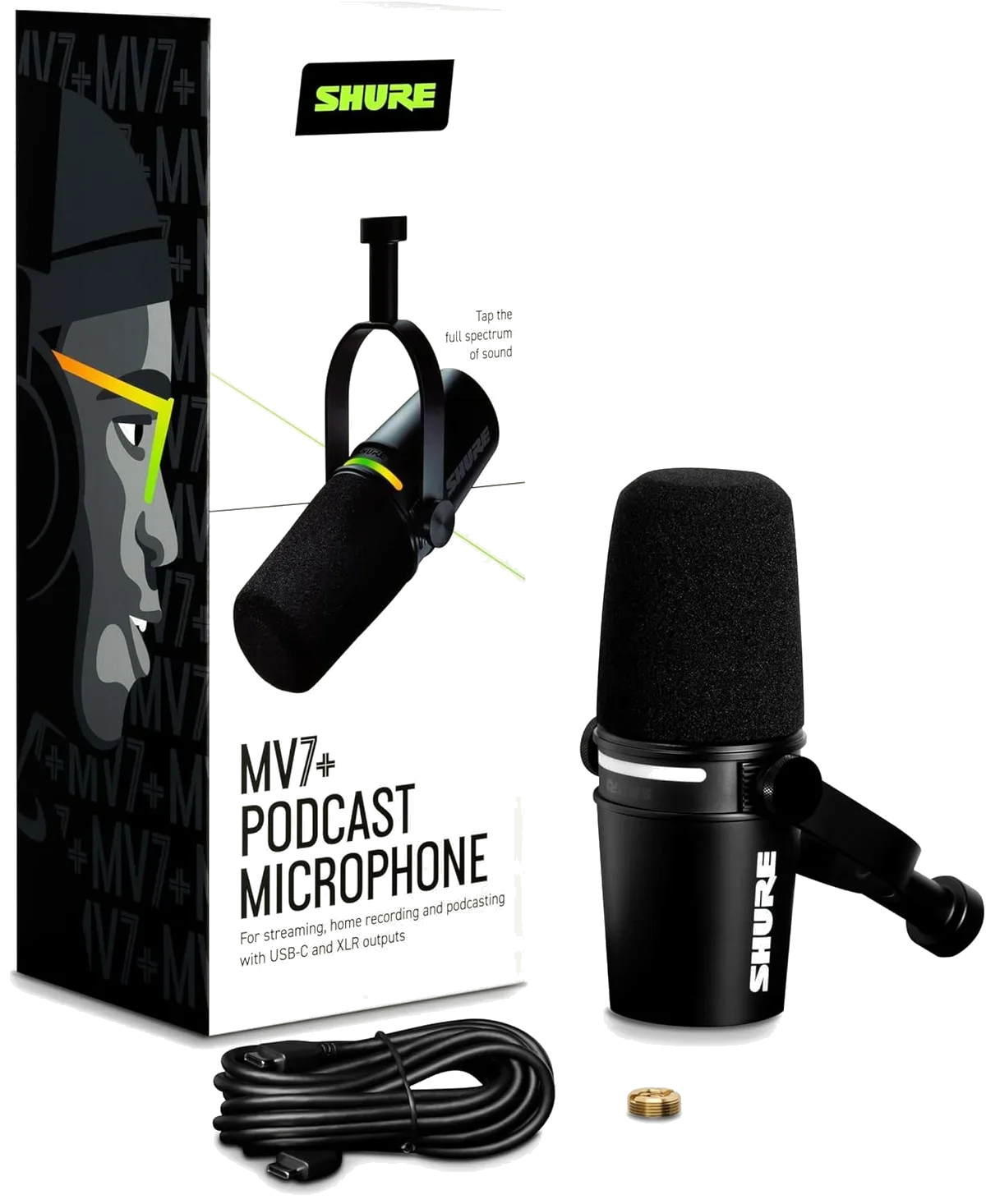
Shure MV7+
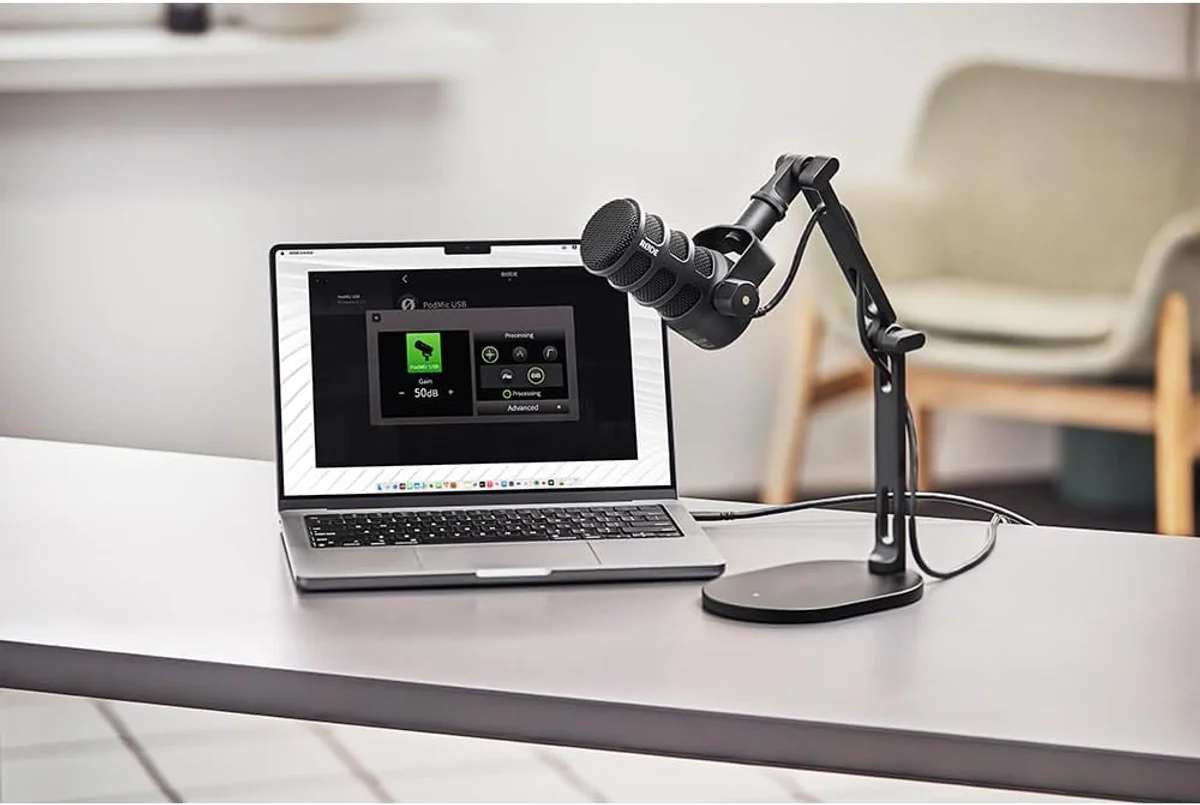
PodMic USB
The Shure MV7+ and PodMic USB are the two best dynamic USB microphones in our catalog — and the comparison between them is the most common purchasing question we receive. Both use dynamic capsules for background noise rejection. Both offer USB-C and XLR dual output. Both produce warm, focused voice audio designed for podcasting, streaming, and voice recording. The MV7+ at $250–$500 costs noticeably more expensive compared to the PodMic USB at $100–$250.
This is not a comparison between good and bad — it is a comparison between excellent and exceptional, and whether the gap between them justifies the price difference for your specific recording frequency, workflow needs, and budget constraints. The PodMic USB with APHEX DSP processing produces broadcast-quality audio that competes with mics at the MV7+'s price tier. The MV7+ adds workflow automation features — Auto Level Mode, real-time denoiser, LED touch panel — that compound into time savings over hundreds of recording sessions.
Both mics appear in our USB microphone roundup (MV7+ at #1, PodMic USB at #2), podcasting roundup (same positions), and streaming roundup. The PodMic USB also appears in our budget roundup as the top mid-range value pick. Understanding specifically what the MV7+'s premium buys — and whether those features matter for your use case — is the point of this detailed category-by-category breakdown. Our dynamic vs condenser guide explains the capsule technology both products share. Our buying guide covers the full product landscape.
Shure MV7+PodMic USBAt a Glance
| Feature | Shure MV7+ Podcast Microphone | Rode PodMic USB |
|---|---|---|
| Price Range | $250–$500 | $100–$250 |
| Type | Dynamic | Dynamic |
| Polar Pattern | Cardioid | Cardioid |
| Frequency Response | 50 Hz – 16 kHz | 20 Hz – 20 kHz |
| Sample Rate | 48 kHz / 24-bit | 48 kHz / 24-bit |
| Connectivity | USB-C + XLR | USB-C + XLR |
| Weight | 1.2 lbs | 0.94 lbs |
| See Current Price | See Current Price |
Audio Quality: 90% Match, 10% Premium
The MV7+ produces tighter, more controlled bass with less low-frequency mud and a smoother high-frequency rolloff. The midrange clarity — the 500-5000 Hz range where speech intelligibility and character live — is more defined, with a subtle presence peak that makes voices "pop" on headphones. And it shows. The overall impression is clean, authoritative, professional. This is the sound of $200+ engineering applied to a USB microphone capsule.
The PodMic USB produces warm, full bass with natural proximity effect at 4-6 inches. The midrange is clear and pleasant but less surgically defined than the MV7+. The APHEX DSP processing through Rode Central — compressor, exciter, high-pass filter, noise gate — closes the gap between raw audio quality and final listening quality. The PodMic USB raw recording is about 85% of the MV7+ raw recording. The PodMic USB processed through APHEX is about 93% of the MV7+ processed through Shure MOTIV. The DSP does real work.
After compression on podcast platforms (128 kbps AAC), the difference between these two mics narrows to a margin that requires A/B comparison on studio headphones to detect. Most listeners on AirPods, car speakers, or gaming headsets will not notice. The audio gap is real but compressed-format delivery minimizes its practical impact on audience experience. The MV7+ sounds better; the PodMic USB sounds good enough for professional distribution.
Noise Rejection: Both Excellent, MV7+ Adds a Layer
Both dynamic capsules reject mechanical keyboard noise, HVAC hum, and ambient room sounds through the same physical principle — the moving-coil diaphragm requires substantial air pressure to generate signal. In our testing, both mics produced zero audible keystrokes from a mechanical keyboard at 2-foot distance. Both ignored window-mounted HVAC at low fan speed. The dynamic capsule advantage is shared equally between these mics at the hardware level.
The MV7+ adds a real-time software denoiser that runs on the mic's internal processor — a second layer on top of the dynamic capsule's natural rejection. This denoiser strips residual noise that even the dynamic capsule passes through: very low-level HVAC hum, faint traffic sounds, the hiss floor of the analog-to-digital conversion itself. The result is a noise floor lower than what the PodMic USB achieves — silence between sentences on the MV7+ is dead-room silent.
The PodMic USB's APHEX noise gate provides a different approach: it cuts audio below a threshold to create silence between sentences. This is effective but operates differently from the MV7+'s continuous denoiser — the gate opens and closes rather than continuously reducing noise. During speech, the PodMic USB's noise floor is slightly higher than the MV7+'s because the gate is open and any residual room noise passes through. The difference is subtle and matters most to listeners on high-quality headphones in quiet environments. Our noise reduction guide covers both hardware and software approaches to noise management.
Workflow Automation: The MV7+ Advantage
Auto Level Mode is the MV7+'s headline workflow feature. The mic adjusts gain in real time as you move relative to the capsule — lean in and gain drops to prevent proximity overload, lean back and gain compensates to maintain consistent level. For podcasters who gesture while talking, streamers who lean toward the screen during intense gameplay, and anyone whose mouth-to-mic distance changes naturally during recording, Auto Level Mode eliminates the volume inconsistencies that otherwise require compression in post-production.
The LED touch panel provides visual level metering on the mic body — you see your recording level without looking at software. Tap-to-mute with LED color change (green to red) confirms mute state from across the room. The capacitive touch surface responds instantly with zero mechanical noise. These controls keep your hands on the mic body and your eyes on content rather than software windows during live recording.
The PodMic USB has no onboard controls. Gain is set through software (Rode Central or your DAW). Muting happens through an OBS hotkey or DAW shortcut. Level monitoring requires looking at software meters. The PodMic USB approach is simpler — fewer moving parts, zero firmware dependencies — but requires more attention to software during recording sessions. For set-and-forget workflows where gain is configured once and never touched, the PodMic USB's simplicity is fine. For dynamic workflows where conditions change during recording, the MV7+'s automation is a real advantage.
DSP Processing: APHEX vs MOTIV
The PodMic USB runs APHEX DSP on its internal hardware chip through Rode Central: compressor, exciter, high-pass filter, and noise gate. The "Podcast" preset applies all four processors with settings optimized for voice recording — one click in Rode Central, then close the app. The processing runs on the mic's internal chip with zero CPU impact. The APHEX exciter is particularly effective — it adds a subtle harmonic presence to voice that makes speech more engaging on earbuds and small speakers where bass and treble are limited.
The MV7+ runs Shure MOTIV processing: EQ curves, compression, and limiter with preset profiles (podcast, vocal, flat). MOTIV's interface is more granular than Rode Central — more parameters to adjust, more control over the exact processing chain. The real-time denoiser is separate from MOTIV and runs continuously at the mic hardware level. For creators who want to fine-tune their processing: MOTIV offers more knobs. For creators who want one-click broadcast quality: Rode Central's presets are faster to configure.
Both DSP implementations produce broadcast-quality results. The PodMic USB's APHEX exciter adds more audible character to voice. The MV7+'s MOTIV offers more precise control. Neither is objectively better — they are different tools for different preferences. The real-time denoiser on the MV7+ is an addition that the PodMic USB does not have — continuous noise reduction rather than gated noise management.
Build Quality: Both Professional, MV7+ Heavier-Duty
The MV7+ weighs 1.2 lbs in all-metal die-cast zinc alloy. The construction communicates "this is a professional broadcast tool" from the moment you pick it up. The yoke mount is a single casting that pivots smoothly. The USB-C port has strain relief. The capsule housing is sealed. This mic is built for a decade of daily professional abuse — desk bumps, cable yanks, boom arm repositioning. It demands a boom arm rated for 2+ lbs (budget arms will sag within weeks).
The PodMic USB weighs 0.94 lbs in all-metal construction with an integrated shock mount. The build is professional and will survive years of daily use without issue. The integrated shock mount absorbs desk vibration without external suspension hardware. The internal pop filter handles plosives without a mesh screen. The PodMic USB is lighter and works with more boom arms — including lighter-duty models that cannot support the MV7+'s weight. Factor boom arm compatibility into your purchase — the MV7+ narrows your arm options to heavier-duty models.
Streaming Performance: Both Excel, Different Strengths
For streaming, the MV7+'s Auto Level Mode handles the volume changes from leaning toward the screen during intense gameplay and leaning back during conversation — maintaining consistent voice level without OBS compressor filters. The LED mute confirmation is visible on camera, adding a subtle production quality indicator to the stream. The real-time denoiser keeps the stream audio floor dead silent between sentences, which viewers consciously or unconsciously associate with professional production quality.
The PodMic USB's APHEX compressor provides a different approach to the same streaming problem: it compresses the dynamic range in the mic's internal processing, so loud reactions and quiet asides arrive at similar levels in OBS. The APHEX exciter adds vocal presence that helps voice cut through game audio in the mix — a subtle but useful effect for streams where game sound and voice compete for the viewer's attention. The PodMic USB does not have visual mute confirmation — muting happens through OBS hotkeys or Stream Deck buttons rather than the mic body.
Neither mic includes virtual audio mixing (the Wave:3 Wave Link is the streaming mic with that feature). Both dynamics reject keyboard noise that condenser streaming mics like the QuadCast S capture. For streaming in noisy environments, either of these dynamics is the right category choice. Our streaming roundup ranks both products in the streaming-specific context.
Podcasting: The Most Common Use Case for Both
Both mics were designed with podcast recording as a primary target — and both excel at it. The MV7+ produces the podcast voice that sounds like a professional studio: clean, warm, authoritative, with dead-silent pauses between sentences. The PodMic USB produces the podcast voice that sounds like a well-produced home studio: warm, natural, broadcast-ready through the APHEX processing, with only the faintest residual room tone between sentences.
For interview podcasts using two mics and an audio interface (XLR connection), both mics work well as the host mic paired with a less expensive guest mic like the Samson Q2U. The MV7+ and PodMic USB maintain consistent tonal character across USB and XLR connections, so switching to XLR does not change the podcast sound your audience expects. Our podcasting roundup covers both products ranked against seven other podcast-optimized picks.
Connectivity and Upgrade Path: Identical
Both mics offer USB-C and XLR dual output — the same upgrade path to audio interfaces, mixers, and professional signal chains. Both work with Cable Matters XLR cables through a Focusrite Scarlett Solo or similar interface. Both transition from USB simplicity to XLR professional workflows without replacement. Our USB vs XLR guide covers the upgrade path that both mics enable.
Through XLR into the same audio interface, the MV7+ produces marginally better audio because the capsule quality advantage persists regardless of connection type. The PodMic USB through XLR sounds excellent — better than its USB output because the interface provides better gain staging and analog-to-digital conversion. Both mics benefit from the XLR upgrade, but the MV7+ benefits slightly more because the interface reveals capsule differences that USB conversion compresses.
Price and the Value Calculation
The MV7+ at $250–$500 costs noticeably more expensive compared to the PodMic USB at $100–$250. The premium buys: Auto Level Mode, real-time denoiser, LED touch panel with visual monitoring, marginally superior capsule, and heavier die-cast construction. The PodMic USB counters with: APHEX DSP that closes the audio quality gap through processing, an integrated pop filter and shock mount, lighter weight for broader boom arm compatibility, and a price that leaves $100+ in budget for other gear (better headphones, a quality boom arm, acoustic treatment).
The time-savings math: if the MV7+'s automation saves 3 minutes per recording session (no gain management, no post-production denoising, no level inconsistency correction), and you record 100 sessions per year, that is 5 hours saved annually. For professional creators whose time has a dollar value, the MV7+ premium pays for itself in saved production time. For creators who enjoy the production process and record less frequently, the PodMic USB's lower price is the smarter allocation of budget.
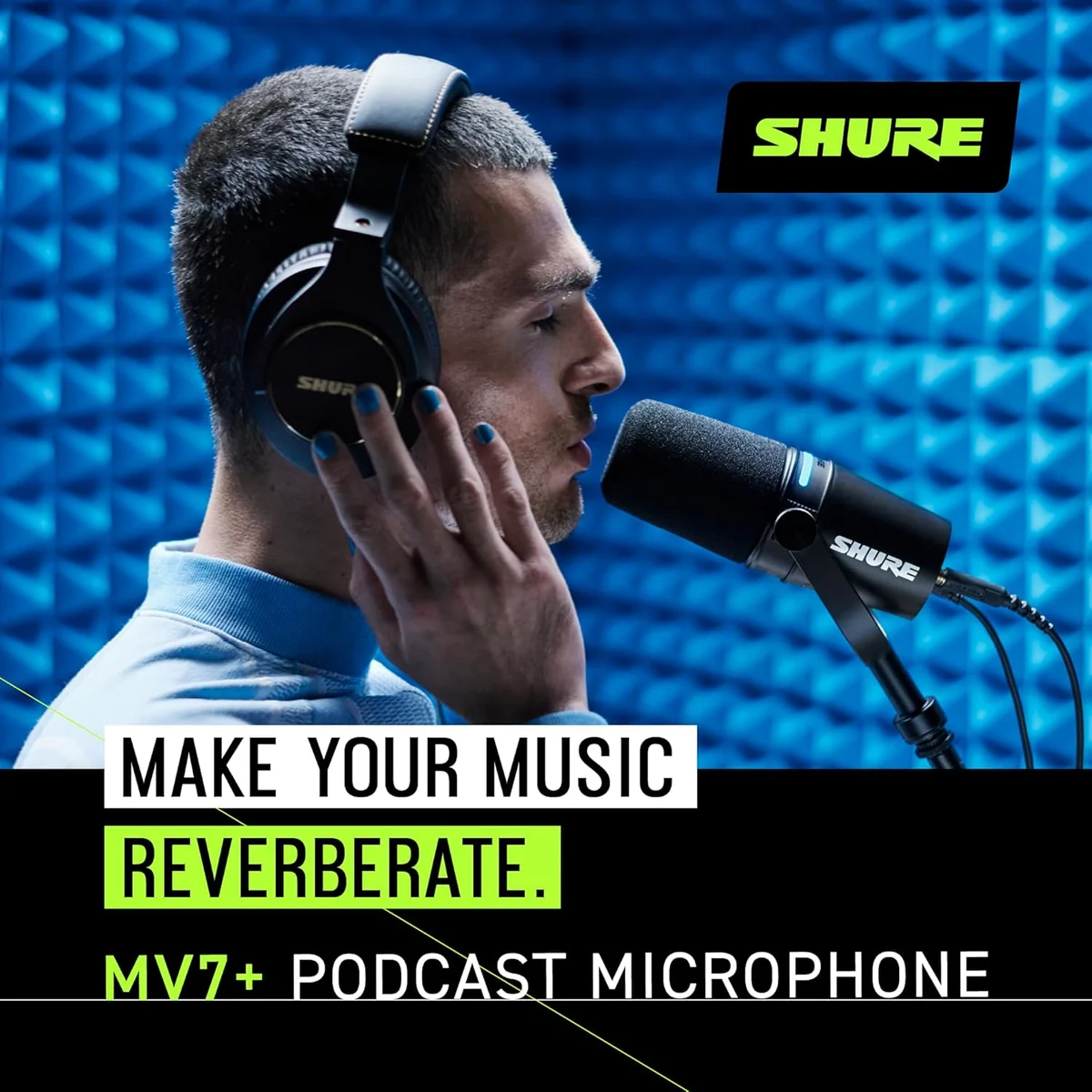 Shure MV7+
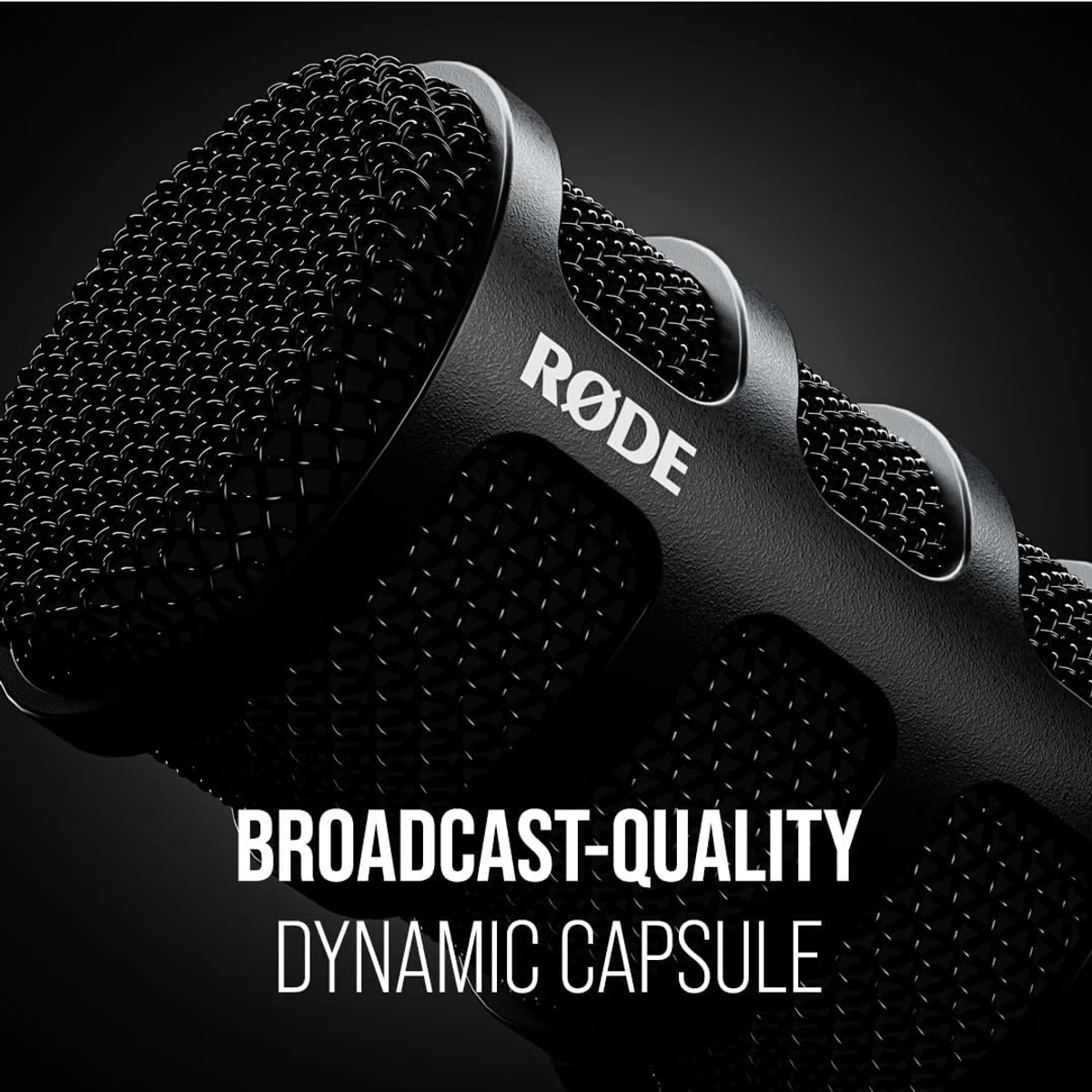 PodMic USB
Premium or Mid-Range?
Get the Shure MV7+ If...
- You record daily or several times per week — the workflow automation compounds into hours of saved production time over a year of consistent recording
- Auto Level Mode matters — you move while recording, your mouth-to-mic distance varies, or you want the mic to handle gain without touching software
- The lowest possible noise floor matters — the real-time denoiser produces dead-silent pauses between sentences that the PodMic USB's gate approach cannot match
- Visual level monitoring on the mic body keeps your eyes on content rather than software meters during live recording or streaming
- Build quality and longevity are priorities — the 1.2 lb die-cast zinc alloy construction is built for professional-grade daily use over many years
Get the Rode PodMic USB If...
- Budget matters — the PodMic USB delivers 90% of the MV7+ audio at roughly half the price, leaving room in budget for a boom arm, headphones, or acoustic treatment
- The APHEX DSP provides broadcast-quality processing that closes the raw audio quality gap — one-click preset, zero ongoing configuration
- You prefer lighter weight (0.94 lbs vs 1.2 lbs) that works with a wider range of boom arms including lighter-duty budget models
- The integrated pop filter and shock mount eliminate two accessory purchases that the MV7+ requires
- You record monthly or occasionally — the PodMic USB's audio quality is more than sufficient for less-frequent recording schedules
This is the one comparison in our catalog where "it depends" is the honest answer rather than a cop-out. Both mics are excellent. Both serve podcasting, streaming, and professional voice recording at genuinely professional quality levels. The MV7+ is the better mic by every measurable audio and build metric. The PodMic USB is the better value by every dollar-per-performance calculation. Which of those priorities — absolute quality or optimal value — drives your purchase determines the right choice for your specific situation and budget.
For creators who want to split the difference: buy the PodMic USB now and invest the savings in a quality boom arm ($40-60) and basic room treatment (a moving blanket behind the recording position, $15). That combination — PodMic USB + good arm + minimal treatment — produces audio that equals the MV7+ on a desktop stand in an untreated room. The total cost is roughly equal, but the audio result is better because the room treatment and arm positioning address problems that neither mic's electronics can fully solve.
The Blue Yeti is the condenser alternative to both — different sound profile, four polar patterns, lower price. Our MV7+ vs Blue Yeti comparison covers the dynamic-vs-condenser decision. The Samson Q2U sits below both as the budget dynamic with the same USB/XLR dual output. Our PodMic USB vs Q2U comparison covers the budget-to-mid upgrade path. Both the MV7+ and PodMic USB appear in our USB microphone roundup, podcasting roundup, and studio setup guide.
MV7+ vs PodMic USB — Value Questions
Is the MV7+ worth double the PodMic USB price?
For weekly podcasters and daily streamers: yes. Auto Level Mode, the real-time denoiser, and LED touch controls save 2-5 minutes per session that compound into hours over a year. For monthly or occasional creators: the PodMic USB delivers 90% of the MV7+ audio quality with APHEX DSP processing that handles broadcast-quality compression and EQ. The 10% audio gap and workflow features justify the premium only for frequent recording schedules.
Which dynamic mic has better noise rejection?
The MV7+ has a slight edge because it adds a software denoiser on top of the dynamic capsule physics. The PodMic USB relies on the dynamic capsule alone for noise rejection, plus the APHEX noise gate for processing. In practice, both mics rejected mechanical keyboard sounds at 2-foot distance in our testing. The difference shows in the noise floor between sentences: the MV7+ is dead silent, the PodMic USB has a faint ambient floor that the APHEX gate largely eliminates.
Both have USB/XLR — which sounds better through XLR?
The MV7+ through XLR into a professional audio interface sounds marginally better than the PodMic USB through the same interface — the capsule engineering and internal electronics are higher quality. The gap through XLR is wider than through USB because the audio interface removes the USB conversion bottleneck and reveals the capsule differences more clearly. Both sound excellent through XLR; the MV7+ sounds more refined.
Which mic is better for a YouTube studio setup?
For face-camera setups where the mic is on a boom arm below or beside the camera frame: the PodMic USB at half the price sounds broadcast-quality on YouTube after 128-192 kbps compression. For desk setups where the mic is prominent on camera: the MV7+ LED touch panel adds visual production value and the auto-leveling handles speaking volume changes from turning between camera and second monitor. The YouTube audio compression narrows the raw quality gap between them.
Track Both Products
We'll email you if either price drops or availability changes.
Only when something changes. Unsubscribe anytime.