Mid-Range Broadcast Quality vs Budget Completeness
The PodMic USB produces noticeably better audio with built-in DSP. The Q2U ships complete with accessories at a lower price and sounds 80% as good. The PodMic USB is the better mic; the Q2U is the better deal.
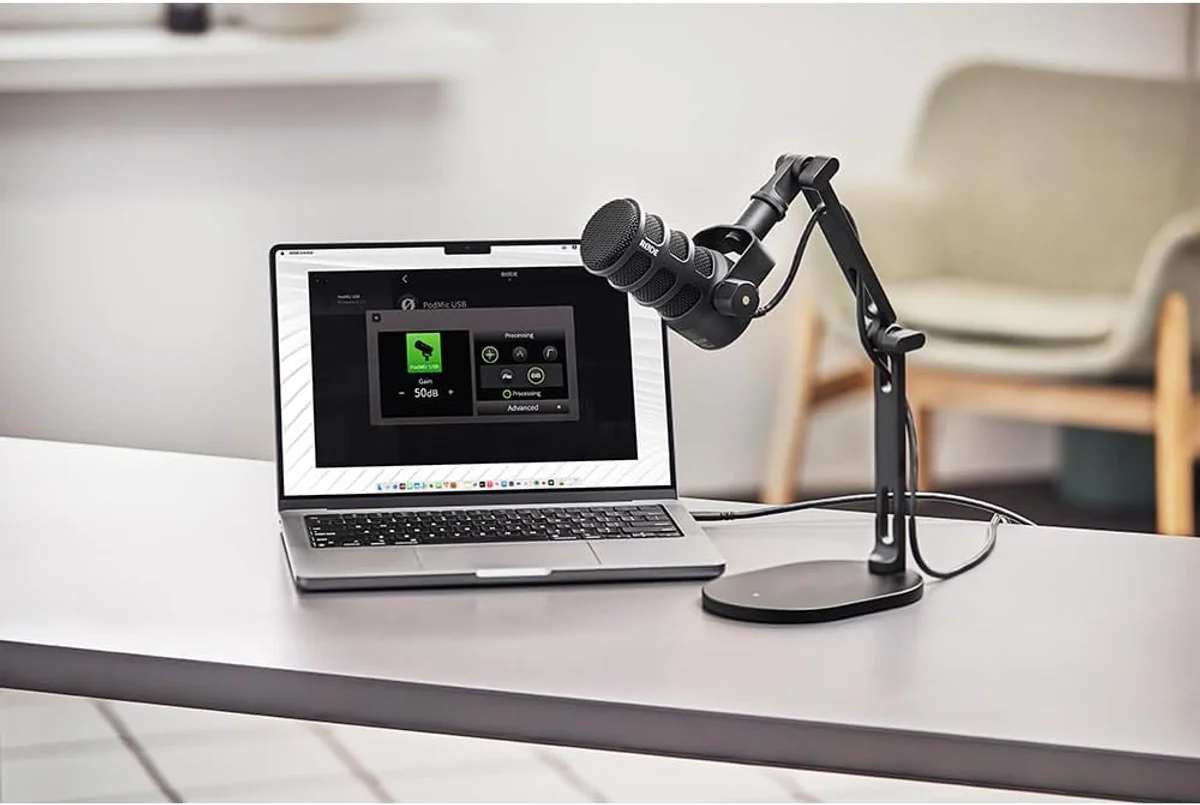
PodMic USB
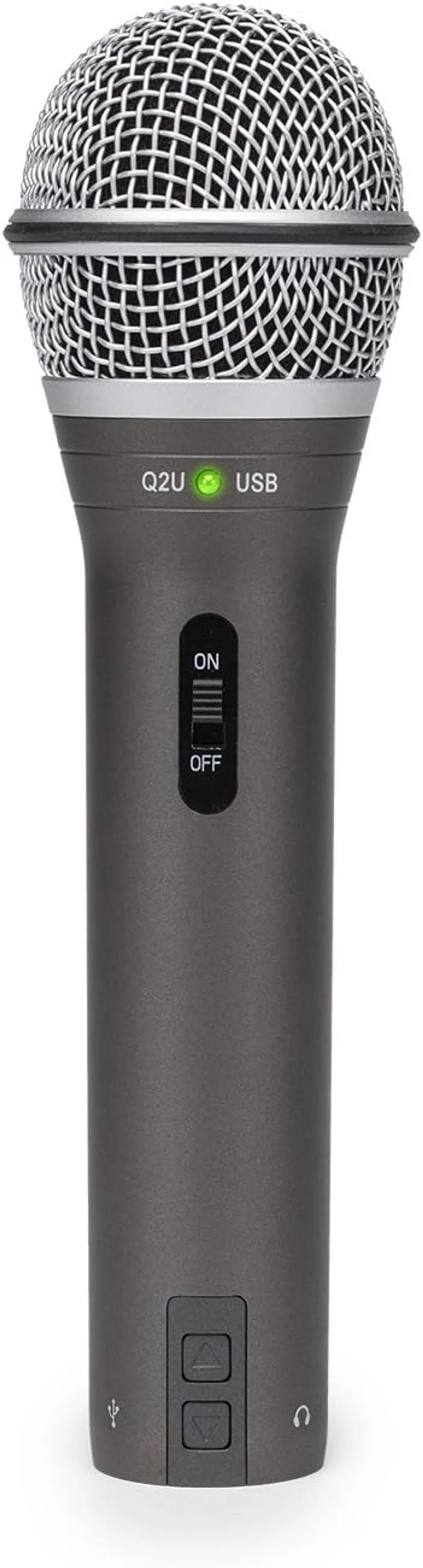
Samson Q2U
The PodMic USB and Samson Q2U share more DNA than any other comparison in our catalog. Both are dynamic microphones. Both offer USB-C and XLR dual output. Both reject background noise through moving-coil capsules designed for voice recording in untreated rooms. Both produce warm, focused audio in the speech-critical frequency range. The question is not "which approach is better" — it is "how much does the audio improvement justify the price difference."
The PodMic USB at $100–$250 costs noticeably more expensive compared to the Q2U at $50–$100. That premium buys APHEX DSP processing (compression, exciter, noise gate running on internal hardware), an integrated pop filter, an integrated shock mount, and higher-grade capsule engineering from Rode's professional audio lineage. The Q2U counters with a complete accessory kit in the box — desktop stand, USB cable, XLR cable, and windscreen — that the PodMic USB does not include.
This comparison is the most common upgrade decision in our audience: "My Q2U sounds good, should I step up to the PodMic USB?" Or from the other direction: "Should I save money on the Q2U or invest in the PodMic USB from the start?" Both are valid strategies — and understanding the specific differences matters more than following a generic recommendation. The breakdown below covers nine comparison categories to help you decide which approach fits your budget, recording schedule, and quality expectations.
Both mics appear in our USB microphone roundup, podcasting roundup, and budget roundup. The PodMic USB is our #2 overall pick and #2 podcast mic. The Q2U is our #1 budget pick across all categories. Understanding why both rank so highly — for different reasons — is the core of this comparison.
PodMic USBSamson Q2UAt a Glance
| Feature | Editor's Pick Rode PodMic USB | Samson Q2U USB/XLR Microphone |
|---|---|---|
| Price Range | $100–$250 | $50–$100 |
| Type | Dynamic | Dynamic |
| Polar Pattern | Cardioid | Cardioid |
| Frequency Response | 20 Hz – 20 kHz | 50 Hz – 15 kHz |
| Sample Rate | 48 kHz / 24-bit | 48 kHz / 16-bit |
| Connectivity | USB-C + XLR | USB + XLR |
| Weight | 0.94 lbs | 0.63 lbs |
| See Current Price | See Current Price |
Audio Quality: The 15-20% Gap
The PodMic USB produces tighter, more controlled bass with less low-frequency mud. The midrange — where speech intelligibility lives — is cleaner, with more definition between consonants and vowels. The high-frequency rolloff (characteristic of dynamic mics) is smoother and more gradual. The overall impression is "broadcast-ready" — a voice recording that sounds like it came from a professional studio.
The Q2U produces warm, natural bass with a broader low-frequency profile. Midrange is clear but less defined than the PodMic USB. High frequencies roll off slightly earlier and less smoothly. The overall impression is "good podcast audio" — clean, pleasant, and clearly better than a webcam or headset mic, but without the polished sheen of the PodMic USB.
In A/B testing at matched gain levels, the difference is audible on studio headphones. On earbuds through podcast platforms at 128 kbps compression, the gap narrows to a margin that requires focused listening to detect. Most podcast audiences listening through AirPods or car speakers will not notice. Most streaming audiences listening through gaming headsets will not notice either. The gap matters most for creators who listen to their own recordings critically and for content distributed at higher bitrates on YouTube or premium podcast platforms.
APHEX DSP: The PodMic USB's Secret Weapon
The PodMic USB runs APHEX audio processing on its internal DSP chip through Rode Central software. This includes a compressor (reduces the volume gap between loud and quiet speech), an exciter (adds subtle harmonic presence to voice), a high-pass filter (removes low-frequency rumble), and a noise gate (cuts audio between sentences to eliminate room noise during pauses). These four processors run on the mic hardware — zero CPU impact on your computer, zero per-session configuration after initial setup.
The Q2U has no built-in processing. Compression, EQ, noise gating, and exciter effects must be applied in your recording software (Audacity, GarageBand, OBS) or through post-production processing. For podcasters who already know their way around a DAW, this is a minor inconvenience. For beginners who want to focus on content rather than audio engineering, the PodMic USB's set-and-forget DSP is a real workflow advantage that saves time on every recording session.
The APHEX "Podcast" preset in Rode Central produces broadcast-quality audio from a single click — open the app, select the preset, close the app, record. For creators who produce 50+ episodes per year, the time saved on per-episode post-production compounds into the equivalent of a full workday or more. That time savings is part of the PodMic USB's value proposition — not just better raw audio, but less work to make it sound professional.
Noise Rejection: Both Excellent, PodMic USB Slightly Better
Both dynamic capsules reject background noise through the same physical principle — the moving-coil diaphragm requires substantial air pressure to generate signal, so quiet ambient sounds fall below the activation threshold. Mechanical keyboards, HVAC hum, and room echo that condenser mics like the Blue Yeti capture are absent from recordings on both the PodMic USB and Q2U.
The PodMic USB adds a layer of noise gate processing through the APHEX DSP — silence between sentences is cut to true zero, eliminating any residual room tone. The Q2U passes raw audio including the low-level room tone between sentences. The difference is subtle but audible on headphones: PodMic USB recordings are truly silent between phrases, while Q2U recordings have a faint ambient floor.
The PodMic USB's internal pop filter handles plosive sounds (hard p, b, and t consonants) better than the Q2U's included windscreen. In our testing at 4-inch proximity, the PodMic USB produced zero plosive pops while the Q2U's windscreen reduced but did not eliminate them. A $5 aftermarket pop filter on the Q2U closes this gap. Our noise reduction guide covers the full approach to clean recordings with either mic.
Build Quality and Physical Design
The PodMic USB is all-metal construction at 0.94 lbs — a heavy, dense puck that feels like a professional broadcast tool. Built to last. The internal shock mount absorbs desk vibration without an external suspension mount. The capsule housing is sealed against dust and humidity. This mic is built for daily professional use over many years. The weight means it needs a boom arm rated for 1+ lbs — budget arms handle it fine, but the lightest clip-on monitor-mounted arms may struggle with the load.
The Q2U is lighter at 0.63 lbs with a mix of metal body and plastic elements. Build quality is solid consumer-grade — it will survive years of careful home use but would show wear faster in professional daily use. The included desktop tripod stand is functional but small and transmits desk vibration directly into recordings. A boom arm is recommended for both mics but is more critical for the Q2U because the included stand is a meaningful audio quality limitation.
Accessories: Q2U's Complete Kit Advantage
The Q2U ships with: desktop tripod stand, USB cable, XLR cable, and foam windscreen. Open the box, plug in, record. Zero additional purchases required to start creating content today. The total value of these included accessories is approximately $20-30 if purchased separately.
The PodMic USB ships as a bare mic body. You need a cable (USB-C, ~$10), a boom arm ($20-30), and optionally a pop filter ($5-10). The true cost of a functional PodMic USB setup is the mic price plus $30-40 in necessary accessories. Factor this into the price comparison — the effective cost difference between a ready-to-use Q2U and a ready-to-use PodMic USB setup is larger than the mic-to-mic price gap suggests.
Connectivity: Identical Feature, Different Context
Both mics provide USB-C and XLR dual output — the same upgrade path to professional audio interfaces. Both work with the Cable Matters XLR cable through a Focusrite Scarlett Solo or similar interface. The Q2U even includes an XLR cable in the box for when you are ready to make that transition.
Through XLR into the same audio interface, the PodMic USB still sounds better than the Q2U because the capsule quality difference persists regardless of connection type. USB vs XLR changes the gain structure and noise floor but does not change the fundamental sonic character of the mic. If you plan to use XLR eventually, both mics serve the upgrade path equally well in terms of connectivity — the PodMic USB just sounds better at either end. Our USB vs XLR guide covers when the connection switch adds real value.
Podcasting Performance: The Primary Use Case
Both mics excel at podcasting — the format where dynamic capsules provide the most value. Voice recordings at 4-6 inches produce warm, natural audio with proximity bass enhancement that makes speech sound full and engaging through earbuds. Background noise between host segments disappears, creating the clean, professional sound that podcast listeners expect. Both mics produce audio that competes with shows backed by professional studios after basic post-production.
The PodMic USB has the edge for podcast-specific workflows. The APHEX compressor evens out the volume differences between energetic speech and quiet asides — a constant challenge in conversational podcasting. The exciter adds subtle vocal presence that helps speech cut through when listeners play podcasts in noisy environments (commuting, gym, cooking). These processing features are designed for podcast voice specifically, not as generic audio effects. Our podcasting roundup ranks both mics alongside seven other podcast picks.
The Q2U handles podcasting with a simpler approach: capture clean audio, process in post. The included windscreen handles plosives adequately. The included stand positions the mic on the desk (add a boom arm for better results). For podcasters who enjoy the post-production process — who find satisfaction in dialing in compression settings and EQ curves — the Q2U provides clean raw material to work with. For podcasters who want to hit record and publish with minimal processing, the PodMic USB's preset DSP eliminates that production overhead.
Streaming Performance: Both Work, Different Strengths
For streaming, the PodMic USB's APHEX noise gate provides a real-time advantage: silence between sentences on the live stream is truly silent, not low-level room tone. Viewers notice the difference — streams with a clean noise floor sound professional, while streams with constant low-level ambient hum sound amateur. The APHEX processing runs on the mic's internal chip, adding zero CPU overhead during gaming.
The Q2U sends raw audio to OBS, where software noise gates and filters handle cleanup. This approach works well but adds CPU processing during stream — a consideration when gaming and streaming push your computer's resources. For streamers who already have OBS audio filter chains configured, the Q2U integrates into the existing workflow without disruption. For streamers who want set-and-forget audio, the PodMic USB requires less OBS configuration. Our streaming roundup covers both mics in the streaming-specific context.
The Brand Factor: Rode vs Samson
Rode is an Australian audio company with a reputation for professional-grade microphones, audio interfaces, and wireless systems. The PodMic USB benefits from the same engineering team that produces the NT1, VideoMic, and Wireless Go series. Rode Central software receives regular updates with new features and profiles. Customer support is responsive with established channels.
Samson has been manufacturing professional audio equipment since the 1980s — decades of experience in microphones, wireless systems, and studio hardware. The Q2U draws on that accumulated engineering knowledge at a consumer-accessible price. Samson's support infrastructure is established and well-documented. Both brands have the pedigree to back their products with long-term reliability — this is not a comparison where one brand is an unknown quantity.
Price, Value, and the Upgrade Math
The Q2U with included accessories provides a complete, functional recording setup at the lowest total cost of any dynamic USB mic in our catalog. For budget-conscious creators — students, hobbyists, first-time podcasters testing the waters — the Q2U removes financial barriers to starting. The audio quality delivers 80% of the PodMic USB at a fraction of the price. That 80% is more than enough for podcast platforms, Twitch streams, and YouTube content.
The PodMic USB provides a premium audio experience with built-in processing that reduces per-episode production time. For committed creators recording weekly or more — podcasters with a publishing schedule, streamers with a regular cadence, professionals using voice recording as part of their work — the PodMic USB's better audio and DSP processing justify the premium through cumulative workflow savings.
The math: if the APHEX DSP saves 5 minutes of post-production per episode, and you produce 50 episodes per year, that is 4+ hours saved annually. For professional creators whose time has a dollar value, the PodMic USB's premium pays for itself in saved production time within months. For hobbyists who enjoy the production process, the Q2U with manual post-processing is a perfectly valid approach that produces excellent final audio.
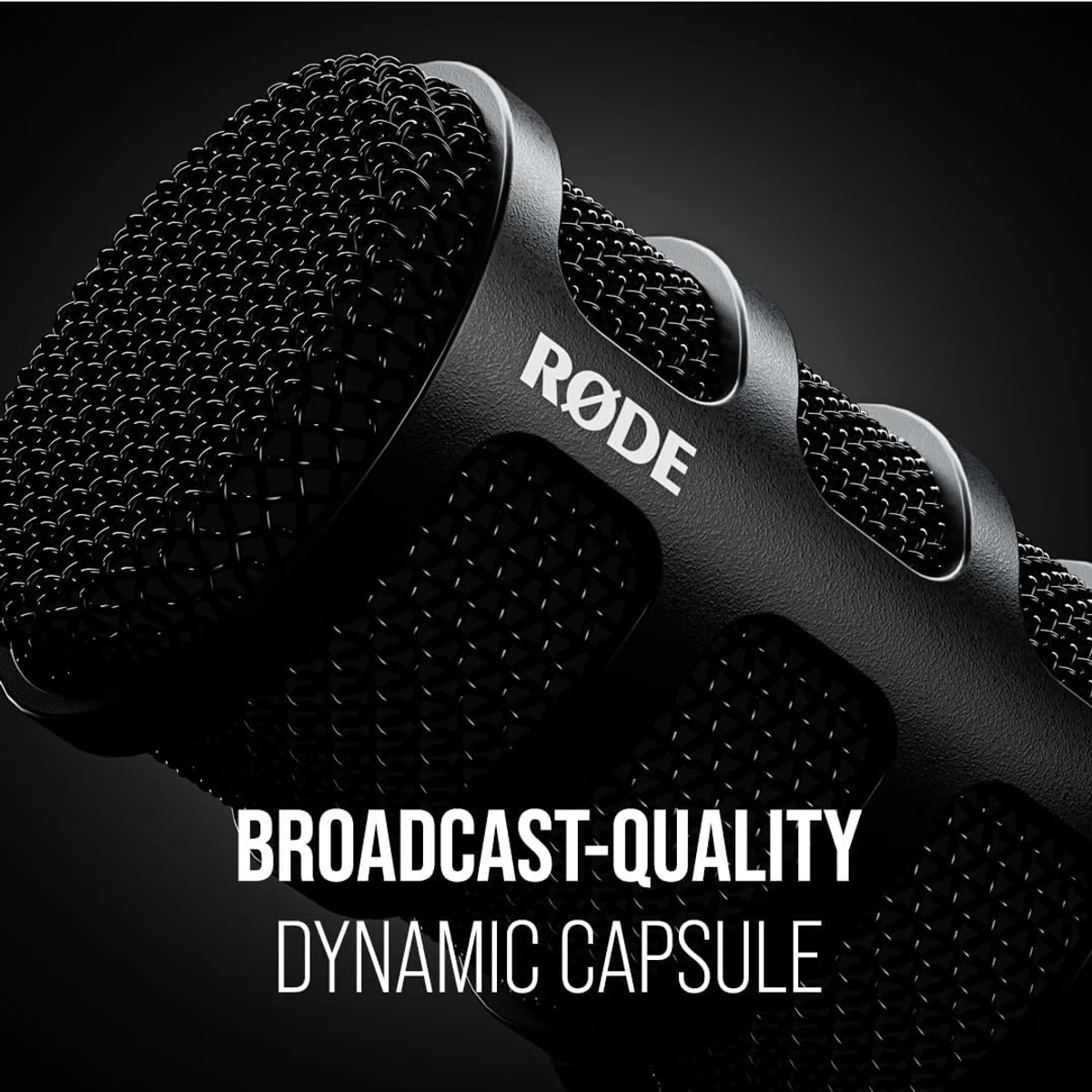 PodMic USB
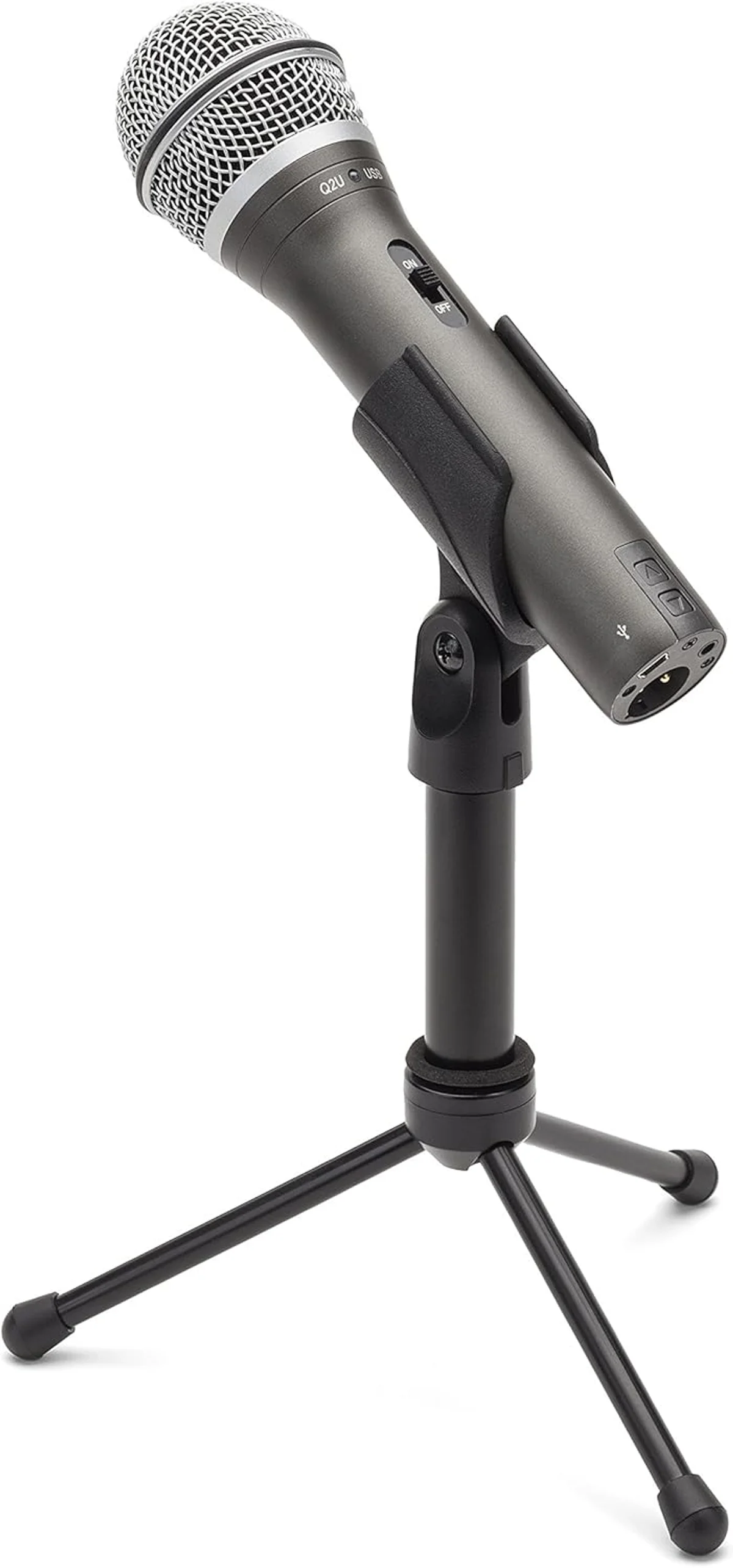 Samson Q2U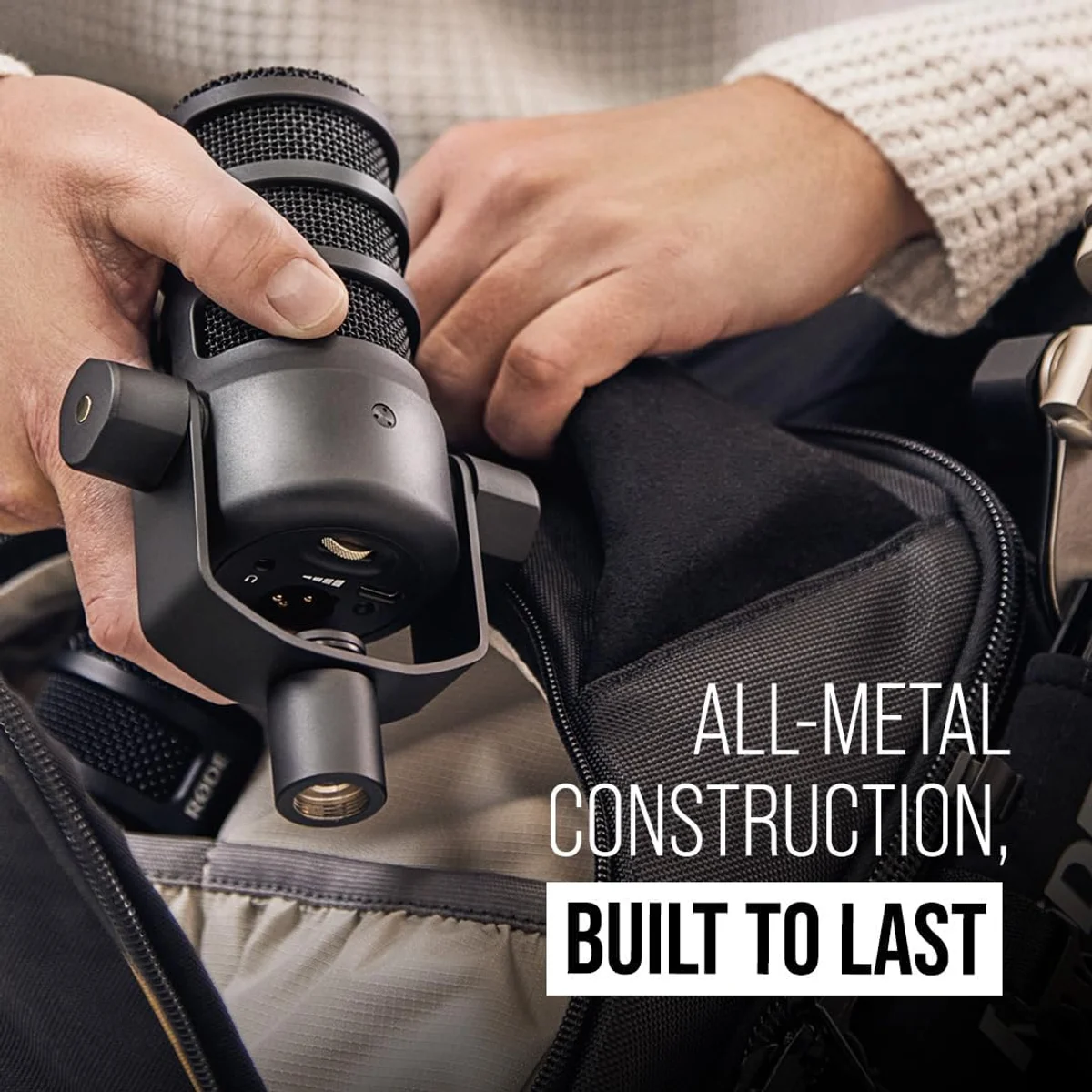
Which Dynamic Fits Your Budget?
Get the Rode PodMic USB If...
- You record weekly or more and want built-in DSP to reduce per-session post-production time — the APHEX processor is a daily-use advantage
- Audio quality is your primary purchasing criterion and you are willing to invest in a boom arm alongside the mic
- You want a mic that sounds broadcast-ready out of the box without learning audio processing software
- Build quality and professional longevity matter — the all-metal PodMic USB is built for years of daily use
- You already own a boom arm and USB-C cable from a previous setup
Get the Samson Q2U If...
- Budget is the primary constraint and you need a complete recording setup in the box with zero additional purchases
- You are testing whether content creation is for you — the Q2U lets you start recording this week at the lowest financial risk
- You are comfortable with basic post-production (noise gate, compression, EQ in Audacity or GarageBand) and enjoy learning the craft
- You want the same USB/XLR dual output and dynamic noise rejection at a lower entry price
- You plan to upgrade to a premium mic later and need a reliable starter that will still serve as a backup or secondary mic
For most creators starting their first podcast or stream: the Q2U is the recommendation. It removes every obstacle between you and your first recording session. The audio quality is more than sufficient for audience growth, and the included XLR cable means you already have the cable you need when upgrading to an audio interface later.
For committed creators ready to invest in their audio chain: the PodMic USB is the recommendation. The APHEX DSP, superior capsule, and professional build quality compound into a better recording experience that gets better with every session. Our MV7+ vs PodMic USB comparison covers the step above the PodMic USB for creators ready to invest at the premium tier.
Both mics rank highly in our USB microphone roundup and budget roundup. The Q2U is our #1 budget pick. The PodMic USB is our #2 overall. Between them, these two mics cover the widest range of budgets and needs of any pair in our catalog.
One final consideration: owning both is not redundant. The Q2U serves as an excellent guest mic or backup if your primary mic fails before a scheduled recording. The PodMic USB serves as the daily driver with superior audio and DSP processing. Many podcasters who started with the Q2U keep it in their accessory kit permanently after upgrading to the PodMic USB — the Q2U's included XLR cable and complete accessory set make it an ideal travel or emergency backup microphone that takes up minimal bag space.
PodMic USB vs Q2U — Answered
Which is better for a first podcast mic — PodMic USB or Q2U?
The Q2U is the better first mic because it ships complete — desktop stand, USB cable, XLR cable, windscreen — with zero additional purchases required. The PodMic USB produces better audio but ships as a bare mic that needs a boom arm and cable purchased separately. If budget is tight, start with the Q2U. If you can afford the PodMic USB plus a $30 boom arm, the audio upgrade is worth it.
How much better does the PodMic USB sound compared to the Q2U?
The PodMic USB sounds about 15-20% better in raw audio quality — tighter bass, cleaner midrange, and the APHEX DSP adds broadcast-quality compression and exciter processing that the Q2U lacks. After podcast compression on Apple Podcasts (128 kbps AAC) or Spotify, the gap narrows to about 10%. The Q2U sounds good. The PodMic USB sounds polished.
Both have USB/XLR — does the Q2U XLR match the PodMic USB XLR quality?
Through XLR into the same audio interface, the PodMic USB produces cleaner audio because the capsule and internal electronics are higher quality regardless of connection type. USB vs XLR does not change the fundamental audio characteristics of the mic. The Q2U through XLR sounds better than the Q2U through USB (less noise, more gain control), but it does not match the PodMic USB through either connection.
Should a streamer get the PodMic USB or Q2U?
Both reject keyboard noise through their dynamic capsules. The PodMic USB adds APHEX DSP that reduces post-processing needs — useful for live streaming where you cannot fix audio after the fact. The Q2U sends raw audio that benefits from OBS noise gate filters. For streamers who want plug-and-play broadcast audio: PodMic USB. For streamers on strict budgets: Q2U with OBS filters.
Track Both Products
We'll email you if either price drops or availability changes.
Only when something changes. Unsubscribe anytime.