Best Microphones for Podcasting 2026: Tested & Ranked
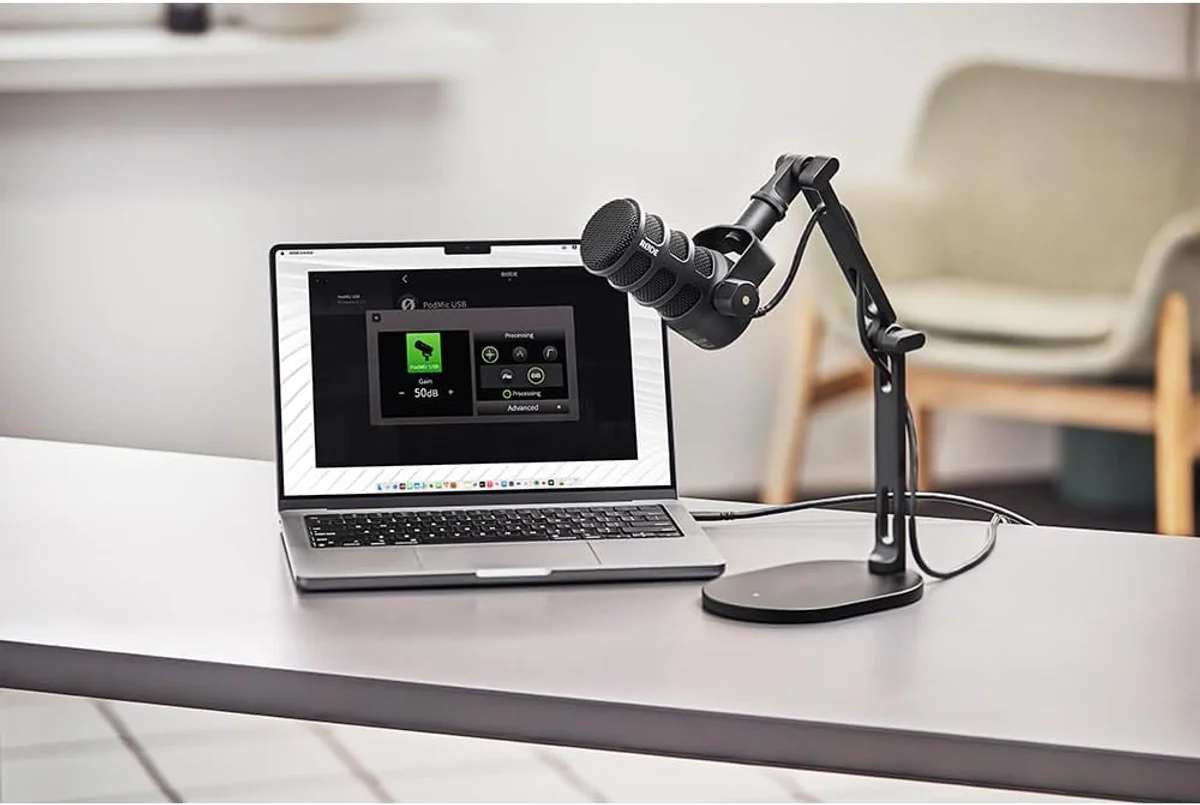
We tested 9 microphones specifically for podcast recording — evaluating voice clarity, background noise rejection, DSP processing capability, and long-session comfort across USB desk mics, dual-output dynamics, and wireless systems. The goal was simple: identify which microphone produces the best podcast audio at each price tier, in a real home office with no acoustic treatment, a mechanical keyboard, and an HVAC system running in the background. Those are the conditions 95% of podcasters actually record in.
No B-roll saves bad audio.
The podcast format is unforgiving — no visual spectacle to distract from hiss, no cutaway to mask a room tone shift. Podcasting rewards a specific set of microphone qualities that differ from streaming, music, or video production. Voice clarity in the 100-5000 Hz range matters more than high-frequency detail. Background noise rejection is non-negotiable when your recording space shares a wall with a dishwasher.
Built-in DSP (compression, EQ, noise gates) saves hours of post-production per episode. And durability matters because a podcast mic takes daily abuse — bumps, desk vibration, cable yanking — for years. Our microphone buying guide covers the technical foundations. This roundup covers the specific products that serve podcasters best.
Two form factors made this list.
The ranking crosses two categories deliberately. Desk-bound solo podcasters need a USB microphone — and 7 of our 9 picks are USB desk mics. But interview podcasters, remote recording setups, and walk-and-talk format shows need wireless — so we included the two wireless systems that produce podcast-grade audio. The USB microphone roundup and wireless microphone roundup cover those categories independently. This list ranks products specifically for how well they serve the podcast format, regardless of form factor.
Price ranges from $25–$50 for the FIFINE AM8 to $250–$500 for the Shure MV7+. The sweet spot — where audio quality per dollar peaks — sits at the Rode PodMic USB in the mid-range. Our podcast studio setup guide covers the full recording chain from mic to mixdown. This roundup focuses on the mic itself — the single component that determines 80% of your audio quality.
One thing worth stating directly: the gap between a $40 podcast microphone and a $250 podcast microphone is smaller than most gear reviews suggest — especially after audio compression on distribution platforms. Apple Podcasts encodes at 128 kbps AAC. Spotify streams at similar bitrates. At those compression levels, the subtle differences between mid-range and premium mics flatten out. The differences that remain audible are noise rejection (dynamic vs condenser), DSP processing (built-in compression and EQ), and proximity effect (how the mic handles close-range voice). Those are the factors we weighted most heavily in this ranking.
Quick Picks at a Glance
| Feature | Editor's Pick Shure MV7+ Podcast Microphone | Rode PodMic USB | Rode Wireless Go II | Blue Yeti USB Microphone | Samson Q2U USB/XLR Microphone | Elgato Wave:3 | FIFINE USB/XLR Dynamic Microphone | DJI Mic 3 | Hollyland Lark M2 |
|---|---|---|---|---|---|---|---|---|---|
| Price Range | $250–$500 | $100–$250 | $100–$250 | $100–$250 | $50–$100 | $100–$250 | $25–$50 | $100–$250 | $50–$100 |
| Type | Dynamic | Dynamic | Wireless System (2TX + 1RX) | Condenser (tri-capsule) | Dynamic | Condenser | Dynamic | Wireless System (2TX + 1RX) | Wireless System (2TX + 1RX) |
| Polar Pattern | Cardioid | Cardioid | Omnidirectional | Cardioid, Bidirectional, Omnidirectional, Stereo | Cardioid | Cardioid | Cardioid | Omnidirectional | Omnidirectional |
| Frequency Response | 50 Hz – 16 kHz | 20 Hz – 20 kHz | 50 Hz – 20 kHz | 20 Hz – 20 kHz | 50 Hz – 15 kHz | 70 Hz – 20 kHz | 50 Hz – 16 kHz | 50 Hz – 20 kHz | 50 Hz – 20 kHz |
| See Current Price | See Current Price | See Current Price | See Current Price | See Current Price | See Current Price | See Current Price | See Current Price | See Current Price |
1. Shure MV7+ — Best Overall Podcast Microphone
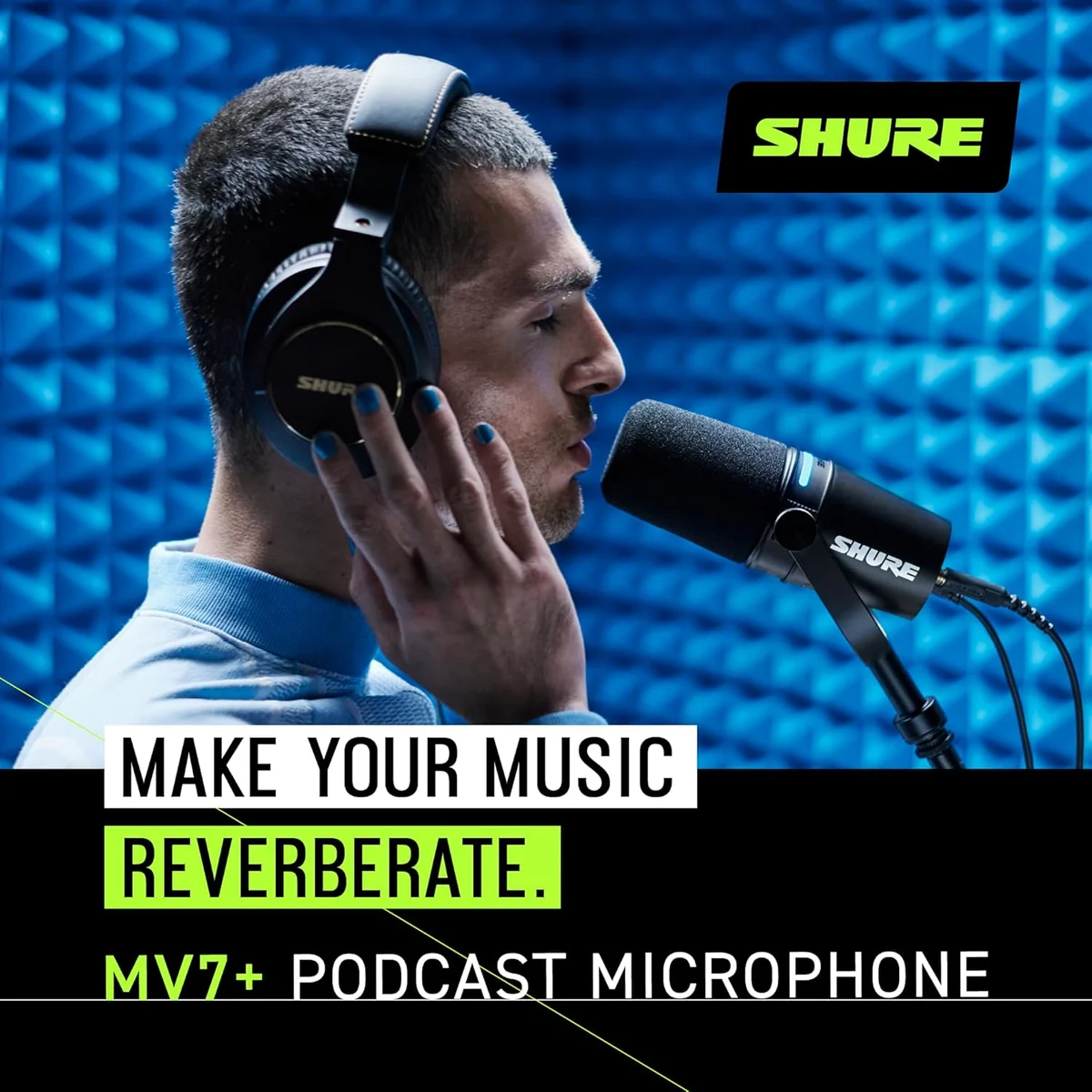
The MV7+ was built for podcasters and it shows. Auto Level Mode adjusts gain in real time as you lean toward or away from the mic — solving the #1 amateur podcast problem without any post-production knowledge. The LED touch panel provides visual level metering and instant mute: tap the top, see the red ring, know you are muted. The real-time denoiser strips HVAC hum and fan noise before it hits your recording software. These features compound over hundreds of episodes into hours of saved editing time.
The dynamic capsule rejects background noise from keyboard clicks, room echo, and HVAC systems through physics — not software. In our home office test, the MV7+ captured zero mechanical keyboard sounds at 2-foot distance while condenser mics on this list picked up every keystroke. USB-C and XLR dual output means this mic transitions from solo USB podcasting to a multi-mic audio interface setup without replacement.
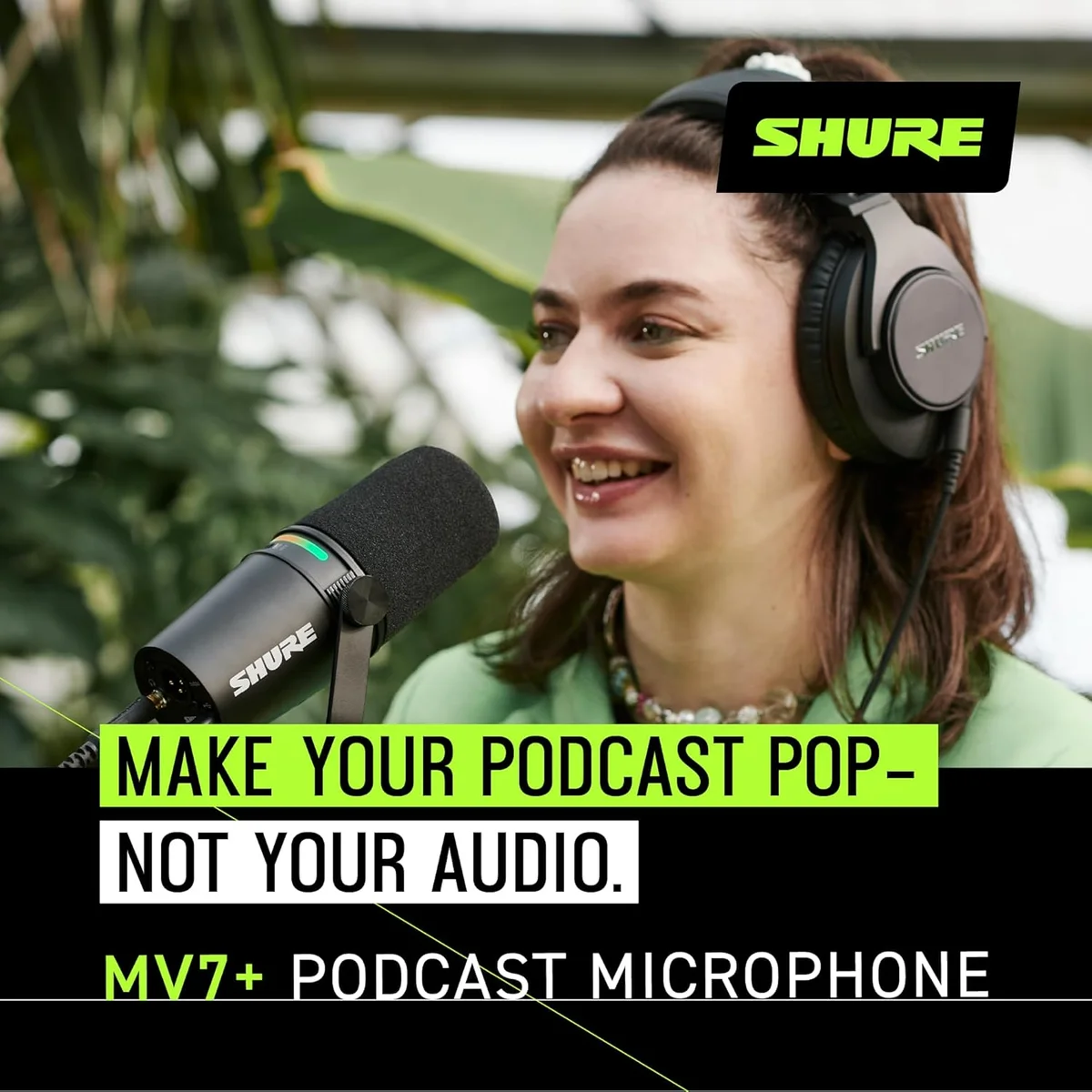
At 1.2 lbs, the MV7+ demands a boom arm rated for 2+ lbs. Budget arms droop within weeks. Factor $40-60 for a proper arm into the total investment. At $250–$500, the MV7+ is the most expensive pick on this list — the premium buys workflow automation that daily podcasters appreciate and weekly podcasters may not need. Our MV7+ vs PodMic USB comparison breaks down whether the premium justifies itself for your publishing schedule. Full MV7+ review →
2. Rode PodMic USB — Best Value for Podcasting
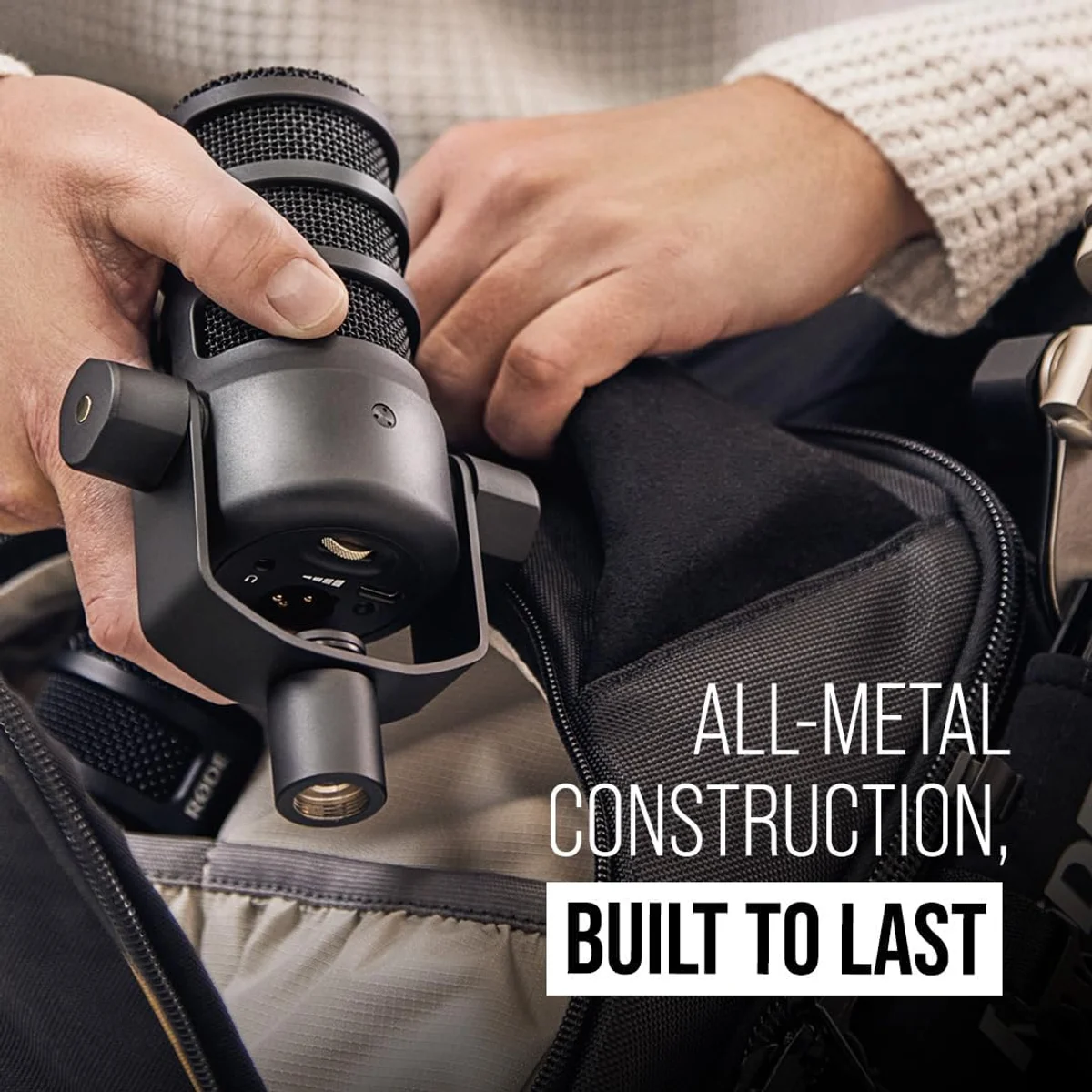
The PodMic USB delivers podcast-broadcast audio at roughly half the MV7+ price. The internal pop filter handles plosives at 4-inch proximity better than external mesh filters on competing mics — one less accessory, one less thing between your mouth and the mic. The integrated shock mount absorbs desk vibration, table bumps, and the inevitable hand gesture that hits the arm mid-sentence.
APHEX DSP through Rode Central provides broadcast-standard compression, noise gate, and exciter effects. Set them once during your first session, close the software, and the processing runs on the mic's internal chip — zero CPU impact, zero per-episode configuration. The DSP profiles were designed with podcast voice specifically in mind, and the default "Podcast" preset produces usable broadcast audio without any adjustment.
What the PodMic USB lacks: the MV7+'s Auto Level Mode, LED touch controls, and real-time visual monitoring. Gain management happens in software rather than on the mic body. For podcasters who prefer a hands-off, set-and-forget approach and manage gain through their DAW, this is a non-issue. For podcasters who want the mic to handle everything, the MV7+ justifies the premium. Our PodMic USB vs Q2U comparison covers the budget-to-mid upgrade decision. Full PodMic USB review →
3. Rode Wireless Go II — Best for Interview Podcasts
Every other mic on this list sits on a desk. The Wireless Go II clips to your guest's collar and produces podcast-grade audio at up to 200 feet from the receiver. For interview podcasts — in-person guests, on-location recording, walk-and-talk formats — no USB mic can replace what wireless provides: mobility without sacrificing audio quality.
The dual-channel system records two speakers independently. The safety channel at -20dB catches unexpected volume spikes before they clip. Forty hours of onboard recording per transmitter provides backup if wireless signal stutters. Pair each transmitter with a Rode Lavalier Go for concealed mic placement under wardrobe — the most common professional podcast interview setup in the sub-$300 range.
For desk-bound solo podcasting, skip the Wireless Go II and choose a USB mic instead — the PodMic USB or MV7+ will always outperform wireless in a controlled desk setup. The Wireless Go II earns its #3 ranking for podcasters who record in formats where a desk mic is impossible or impractical. Our DJI Mic 3 vs Wireless Go II comparison covers the wireless decision for podcast interviews. Full Wireless Go II review →
4. Blue Yeti — Best Multi-Pattern for Solo Shows
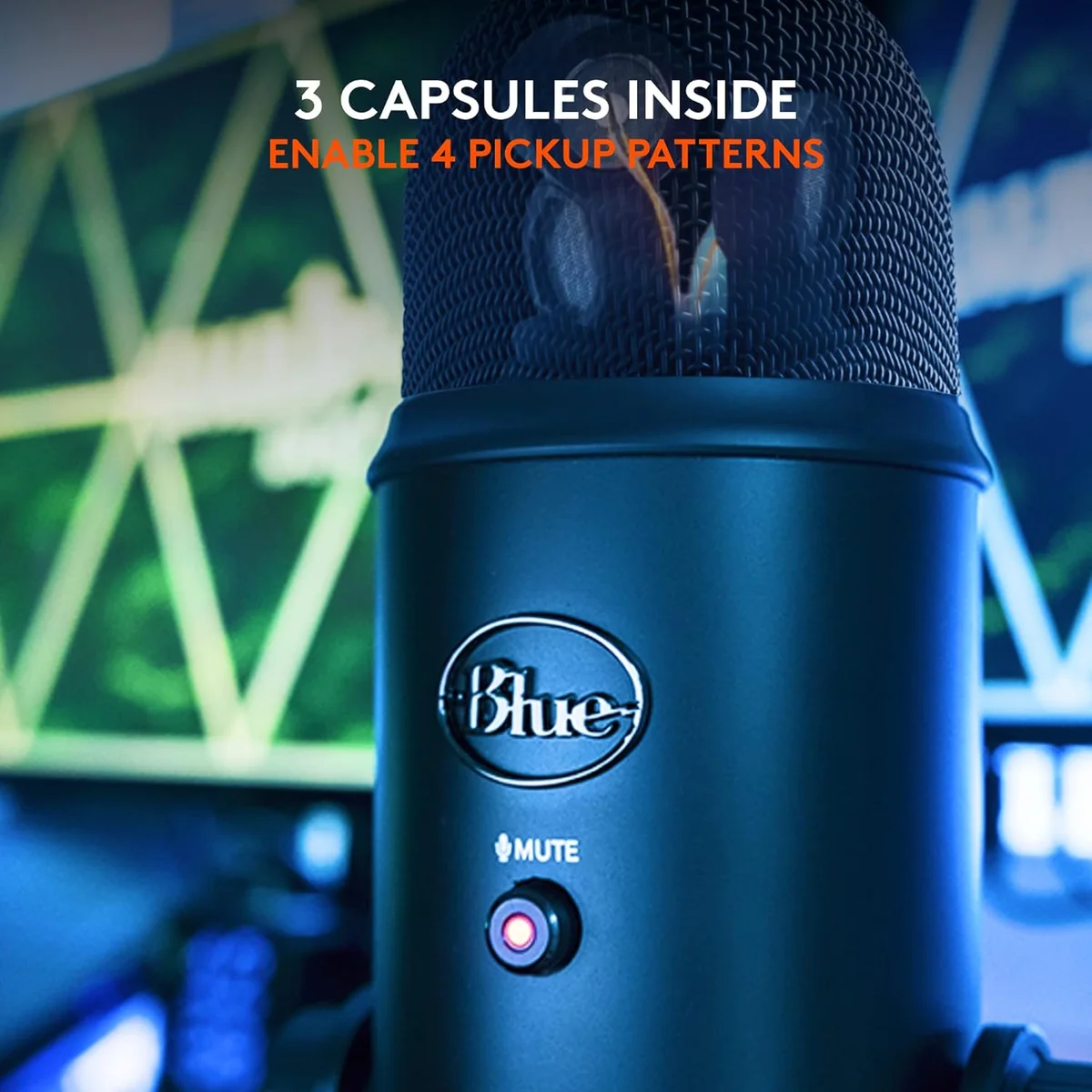
The Blue Yeti remains the only USB mic on this list with four selectable polar patterns. Cardioid for solo recording. Bidirectional for face-to-face interviews sharing one mic. Omnidirectional for roundtable discussions. Stereo for ambient atmosphere and sound design. No other USB microphone in our catalog offers this flexibility, and for podcasters who vary their format — solo episodes plus guest episodes plus panel discussions — the Yeti covers all scenarios with a physical switch.
The condenser capsule captures more high-frequency vocal detail than any dynamic on this list — sibilance, breath sounds, vocal overtones. In a treated room, this produces a richer, more intimate podcast sound. In an untreated room, it also captures every keyboard click, HVAC rumble, and room reflection. The Yeti is the right podcast mic IF your recording space is quiet. If it is not, every dynamic mic on this list is the smarter choice. Our MV7+ vs Blue Yeti comparison covers the dynamic-vs-condenser podcast decision. Full Blue Yeti review →
5. Samson Q2U — Best Budget Podcast Starter
The Samson Q2U ships with everything a first-time podcaster needs in the box: desktop tripod stand, USB cable, XLR cable, windscreen. Zero additional purchases required to start recording your first episode today. The dynamic capsule rejects room noise. USB works immediately; XLR provides the upgrade path to an audio interface when your show outgrows the basics.
Audio quality delivers 80% of the MV7+ at a fraction of the cost — clean, warm voice reproduction with natural proximity effect at 4-6 inches. No DSP, no onboard processing, no software companion. The Q2U focuses budget on the capsule and dual connectivity rather than features that first-time podcasters will not use for months.
Compression levels the field.
Here is the thing: most podcast audiences cannot tell the difference between a Q2U and an MV7+ after MP3 compression on Apple Podcasts. The gap narrows further on Spotify's compressed streams. If budget is the constraint and you want to start recording this week, the Q2U removes every excuse.
The included accessories deserve emphasis. Other mics at this price ship as a bare mic body — you buy the stand, cables, and windscreen separately. The Q2U ships complete. Unbox it, plug it into your computer via USB, open your recording app, and you are producing podcast audio within five minutes. For first-time podcasters paralyzed by gear decisions, the Q2U is the answer that lets you start making episodes instead of researching equipment. Our PodMic USB vs Q2U comparison covers the upgrade decision when your show outgrows the basics. Full Q2U review →
6. Elgato Wave:3 — Best for Podcast-Plus-Stream Shows
The Elgato Wave:3 earns its spot for podcasters who also stream their recording sessions live. Wave Link provides virtual audio mixing — route your podcast guest's audio, background music, sound effects, and your mic to separate channels in OBS without any third-party software. Clipguard hardware prevents digital clipping by running a second signal path at reduced gain. For live podcast shows where audio peaks are unpredictable, Clipguard provides a safety net that other USB mics lack.
The condenser capsule captures at 96 kHz/24-bit — the highest native sample rate on this list. For podcast distribution where audio compresses to 128-192 kbps, the high sample rate provides headroom rather than audible improvement. The cardioid-only pattern limits flexibility compared to the Blue Yeti's four patterns. For hybrid podcast-stream shows, the Wave:3 is the right tool. For podcast-only recording, the PodMic USB or Q2U serve the format better. Our QuadCast S vs Wave:3 comparison covers the streaming mic decision. Full Wave:3 review →
7. FIFINE AM8 — Budget Dual-Output Podcast Mic
The FIFINE AM8 matches the Q2U's core value proposition — dynamic capsule with USB/XLR dual output — at a competitive price with a more modern design. The RGB lighting ring adds visual appeal for video podcasters who show their setup on camera. Audio quality in our testing tracked close to the Q2U: warm, noise-rejecting voice recordings that work well in untreated home offices.
FIFINE is a newer brand with a thinner support track record than Samson's decades of audio equipment history. The core proposition is identical: dynamic capsule, USB/XLR dual output, noise rejection in untreated rooms. The AM8 adds a visual element — the RGB ring glows for video podcasters who show their setup on camera or in social media clips. For audio-only podcast recording where nobody sees the mic, the Q2U is the safer bet. For video podcast formats where the mic is visible, the AM8 earns consideration. Our Blue Yeti vs FIFINE AM8 comparison covers the condenser-vs-dynamic budget decision. Full AM8 review →
8. DJI Mic 3 — Premium Wireless for Field Podcasts
The DJI Mic 3 sits at #8 not because of audio quality — it matches the Wireless Go II — but because 32-bit float recording and timecode synchronization solve problems that most podcasters do not have. Timecode matters for multi-camera video podcasts edited in DaVinci Resolve or Premiere Pro. 32-bit float matters for unpredictable volume in field interviews where a guest suddenly raises their voice or traffic noise surges. If those describe your show, the Mic 3 leapfrogs to #3 on this list above the Wireless Go II.
The dual-transmitter system records two channels independently — host and guest on separate tracks without an audio interface. Voice presets (Interview, Vlog, Outdoor) apply targeted EQ and noise reduction in hardware. The receiver's touchscreen shows real-time levels for both channels.
The missing 3.5mm lavalier input is the reason the Wireless Go II ranks higher for podcast use. Concealed lavalier placement under a guest's shirt produces cleaner audio than a clip-on transmitter on the outside of clothing — and podcast interviews frequently require that invisible mic placement for professional appearance on camera. Full DJI Mic 3 review →
9. Hollyland Lark M2 — Budget Wireless for Casual Shows
The Lark M2 provides dual-channel wireless at a price that makes wireless podcasting accessible to shows with modest budgets. Two 9-gram transmitters, 12-hour battery life each, factory-paired operation. For podcast interviews where both host and guest need wireless freedom — coffee shop recordings, outdoor conversations, walk-and-talk formats — the Lark M2 costs less than most single USB desk mics on this list.
Audio quality is a step below the Wireless Go II and DJI Mic 3 — audible on high-quality headphones, invisible after podcast compression on Spotify and Apple Podcasts. The noise cancellation algorithm handles moderate wind and ambient room noise well enough for casual outdoor recording. No onboard recording backup and limited indoor range (80-100 feet measured) are the specific concessions. For casual interview podcasts recorded in the same room at close range, those concessions will never affect your listeners or your show's audio reputation. Full Lark M2 review →
How We Chose
Podcast microphone evaluation focuses on sustained voice recording — not streaming reactivity, not musical instrument capture, not field recording range. We weighted four factors: voice clarity in the 100-5000 Hz speech range (35%), background noise rejection in untreated home offices (30%), workflow efficiency — DSP processing, auto-leveling, and companion software that reduces post-production per episode (20%), and build quality for daily recording use (15%).
Every microphone was tested in the same untreated 12x14-foot home office: drywall walls, a window HVAC unit, and a mechanical keyboard on the desk. We recorded 15-minute voice segments with each mic, then processed the raw audio through a standard podcast mastering chain (noise gate, compression, EQ, limiter) to evaluate how each mic's raw capture translates to finished podcast audio.
That gap drove the ranking.
Some mics sounded broadcast-ready out of the box — zero processing needed, immediate publish quality. Others required a full mastering chain in post before the audio reached a listenable standard. Cross-category ranking required a podcast-specific lens. Wireless mics were evaluated for podcast interview scenarios — not field vlogging. USB condensers were evaluated for quiet rooms only. USB dynamics were evaluated as the universal default. The ranking reflects which microphone produces the best podcast audio for the widest range of recording environments and show formats.
Long-session comfort was a tiebreaker. Podcast recording sessions often run 60-90 minutes continuously. Mics that required constant gain adjustment, awkward positioning, or produced listening fatigue on monitoring headphones were penalized. The MV7+ Auto Level Mode and PodMic USB set-and-forget DSP profiles both excelled at hands-free extended recording — a direct advantage for the podcast format. Our dynamic vs condenser guide explains the capsule technology that drives each product's voice characteristics.
We also evaluated each microphone through the lens of podcast distribution compression. Raw audio quality matters less than how a mic's capture translates to 128 kbps AAC on Apple Podcasts or Spotify's Ogg Vorbis encoding. Products with a flat, detailed frequency response often produced harsh sibilance after compression, while products with a natural high-frequency rolloff sounded warmer and more polished in the final compressed format.
Dynamic mics excelled here — their natural proximity warmth and softer high-end translated better through aggressive podcast compression than the detailed, bright profiles of condenser mics. This is a podcast-specific evaluation that differs from our broader USB microphone roundup where raw audio fidelity carried more weight.
Buying Guide: What to Look For
Dynamic vs condenser for podcasting — choose by room. Record in a quiet, treated space? A condenser (Blue Yeti, Wave:3) captures richer vocal detail. Record in a home office with background noise? A dynamic (MV7+, PodMic USB, Q2U) rejects everything except your voice. Most podcasters record in imperfect rooms — dynamics win for most people. Our dynamic vs condenser guide covers the full comparison.
Solo vs interview format. Solo shows need one mic on a boom arm — any USB mic on this list works. Interview shows need either two USB mics into an audio interface, or a wireless system. The Wireless Go II dual-channel system is the simplest interview setup: two wireless transmitters recording to one receiver, no interface needed. For desk-based interviews, two Samson Q2U mics into a budget audio interface provide better audio quality than wireless at a comparable total price.
USB/XLR dual output is future-proofing. Four mics on this list (MV7+, PodMic USB, Q2U, AM8) offer both USB and XLR output. Start with USB simplicity. When your show grows to multi-mic setups, hardware processing, or professional mixing, switch to XLR through an audio interface — same mic, zero replacement cost. Our USB vs XLR guide covers the upgrade path with cable recommendations for the transition.
Boom arms change everything.
The boom arm question. Desktop stands transmit desk vibration — typing, mouse clicks, table bumps — directly into recordings. A boom arm isolates the mic and positions it at mouth level for optimal proximity effect (4-6 inches). Every dynamic mic on this list benefits from a boom arm. Budget arms ($20-30) work for lighter mics under 1 lb. The MV7+ at 1.2 lbs and PodMic USB at 0.94 lbs need arms rated for 2+ lbs. Factor $30-60 for the arm into your total mic budget.
Post-production workload as a buying factor. Mics with built-in DSP (MV7+ MOTIV, PodMic USB APHEX, Wave:3 Wave Link) reduce per-episode editing time. Set compression and EQ once, and every recording session sounds broadcast-ready without touching a DAW. For weekly podcasters producing 50+ episodes per year, that time savings compounds into the equivalent of several full workdays. For monthly shows, the convenience is pleasant but marginal.
Budget tiers for podcasting. Under $50: the Samson Q2U with included accessories gets you recording immediately. $50-100: the FIFINE AM8 adds modern aesthetics with the same dual-output core. $100-150: the Rode PodMic USB is the sweet spot — broadcast DSP, internal pop filter, professional build. $200+: the Shure MV7+ adds auto-leveling, touch controls, and premium build for daily podcasters. Our microphone buying guide covers the underlying technology at each tier.
Podcast Microphone Questions
Do podcasters need a USB microphone or an audio interface?
USB handles everything for solo podcasters: plug in, set levels, record. An audio interface adds complexity — external hardware, XLR cables, gain staging — but allows mixing multiple mics, hardware processing, and professional signal routing. Start USB. If you outgrow it — multi-host shows, live mixing, hardware EQ — add an interface. Four of our top picks (Shure MV7+, Rode PodMic USB, Samson Q2U, FIFINE AM8) offer both USB and XLR, so you never need to replace the mic when you make that jump.
What is the single best podcast microphone for most people?
The Rode PodMic USB. It costs roughly half the MV7+ while delivering 90% of the audio quality. The built-in pop filter and shock mount eliminate two accessory purchases. APHEX DSP via Rode Central adds broadcast-quality compression and exciter effects with zero learning curve. Dual USB/XLR output means it grows with your setup. Unless you specifically need the MV7+ Auto Level Mode, the PodMic USB is the right default answer.
Why do so many podcasters use dynamic instead of condenser microphones?
Dynamic mics reject background noise through physics — the capsule requires substantial air pressure to generate signal. In a home office with a mechanical keyboard, HVAC noise, and zero acoustic treatment, a dynamic mic captures voice and ignores everything else. Condensers capture more detail and sensitivity, which means they also capture every room problem. Unless your recording space is acoustically treated, dynamic beats condenser for podcast recording.
Should podcast guests use the same microphone as the host?
No — matching mics is a common myth. Guest audio quality depends more on mic technique and room acoustics than on using the same brand. For remote guests, recommend the best mic they already own. For in-person guests, any dynamic USB mic will work. The priority is consistent distance from the mic (4-6 inches), not matching hardware. Our podcast studio setup guide covers multi-mic configurations.
Can wireless microphones produce podcast-quality audio?
Yes, with caveats. The Rode Wireless Go II and DJI Mic 3 both produce audio clean enough for podcast distribution after light post-processing. The Wireless Go II with a Rode Lavalier Go attached produces audio nearly indistinguishable from a desk mic on compressed podcast platforms. Wireless is ideal for interview podcasts recorded on location, walk-and-talk formats, and shows where mobility matters more than studio polish. For desk-bound solo recording, a USB mic will always outperform wireless.
How much does a podcast microphone setup actually cost?
A complete solo podcast recording setup ranges from $40 (Samson Q2U with included accessories) to $350 (Shure MV7+ with a quality boom arm). The Q2U ships with a desktop stand, cables, and windscreen — everything needed to start recording today. The sweet spot is the Rode PodMic USB at mid-range plus a $30-50 boom arm — total investment under $200 for broadcast-quality audio that competes with shows backed by professional studios.
Track Microphones for Podcasting Picks
We'll let you know when our picks for this category change.
Only when something changes. Unsubscribe anytime.
Our Top Pick
The Shure MV7+ is our #1 recommendation — serious podcasters and streamers who want a single mic that works with both usb-c and xlr, especially in untreated rooms..
See Current Price: Shure MV7+