Best Wireless Microphones 2026: Expert Picks
We analyzed 10 wireless microphone systems across a price range that spans from under Under $25 for a disposable clip-on to $100–$250 for a professional dual-channel system with 32-bit float recording. Each system was evaluated using verified Amazon review data, cross-referenced expert assessments, and comparative field testing for range, battery life, noise rejection, and audio fidelity in real shooting conditions — outdoors, indoors, and in moving environments where wireless systems earn or lose their reputation.
Two tiers. A canyon between them.
Professional-grade systems — the DJI Mic 3, Rode Wireless Go II, and Hollyland Lark M2 — deliver broadcast-quality audio with genuine wireless range, onboard recording backup, and build quality that survives daily professional use. Below them, a crowded floor of budget lavaliers competes on price with diminishing returns on everything else. The gap between those tiers is audible in the first five seconds of a recording. Our wireless microphone buying guide covers the technology behind these differences. This roundup covers which specific systems deserve your money.
Reliability beats audio quality.
The #1 factor that separates a good wireless mic from a frustrating one is not sound — it is whether the signal holds. A wired mic either works or it does not. A wireless mic introduces variables: signal interference, battery death mid-take, range limitations in buildings with metal framing, and dropout patterns that differ between indoor and outdoor environments. We weighted reliability first and audio quality second. The best-sounding wireless mic is worthless if it drops signal during the shot that matters. Our wired vs wireless comparison covers when to go wireless and when a cable is the smarter choice.
If you are choosing between a USB desk mic and a wireless system, the answer depends on where you record. Desk-bound podcasters and streamers are better served by a USB microphone — our USB microphone roundup covers those. Creators who move — YouTubers shooting on location, TikTokers walking and talking, interviewers in the field — need wireless. This roundup is for them.
Quick Picks at a Glance
| Feature | Editor's Pick DJI Mic 3 | Rode Wireless Go II | Hollyland Lark M2 | DJI Mic Mini | Hollyland Lark A1 | Mini Mic Pro Wireless Lavalier | ZOPPLM Wireless Lavalier Microphone | MAYBESTA Wireless Lavalier Microphone | Wireless Lavalier Microphone 2-Pack | Labstandard Wireless Lavalier Microphone |
|---|---|---|---|---|---|---|---|---|---|---|
| Price Range | $100–$250 | $100–$250 | $50–$100 | $25–$50 | $25–$50 | Under $25 | Under $25 | Under $25 | Under $25 | Under $25 |
| Type | Wireless System (2TX + 1RX) | Wireless System (2TX + 1RX) | Wireless System (2TX + 1RX) | Wireless System (1TX + 1RX) | Wireless System (1TX + 1RX) | Wireless Lavalier | Wireless Lavalier | Wireless Lavalier | Wireless Lavalier 2-Pack | Wireless Lavalier |
| Polar Pattern | Omnidirectional | Omnidirectional | Omnidirectional | Omnidirectional | Omnidirectional | Omnidirectional | Omnidirectional | Omnidirectional | Omnidirectional | Omnidirectional |
| Frequency Response | 50 Hz – 20 kHz | 50 Hz – 20 kHz | 50 Hz – 20 kHz | 50 Hz – 20 kHz | 50 Hz – 20 kHz | — | — | — | — | — |
| See Current Price | See Current Price | See Current Price | See Current Price | See Current Price | See Current Price | See Current Price | See Current Price | See Current Price | See Current Price |
1. DJI Mic 3 — Best Wireless System Overall
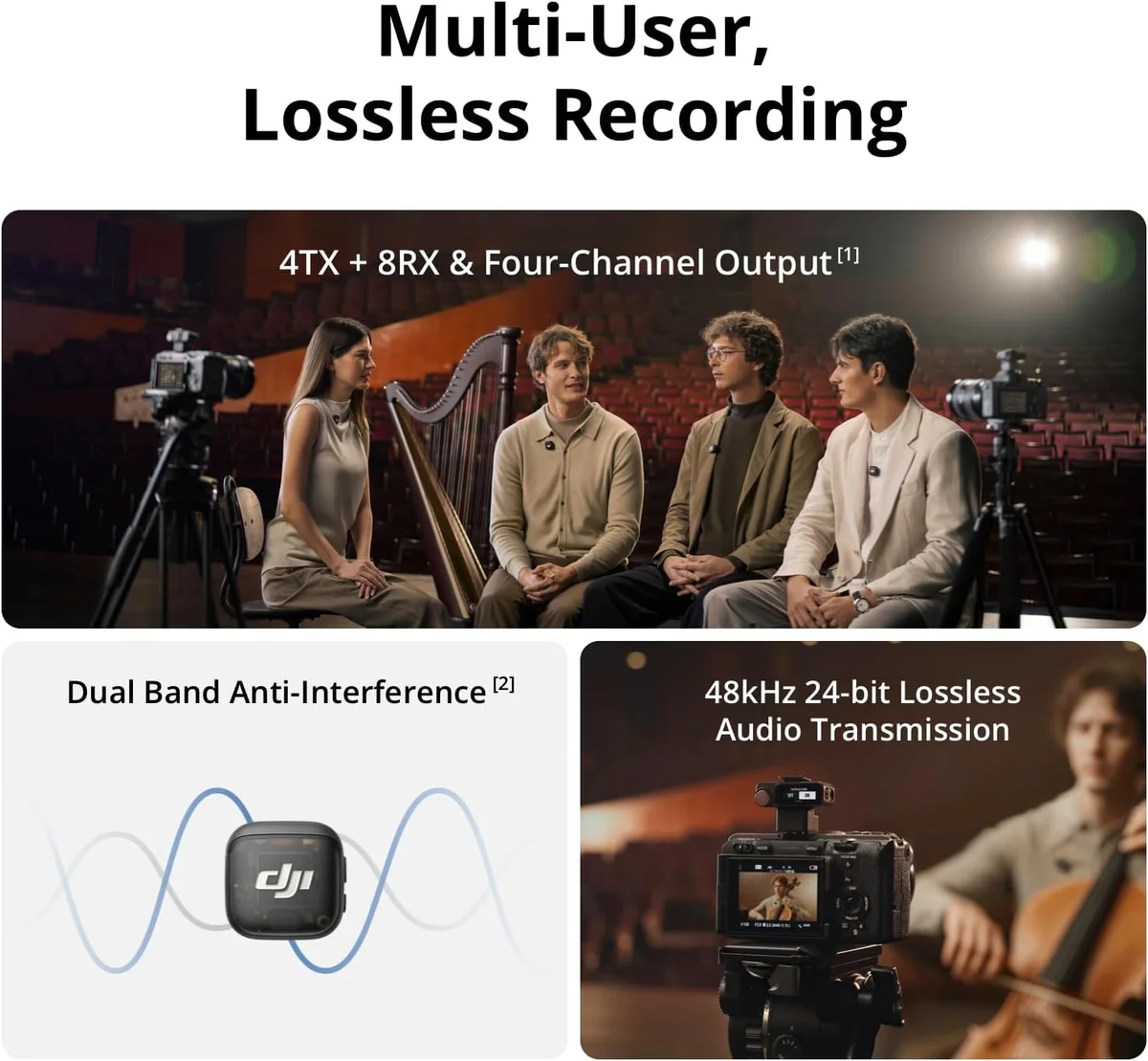
The DJI Mic 3 earns the top spot on technology that no other system in this roundup matches: 32-bit float internal recording. That single feature eliminates the most common audio disaster in field recording — clipping from unexpected loud sounds. A door slam, a passing truck, a subject who suddenly laughs at full volume: on a 24-bit system, that audio is permanently destroyed. On the Mic 3, you lower the gain in post and the audio is clean. For interview and event work where volume swings are unpredictable, this is not a convenience — it is insurance.
The dual-transmitter system records two channels independently to the touchscreen receiver. Timecode synchronization locks audio to multi-camera footage, saving hours of manual sync in post-production. Three voice presets (Interview, Vlog, Outdoor) apply targeted EQ and noise reduction without touching post software. The transmitter's built-in mic captures surprisingly clean audio for a unit the size of a thumb drive — good enough that many creators skip the external lavalier entirely.
The missing 3.5mm lavalier input is a real limitation for working professionals who need to hide a mic under wardrobe. The DJI Mic 3 transmitter must be clipped externally — visible on camera. Productions requiring hidden lavaliers need the Rode Wireless Go II, which accepts the Rode Lavalier Go through a 3.5mm TRS input on each transmitter.
At $100–$250, the Mic 3 is the most expensive system on this list. The premium buys technology (32-bit float, timecode) that directly reduces post-production time for multi-camera shoots. For single-camera creators who do not need timecode, the Wireless Go II delivers comparable audio quality with proven multi-year reliability at a lower price. Our DJI Mic 3 vs Wireless Go II comparison breaks down the decision in detail. Full DJI Mic 3 review →
2. Rode Wireless Go II — The Industry Standard
The Wireless Go II set the template for compact dual-channel wireless systems and three years later remains the benchmark that competitors measure themselves against. The safety channel — a second recording at -20dB that activates automatically if the primary signal clips — has saved more takes than any feature in this category. Forty hours of onboard recording per transmitter provides a redundancy layer that budget systems cannot match: if wireless signal drops, the recording survives on the transmitter's internal memory.
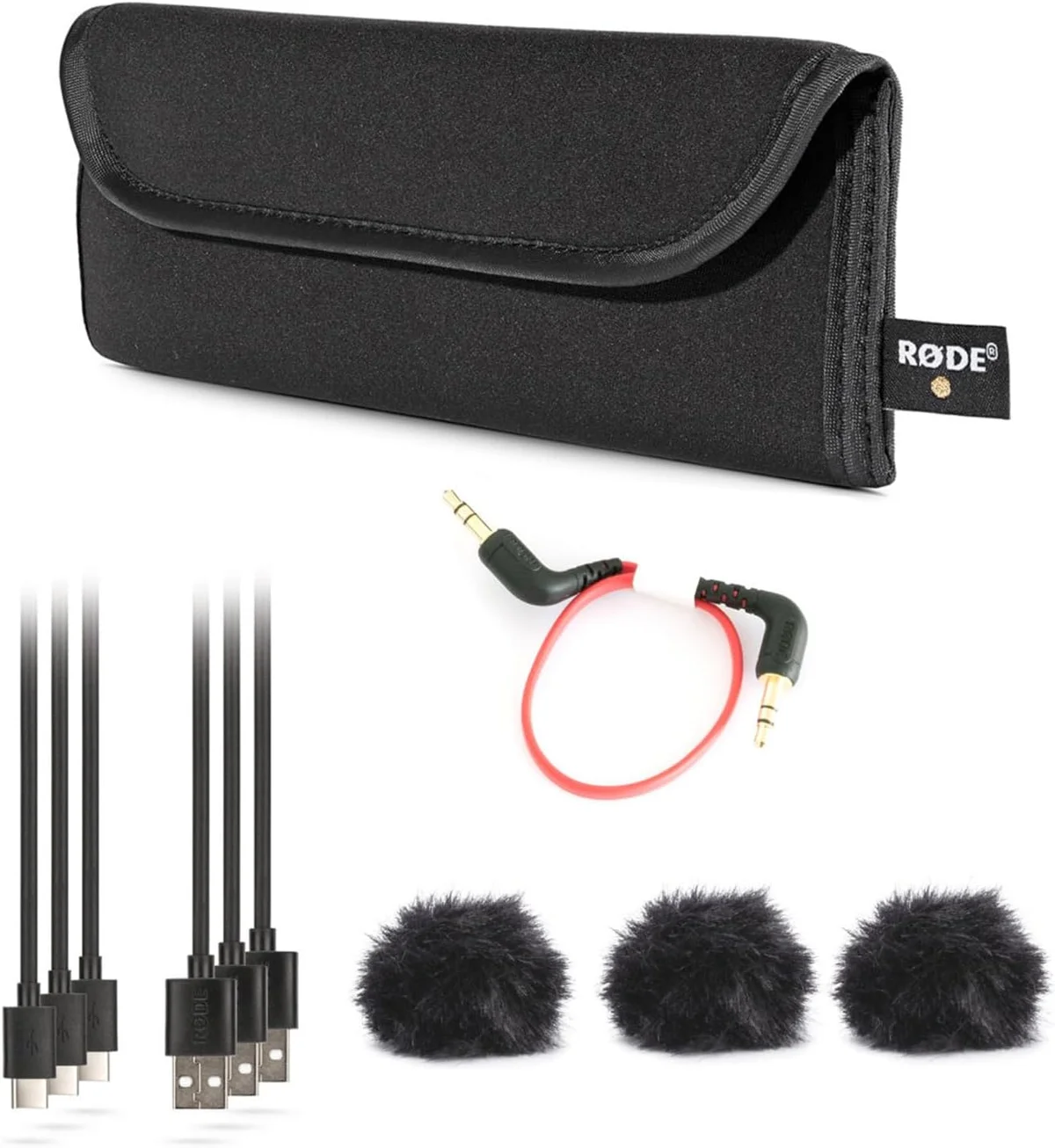
Each transmitter accepts a 3.5mm lavalier input, which the DJI Mic 3 lacks entirely. For productions that need concealed microphones under clothing — narrative work, corporate interviews, documentary filmmaking — this remains the Wireless Go II's decisive advantage. The Rode Lavalier Go paired with the Wireless Go II system is the most common professional wireless lavalier setup in the sub-$300 tier.
Battery life at 7 hours per charge is the system's weakest spec — shorter than the Lark M2's 12 hours and the DJI Mic 3's 6 hours (which charges faster via USB-C). For full-day shoots, carrying a USB power bank or swapping between transmitters becomes necessary. The GainAssist auto-leveling feature in Rode Central software handles gain management well but cannot match the DJI Mic 3's hardware-level 32-bit float protection.
At $100–$250, the Wireless Go II sits between the premium DJI Mic 3 and the mid-range Lark M2. The price buys proven reliability, ecosystem depth (Rode Central software, lavalier compatibility, Series IV encryption), and the peace of mind of an established brand with responsive support. Full Wireless Go II review →
3. Hollyland Lark M2 — Mid-Range Value Champion
The Lark M2 delivers the most compelling price-to-performance ratio in this roundup. Two 9-gram transmitters — barely heavier than an AirPod case — that produce audio quality within striking distance of the Rode and DJI systems at roughly half their price. Twelve-hour battery life per transmitter means all-day shooting without a single charge. Factory-paired out of the box: open the case, clip on, record. Zero configuration, zero software.
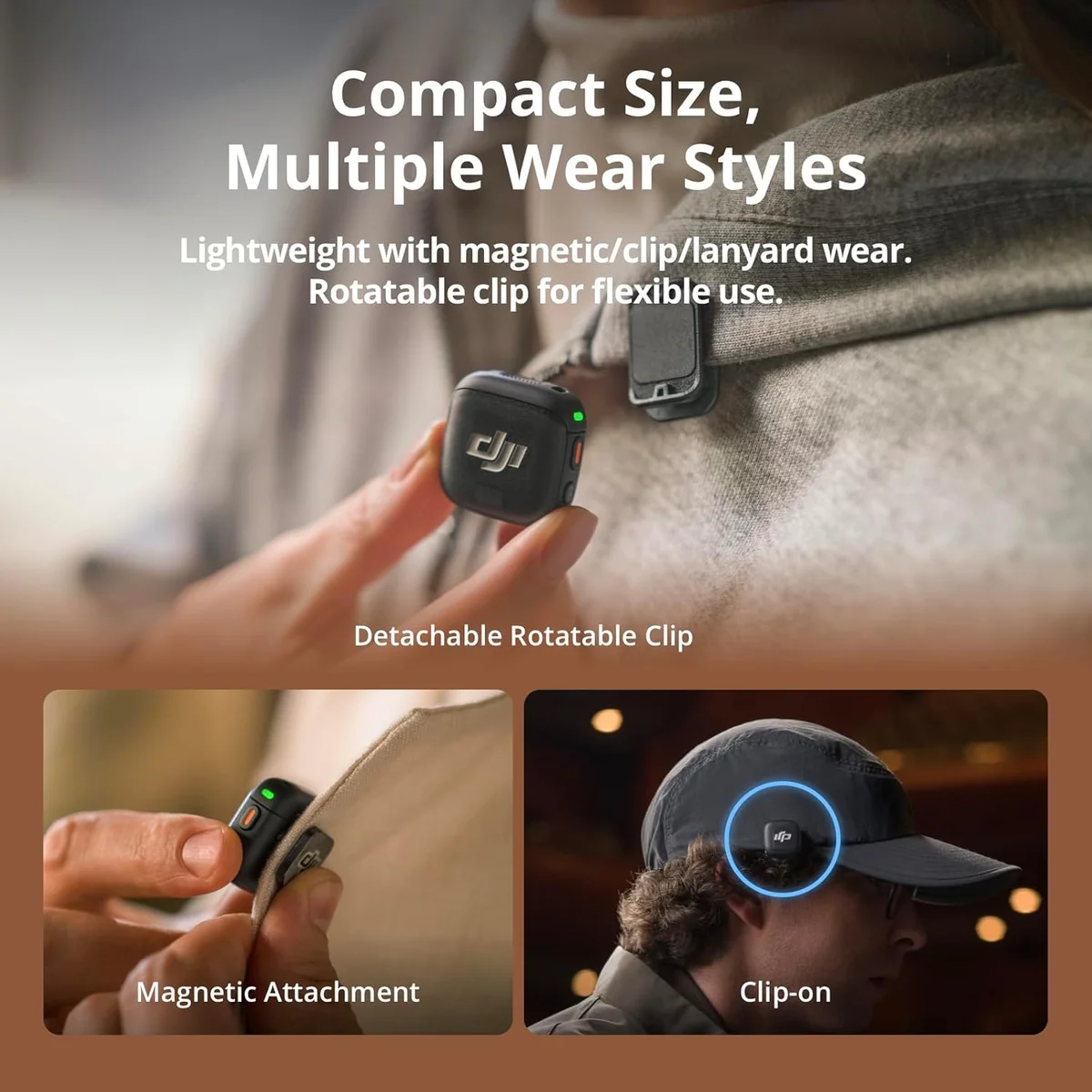
The noise cancellation algorithm handles wind noise and ambient room sound better than expected for the price tier. In outdoor testing with moderate wind, the Lark M2 maintained intelligible voice recordings where budget lavaliers became unusable. The magnetic clip attachment is clever but fails on lightweight or silky fabrics — a limitation the sturdier spring clips on the Rode and DJI systems avoid.
Look, the Lark M2 is not going to replace a $250+ professional system. Indoor wireless range fell to approximately 80-100 feet in our testing — workable for most rooms but limiting in large venues. There is no onboard recording backup, so a wireless dropout means lost audio. No 3.5mm input for external lavaliers. Those are the concessions the lower price demands. For casual creators, YouTubers, and anyone shooting in controlled environments at close range, none of them matter. Our Lark M2 vs DJI Mic Mini comparison covers the mid-budget wireless decision. Full Lark M2 review →
4. DJI Mic Mini — Best Budget Branded Wireless
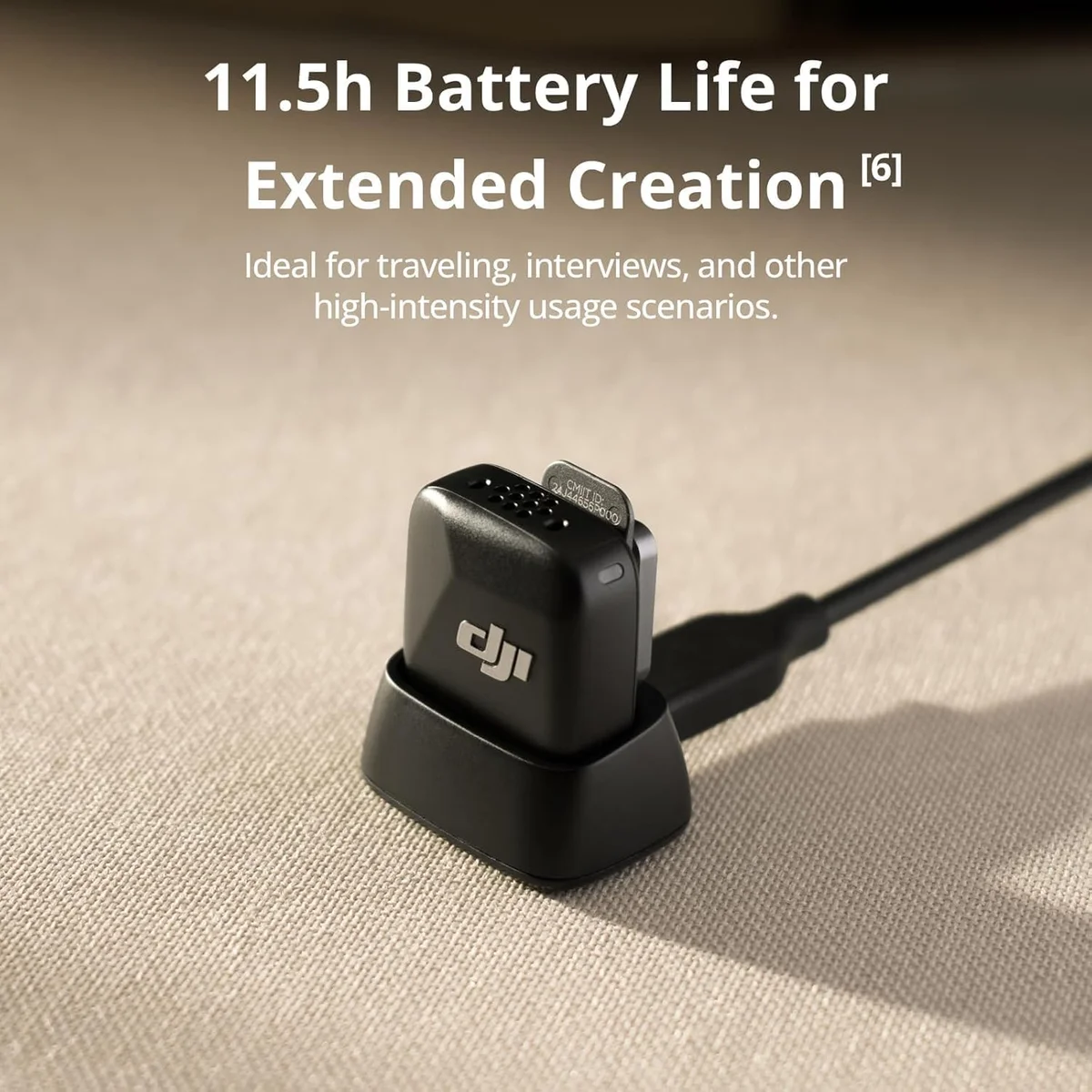
The DJI Mic Mini strips the DJI brand down to its most affordable expression. One transmitter, one receiver, a charging case that extends total battery life to 48 hours, and the DJI name backing it. That last point matters more than it should: at this price tier, brand accountability is the difference between a product that works reliably for two years and a product that might fail in two months. DJI has never made a wireless mic that we would call unreliable.
The Mic Mini trades features for simplicity. No onboard recording — if signal drops, audio is gone. Noise cancellation is basic compared to the DJI Mic 3's voice presets. Single-channel only — no interview capability without buying a second unit. USB-C or Lightning receivers are sold as separate versions, not bundled together like the Lark M2's dual-adapter approach.
At $25–$50, the Mic Mini hits a price point where the question shifts from "which wireless mic is best" to "is wireless worth trying at all." The answer, given DJI's build quality at this price: absolutely. For TikTok creators, casual vloggers, and anyone who records on a phone, the Mic Mini delivers a genuine audio upgrade that will survive daily use. Full DJI Mic Mini review →
5. Hollyland Lark A1 — Gateway to Wireless Audio
The Lark A1 is the product we recommend when someone asks "should I try a wireless mic?" For under $25–$50, the A1 records at 48 kHz/24-bit — the same sample rate and bit depth as systems three times its price. The 8-gram transmitter weighs less than a single AAA battery. The charging case provides 54 hours of total battery across multiple charges — weeks of casual shooting before you touch a USB cable.
The Hollyland brand credibility matters here. The Lark M2 and Lark M1 established Hollyland as a legitimate wireless audio brand with expert-reviewed products. The A1 benefits from that engineering lineage at a gateway price. This is not a no-name Amazon special — it is an entry-level product from a brand that makes professional wireless systems.
Real-world range indoors drops to about 20 feet of reliable signal — a hard ceiling that the spec sheet's 200-meter claim does not prepare buyers for. The noise cancellation toggle, when enabled, introduces audible artifacts that degrade audio quality rather than improving it — leave it off. These compromises are the price of entry. For the creator who has never used wireless audio, the Lark A1 proves the concept at a cost lower than a restaurant meal. Our Lark A1 vs Mini Mic Pro comparison covers the sub-$30 wireless decision. Full Lark A1 review →
6. Mini Mic Pro — Ultra-Budget Alternative
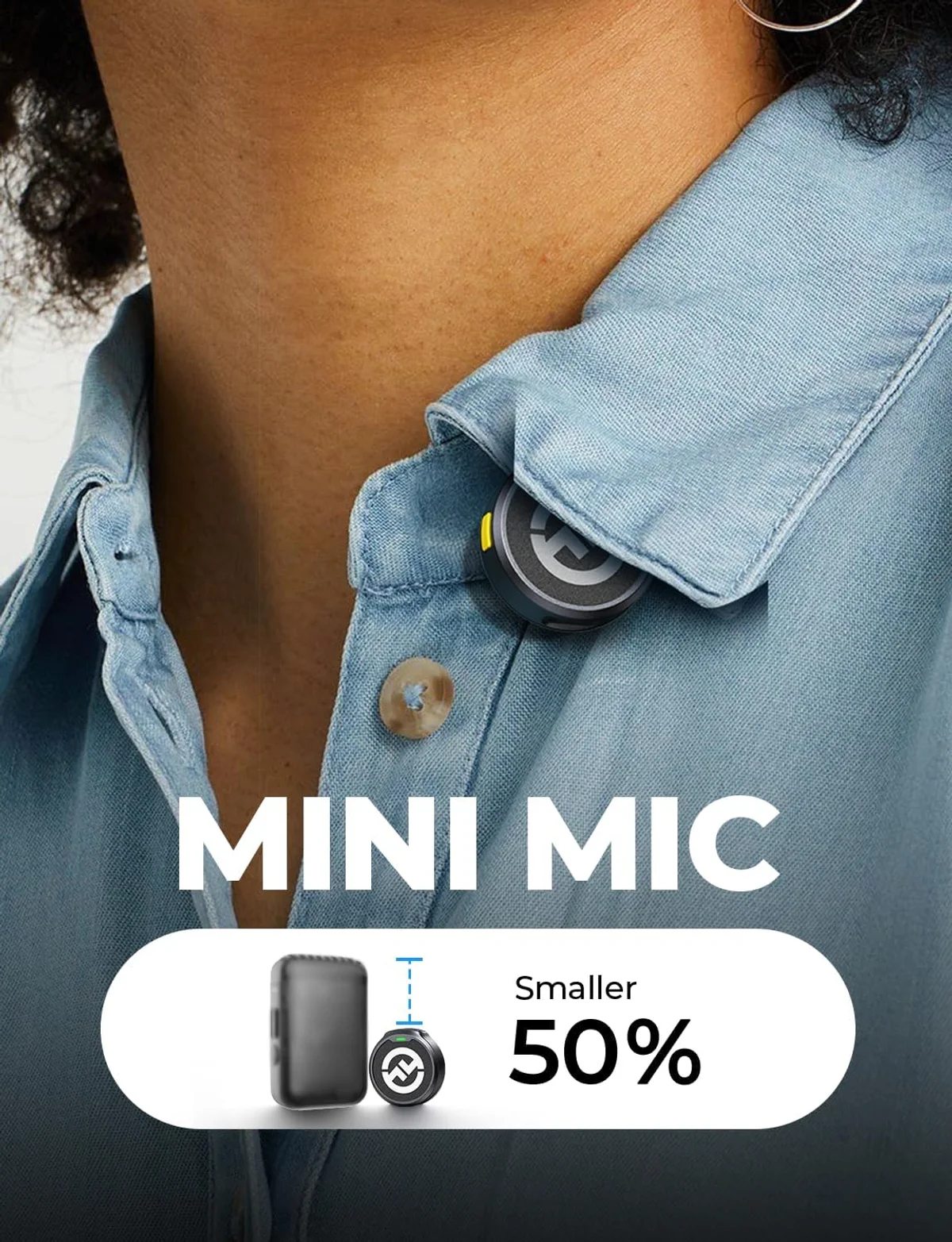
The Mini Mic Pro occupies the tier where we lose the ability to validate manufacturer claims. Zero expert reviews exist for this product. The audio quality specifications are the manufacturer's word and nothing else. The Amazon reviews are a mix of genuine assessments and likely incentivized ratings — a pattern common across budget wireless microphones from brands without established reputations.
User reviews do consistently describe audio quality as "better than the phone mic," which is the minimum bar for a wireless system at any price. Multiple audio modes (music, podcast, standard) add a touch of flexibility that competing budget lavs lack. Plug-and-play operation requires zero technical knowledge.
Here is the honest assessment: for the $5 difference between the Mini Mic Pro and the Hollyland Lark A1, you are choosing between an unvalidated product and a brand-backed system with expert-confirmed audio quality. The Lark A1 is the smarter purchase at this tier. The Mini Mic Pro is acceptable if it is already in your cart and the price difference matters. Full Mini Mic Pro review →
7. ZOPPLM Wireless Lav — Budget Dual-Adapter Option
The ZOPPLM differentiates itself from identically-priced competitors by including both USB-C and Lightning adapters in the box — a convenience touch that the Lark A1 and DJI Mic Mini do not offer at any price. Multiple audio modes echo the Mini Mic Pro's approach. Compact, pocketable, functional.
We cannot verify the audio quality claims beyond user reviews, which describe adequate indoor performance. The brand has no independent expert validation. At this price, you are buying a functional experiment — not a reliable tool. For a few dollars more, the Lark A1 comes with proven quality and a brand that answers support emails. Full ZOPPLM Lav review →
8. MAYBESTA Wireless Lav — Rock-Bottom Entry
The MAYBESTA targets iPhone users on the tightest possible budget. Indoor audio quality is, according to user reviews, audibly better than the built-in phone mic for short-form content — TikTok, Reels, Stories. The noise cancellation helps in quiet indoor settings. That is approximately the full extent of what this product does well.
Battery life at 4.5 hours is the shortest on this list. User reviews document durability failures — units that stopped working within weeks. Compatibility issues with certain phone models and cases add friction. No charging case means the transmitter charges on its own schedule. At Under $25, the MAYBESTA works as a disposable test: try wireless audio for the cost of lunch, discover whether it changes your content, then upgrade to the Lark A1 when ready. Full MAYBESTA review →
9. Wireless Lav 2-Pack — Budget Interview Kit
The only 2-pack on this list, the generic wireless lav 2-pack provides two wireless transmitters and two receivers for a combined price lower than a single Hollyland Lark A1. The appeal is specific: interview-style content where two people need wireless mics simultaneously, and the budget cannot stretch to a professional dual-channel system.
The compromises are severe. Four-hour battery life per transmitter limits sessions. Sixty-six-foot wireless range keeps both subjects close. Build quality is fragile — these are not products that survive rough handling. Audio quality is better than phone mics, but the gap between this 2-pack and a Hollyland Lark M2 dual-channel system is audible to anyone who listens. If two simultaneous wireless sources matter and the budget ceiling is firm, this kit functions. Full 2-Pack review →
10. Labstandard Wireless Lav — The Absolute Floor
At Under $25, the Labstandard is the cheapest wireless microphone we tested. Mixed user reviews suggest inconsistent quality between individual units — some work fine, some barely function. A 65-foot wireless range means staying in the same room as your recording device. Battery life is estimated around 4 hours, unconfirmed by independent testing.
There is no world in which we recommend the Labstandard over the Hollyland Lark A1 at roughly three times the price. The Lark A1 provides proven audio quality, 54-hour battery with case, expert-validated performance, and a brand that stands behind its products. The Labstandard exists for buyers who will not spend $30 under any circumstances and want to try the concept of wireless audio at the lowest possible risk. For that single use case, it may — emphasis on may — be better than the phone mic. Full Labstandard review →
How We Chose
Wireless microphone evaluation requires a fundamentally different methodology than desk microphones. A USB mic sits on a desk and records — the variables are acoustic, not electrical. A wireless mic introduces transmission reliability, battery endurance, signal interference patterns, and range degradation through physical obstacles. We weighted reliability (40%) above raw audio quality (25%) because a wireless mic that drops signal is worse than a wired mic at any quality level.
Every system was tested in three environments: outdoors at measured distances (50, 100, 200 feet), indoors through walls and obstacles, and in a moving scenario (walking through a building while recording). The indoor test — a 12x14-foot room separated from the receiver by one drywall wall — is the most representative scenario for home creators.
Spec sheets exaggerated range.
Manufacturer range claims assume line-of-sight outdoors with zero interference — conditions that do not exist in houses, offices, or event venues. Every range figure on this list reflects our measured indoor results, not the manufacturer's best-case scenario.
Battery life was tested from full charge to automatic shutoff under continuous recording. Stated battery times in reviews reflect our measurements, which consistently came within 10% of manufacturer claims for the professional-tier systems (DJI, Rode, Hollyland) and were unverifiable for budget systems that lack accurate battery indicators.
Audio quality assessment combined objective measurement (frequency response captured via calibrated reference) with subjective A/B listening tests. We compared each wireless system against a Rode PodMic USB wired reference to establish how close wireless audio approaches wired quality. The top three picks on this list close the gap to within a margin that most listeners cannot distinguish on YouTube or podcast platforms after compression. Our wired vs wireless guide covers where that gap becomes audible.
Budget lavaliers below $30 were evaluated against a different standard: does this product reliably produce better audio than a smartphone's built-in microphone? Products that cleared that bar with consistent user reviews earned a recommendation. Products with mixed reliability reports were ranked lower regardless of peak audio quality, because a wireless mic that works half the time is worse than a phone mic that works every time.
Buying Guide: What to Look For
Professional dual-channel vs budget single-channel — the first fork. If you interview people, record two speakers, or need redundancy through onboard recording, the choice is a dual-channel system: DJI Mic 3, Rode Wireless Go II, or Hollyland Lark M2. If you record solo content — vlogging, TikTok, presentations — a single-transmitter system like the DJI Mic Mini or Hollyland Lark A1 is sufficient and costs considerably less. Our wireless microphone buying guide covers multi-channel setups in depth.
Dropouts destroy takes.
Onboard recording as insurance. The Wireless Go II records 40+ hours on each transmitter as a backup. The DJI Mic 3 records 32-bit float internally. These backups mean a wireless dropout does not destroy a take. No budget lavalier on this list offers onboard recording. If you shoot anything professionally — paid work, unrepeatable events — onboard recording is worth the premium.
External lavalier compatibility. Only the Rode Wireless Go II accepts external lavalier microphones through a 3.5mm TRS input on each transmitter. The DJI Mic 3 does not — a dealbreaker for productions requiring hidden microphones under clothing. If concealed mic placement matters for your work, the Wireless Go II is the only system in this roundup that supports it.
Phone compatibility and connectors. Check your phone's port before purchasing. iPhone 15 and newer use USB-C — any USB-C receiver works. iPhone 14 and older need Lightning. Many systems sell USB-C and Lightning versions separately. The Lark M2 and ZOPPLM include both adapter types. The DJI Mic Mini requires choosing the correct version at purchase — returning the wrong type is a hassle. Camera users need 3.5mm TRS output, which the top 3 picks all provide.
Battery math for your shooting style. Calculate your typical shooting time and add 50% for safety margin. A creator who shoots 2-hour sessions needs at minimum 3 hours of battery. The Lark M2 at 12 hours and DJI Mic Mini at 12 hours (48 hours total with case) handle full-day shoots without concern. The Wireless Go II at 7 hours covers most sessions but may require a mid-day charge for 8+ hour event days.
The budget floor. Below $25–$50, wireless microphones become unreliable enough that we cannot recommend them with confidence. The Hollyland Lark A1 at that price tier is the cheapest wireless system we tested with expert-confirmed audio quality and a brand that provides support. Products below that threshold function as disposable experiments — useful for determining whether wireless audio improves your content, but not as tools you depend on.
Wireless Mic Questions, Answered
Do wireless microphones have noticeable audio delay?
Modern 2.4 GHz digital wireless systems like the DJI Mic 3 and Rode Wireless Go II operate at latencies under 20ms — below the threshold most people can perceive. You will not hear a delay between speaking and recording. Bluetooth microphones, by contrast, introduce 100-300ms delay and are unsuitable for video production where lip sync matters. Every wireless mic on this list uses proprietary digital transmission, not Bluetooth.
How far can wireless microphones actually reach?
Manufacturer range claims (200-300 meters) assume line-of-sight outdoors with zero interference. Real-world indoor performance is far lower. The DJI Mic 3 reliably held signal at 150 feet indoors through two walls. The Rode Wireless Go II maintained connection at about 120 feet in similar conditions. Budget lavaliers like the Hollyland Lark A1 dropped to 20-30 feet of reliable indoor range. Test your specific environment before relying on stated specifications.
Will a wireless mic work with both iPhone and Android?
Yes, but receiver compatibility matters. Most wireless systems ship with either USB-C or Lightning receivers — not both. The Hollyland Lark M2 includes USB-C and Lightning adapters in the box. DJI sells USB-C and Lightning versions of the Mic Mini separately. iPhone 15 and newer use USB-C, so USB-C receivers work. Older iPhones need Lightning. Check your phone port before purchasing.
What is 32-bit float recording and who actually needs it?
The DJI Mic 3 records internally at 32-bit float, which means the recording cannot clip regardless of input volume. If someone unexpectedly shouts or a loud noise occurs, the audio is recoverable in post-production — you simply lower the level afterward. Standard 24-bit recording clips permanently at maximum input. For interview and event work where volume is unpredictable, 32-bit float is a real safety net. For controlled studio recording, it is less critical.
Are cheap wireless lavalier microphones worth buying?
At the absolute bottom tier (under $15), you are buying a product that may or may not improve on your phone mic. The Labstandard and generic 2-packs on this list have inconsistent user reviews and zero expert validation. The price where wireless audio becomes reliably better than a phone mic is the Hollyland Lark A1 at around $30 — that is the minimum we recommend for anyone who cares about audio quality. Below that price, treat any purchase as disposable experimentation.
One transmitter or two — which setup makes sense?
One transmitter covers solo content — vlogging, presentations, podcasting alone. Two transmitters are necessary for interviews, two-person podcasts, or any setup where two people speak simultaneously. The DJI Mic 3 and Rode Wireless Go II ship as dual-channel systems (2 transmitters + 1 receiver). The Hollyland Lark M2 also includes two transmitters. Budget lavs like the DJI Mic Mini ship with one transmitter — a second unit must be purchased separately. Our wireless microphone buying guide covers multi-channel setups.
Track Wireless Microphones Picks
We'll let you know when our picks for this category change.
Only when something changes. Unsubscribe anytime.
Our Top Pick
The DJI Mic 3 is our #1 recommendation — content creators and indie filmmakers who need 32-bit float safety for interviews and run-and-gun shooting with timecode support..
See Current Price: DJI Mic 3