Microphone Polar Patterns Explained
Why Pattern Matters More Than You Think
Every microphone has a polar pattern — a three-dimensional map of where it picks up sound and where it ignores sound. Two mics with identical capsules and frequency response curves will produce different recordings in the same room if their patterns differ. One captures your voice. The other captures your voice, your keyboard, the air conditioner, and the neighbor's dog.
Most creators fixate on USB vs XLR, dynamic vs condenser, and brand reputation. The polar pattern gets buried in a specs table and skipped entirely. That is a mistake. The pattern determines what reaches the capsule in the first place — every other spec operates on the signal after pickup. A mic with a perfect frequency response still sounds terrible if it captures sounds you do not want.
Here is the thing: most microphones ship with a cardioid pattern, and for most creators that is the correct default. But "most" is not "all." The wrong pattern for your recording scenario introduces problems that no amount of post-processing can fix. Noise gates, EQ, and AI noise removal are all working against physics when the mic captured the wrong sounds at the source.
We tested and reviewed over 20 microphones across every price tier. The pattern mismatch — creators using the wrong pattern for their scenario — accounts for a disproportionate share of negative user reviews. A cardioid mic used for a three-person roundtable picks up two of the three voices poorly. An omnidirectional mic on a gaming desk captures every mechanical keyswitch. The fixes are not expensive or complicated. They start with understanding the shapes above.
Cardioid: The Default for 90% of Creators
Cardioid (from the Latin "cardia" — heart) describes a heart-shaped pickup pattern. The mic captures sound from directly in front with full sensitivity, gradually reduces sensitivity to the sides, and rejects almost everything from the rear. At 180 degrees — directly behind the mic — rejection is at its maximum, typically -20 to -30 dB below the on-axis sensitivity.
This pattern exists because most recording scenarios involve one sound source (your voice) positioned in front of the mic, with unwanted sounds arriving from every other direction. Cardioid solves that geometry by design.
Cardioid Strengths
- Maximum rejection directly behind the mic (keyboard, monitors)
- Good side rejection — gradually drops off from 0 to 180 degrees
- Proximity effect adds bass warmth at close range (4-6 inches)
- Works in untreated rooms without picking up excessive room reflections
Cardioid Weaknesses
- Off-axis coloration — sounds from the side change tonal quality, not just volume
- Only captures one speaker position — cannot share between two people
- Proximity effect can muddy low-end if mic technique is inconsistent
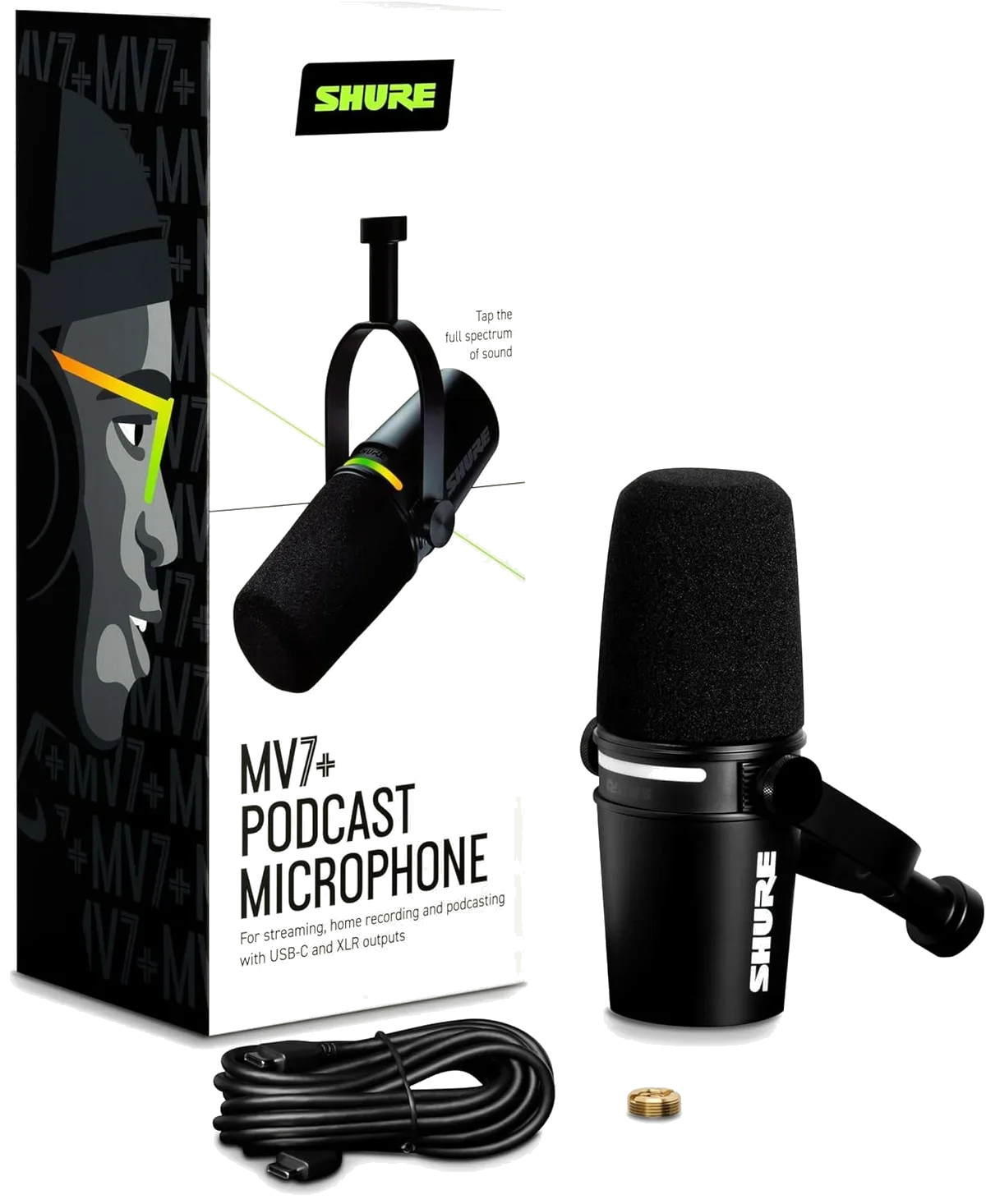
The Shure MV7+ broadcast cardioid dynamic uses a fixed cardioid pattern optimized for close-range speech. The Rode PodMic USB broadcast dynamic does the same. The Elgato Wave:3 streaming condenser and the Samson Q2U budget dual-connectivity dynamic — both cardioid. These mics do not offer pattern switching because they do not need to. For solo creators at a desk, cardioid is the complete answer.
Omnidirectional: Pick Up Everything, Everywhere
An omnidirectional pattern picks up sound equally from all 360 degrees. No front, no back, no rejection zone. The mic treats every direction the same.
Look, this sounds like a terrible idea for most home recording — and it is. An omnidirectional mic on a desk captures your voice, the keyboard behind you, the TV in the next room, and the refrigerator humming through the wall. In an untreated room, omnidirectional is the worst possible choice for solo voice recording.
But it has specific, powerful uses.
A cardioid mic would favor the person sitting in front and reject the person sitting behind. Omnidirectional treats all positions equally. The Blue Yeti in omnidirectional mode handles four-person roundtables where buying four separate mics is not practical.
Film sound designers and foley artists need the full spatial character of a room. Music producers recording acoustic instruments in a treated studio want the room ambience mixed into the instrument tone. Omnidirectional captures the space, not just the source.
Omnidirectional mics exhibit almost no proximity effect — the bass boost that cardioid mics produce at close range. For vocalists who move while singing or speakers who cannot maintain consistent mic distance, omnidirectional delivers a more even tonal response regardless of position.
Bidirectional (Figure-8): Two Sides, Zero Sides
Bidirectional — also called figure-8 — picks up sound from directly in front and directly behind the mic while rejecting sound from the sides. The pickup shape looks like the number 8 viewed from above, with the mic at the center.
When Figure-8 Works
- Two-person interviews: host and guest sit facing each other with the mic between them, each speaking into one side
- Mid-Side recording: a studio technique pairing a cardioid mic with a figure-8 mic for variable stereo width in post-production
- Side noise rejection: maximum rejection at 90 and 270 degrees — if your noise sources are to the left and right, figure-8 rejects them better than cardioid
Where Figure-8 Fails
- Solo recording at a desk — the rear lobe picks up whatever is behind the mic (monitor, wall reflections)
- Noisy rooms — two open pickup lobes means twice the surface area exposed to ambient noise compared to cardioid
- Group recordings with 3+ people — the side rejection zones create dead spots where participants cannot be heard
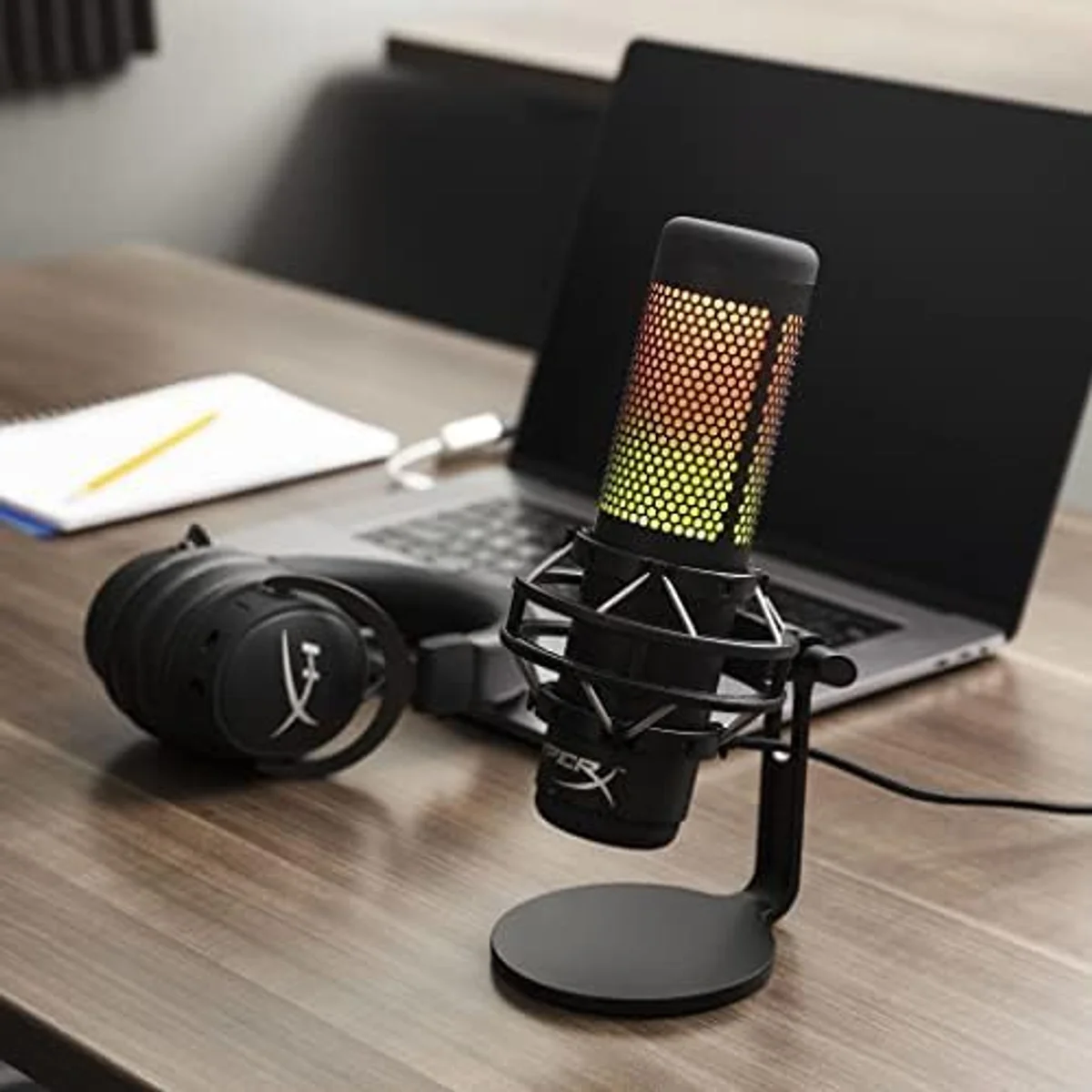
The Blue Yeti's bidirectional mode and the HyperX QuadCast S figure-8 setting both produce usable two-person interview recordings. The key is mic placement: position the mic sideways between the two speakers so each person faces one lobe. Sounds simple. In practice, getting equal volume from both sides requires the speakers to sit at matched distances — and most interview setups are not that precise.
Stereo: Left-Right Spatial Imaging
Stereo mode uses two capsule elements to capture separate left and right channels, producing a spatial audio image that places sounds in a left-to-right field. The result is wider, more immersive audio compared to the mono output of cardioid, omni, or bidirectional patterns.
Two content types benefit from stereo capture more than any others.
ASMR creators need spatial positioning. A whisper panning from left to right ear, fingernails tapping on one side then the other — these triggers depend on directional audio that mono recording cannot produce. The Blue Yeti stereo mode is the entry point for ASMR creators who want spatial audio without investing in a matched pair of XLR condensers and a stereo bar.
Acoustic instrument recording is the other major use. A stereo mic placed 12-18 inches from an acoustic guitar captures the body resonance from one capsule and the string attack from the other, producing a natural stereo image that sounds closer to sitting in front of the player. A mono cardioid mic captures both elements summed together, losing the spatial separation.
For spoken word content — podcasts, streams, voiceover — stereo adds width without adding value.
A podcast listener wearing headphones does not benefit from your voice appearing 20% to the left. Mono cardioid keeps the voice centered and focused, which is what spoken content needs.
Super-Cardioid: Tighter Rejection, Smaller Sweet Spot
Super-cardioid is a narrower version of cardioid. The front pickup area is tighter — roughly 115 degrees compared to cardioid's 130 degrees — and side rejection is stronger. The trade-off is a small rear lobe: super-cardioid picks up a narrow sliver of sound from directly behind the mic, where standard cardioid rejects it entirely.
Most creators never encounter this pattern unless they specifically go looking for it.
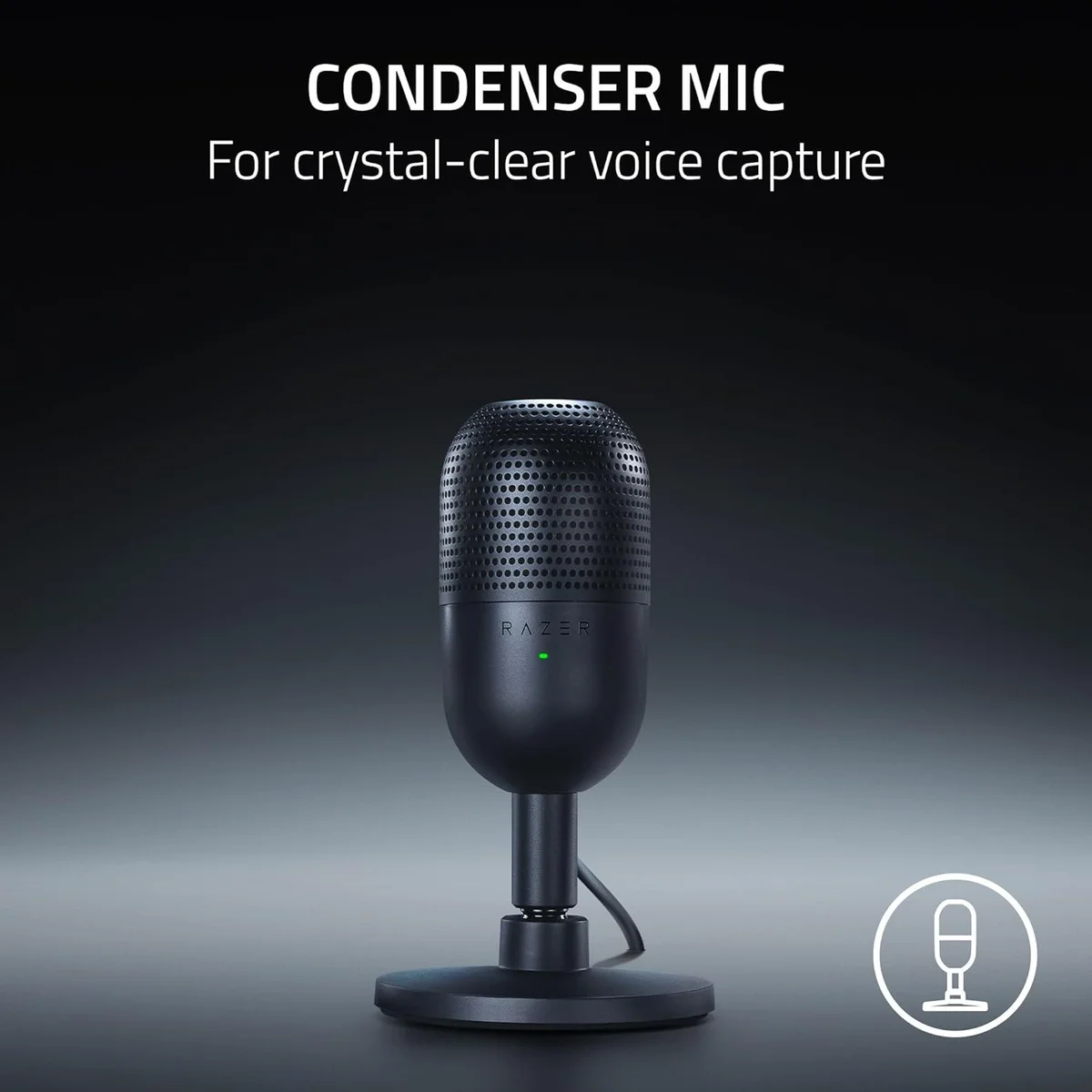
The Razer Seiren V3 Mini super-cardioid condenser uses this pattern. The tighter front pickup means it captures a smaller area in front of the mic with higher isolation, which helps compensate for the condenser capsule's inherent sensitivity. The result is a condenser mic that handles moderately noisy rooms better than wider-pattern condensers — though not as well as a dynamic mic with standard cardioid.
The practical implication: super-cardioid mics demand more precise positioning. With standard cardioid, you can shift a few inches left or right and stay in the pickup zone. Super-cardioid punishes off-axis movement more aggressively. Creators who move around while talking — looking at a second monitor, turning to grab notes — will notice volume drops that cardioid would mask.
Multi-Pattern Mics: Flexibility at a Price
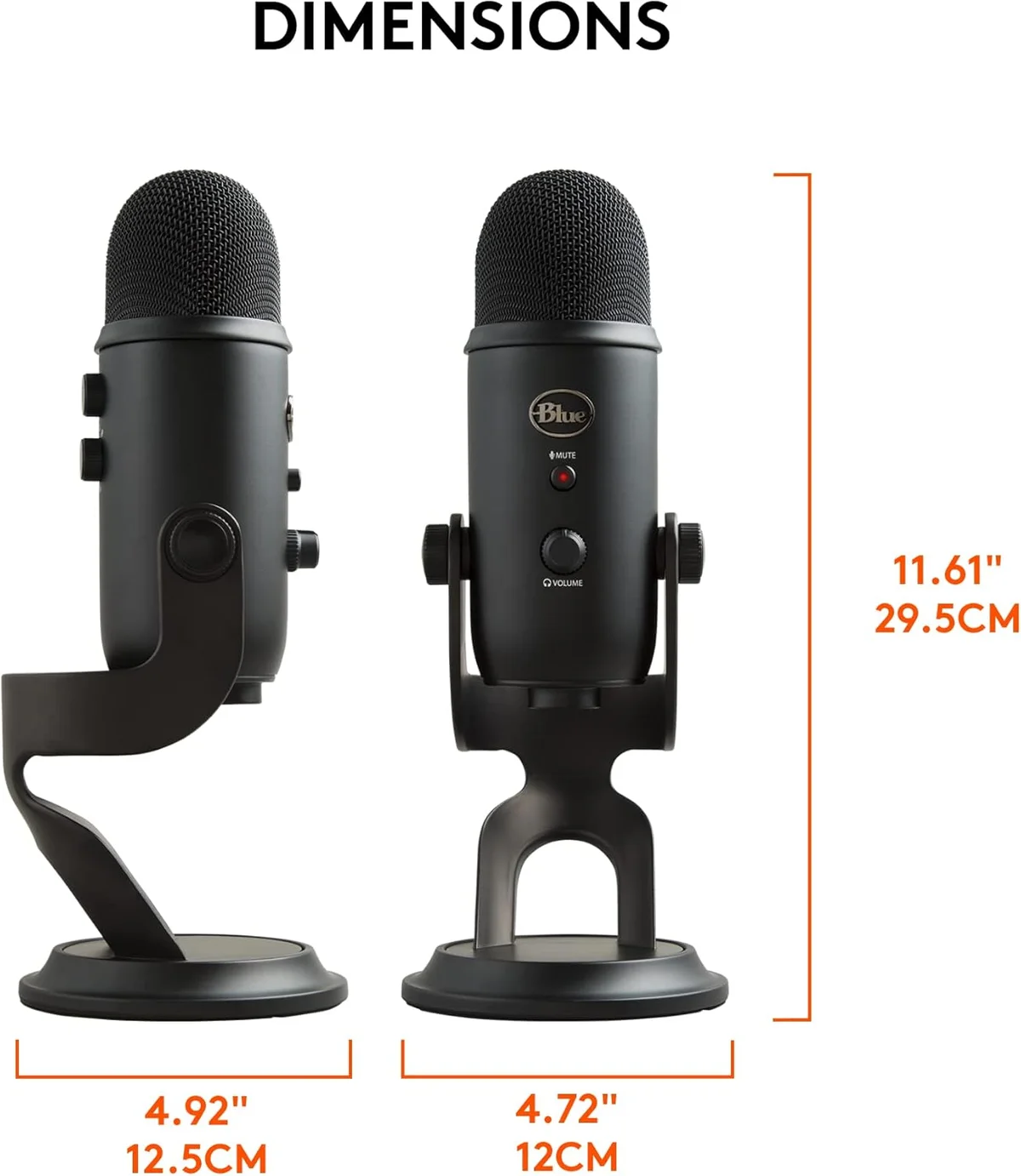
A few USB microphones offer switchable polar patterns — multiple capsule elements that can be combined electronically to produce different pickup shapes. The Blue Yeti four-pattern USB condenser and the HyperX QuadCast S multi-pattern gaming condenser both include cardioid, omnidirectional, bidirectional, and stereo from a single mic body.
The benefit is obvious: one mic handles podcasting (cardioid), roundtable recording (omni), interviews (bidirectional), and ASMR (stereo). No need to buy four separate microphones.
The cost is less obvious. Multi-capsule mics are physically larger because they house three capsule elements in a triangular arrangement. They are heavier, which limits boom arm compatibility. And each individual pattern is slightly compromised compared to a dedicated single-pattern mic — the Blue Yeti in cardioid mode does not reject off-axis sound quite as well as the Shure MV7+ dedicated cardioid or the Rode PodMic USB single-pattern dynamic.
Here is our honest take: if you are a solo creator who records one type of content at a desk, a single-pattern cardioid mic will outperform a multi-pattern mic at the same price. The multi-pattern premium buys flexibility you may never use. If you record multiple content formats — solo podcasts, guest interviews, ambient field recordings, ASMR — the Blue Yeti's four patterns save you from buying multiple mics and the QuadCast S adds gaming features like tap-to-mute and RGB lighting to the same pattern flexibility.
Matching Pattern to Recording Scenario
The decision tree is shorter than the internet makes it seem. Every recording scenario maps to one optimal pattern. Here is the reference grid we use.
If your scenario is not on that grid, default to cardioid. It is the safest general-purpose pattern, and switching to a different pattern later (on a multi-pattern mic) costs nothing. Starting with omnidirectional or bidirectional and realizing you need cardioid means re-recording everything — or buying a second mic.
Off-Axis Rejection: The Hidden Performance Metric
The polar pattern diagram shows the theoretical sensitivity at each angle. In practice, there is a second layer: off-axis coloration. This is how the mic's frequency response changes for sounds arriving from outside the primary pickup area.
A mic with good off-axis rejection attenuates off-axis sounds evenly across the frequency spectrum. The keyboard behind a cardioid mic gets quieter, but it still sounds like a keyboard — just distant. A mic with poor off-axis rejection attenuates some frequencies more than others, producing a filtered, hollow quality to off-axis sounds. The keyboard sounds like a keyboard recorded through a tin can.
This matters because no real room produces sound from only one direction. Even a solo speaker generates reflections off walls, the desk surface, and the ceiling. Those reflections arrive off-axis. A mic with clean off-axis rejection handles them gracefully. A mic with harsh off-axis coloration adds a boxy, colored quality to the recording that EQ cannot fix because it varies with each reflection angle.
Among the mics in our catalog, the dynamic mics (Shure MV7+, Rode PodMic USB, Samson Q2U) generally exhibit cleaner off-axis rejection than the condensers. This is another reason dynamics perform better in untreated rooms — not just sensitivity differences but smoother off-axis behavior. Our MV7+ vs Blue Yeti comparison puts this difference in sharp relief.
Understanding polar patterns is one piece of a broader microphone selection process. The QuadCast S vs Blue Yeti comparison directly contrasts two multi-pattern mics with different strengths. The QuadCast S vs Wave:3 comparison pits multi-pattern flexibility against single-pattern optimization — a decision that only makes sense once you understand what each pattern does.
The pattern question has a short answer for most creators: cardioid, unless you have a specific scenario that demands otherwise. If you need flexibility, the Blue Yeti four-pattern condenser gives you every mode in one mic. If you need the best possible cardioid performance, a single-pattern mic like the Shure MV7+ broadcast dynamic or Rode PodMic USB is the better investment. Match the pattern to the scenario, not the brand to the budget.
Our Top Pick for Multi-Pattern Recording
Compare Side by Side
Frequently Asked Questions
What polar pattern is best for streaming?
Cardioid. It captures your voice from the front and rejects sound from the rear and sides — keyboard clicks, fans, roommates. Every dedicated streaming mic ships in cardioid by default because it solves the exact problem streamers face: isolating one voice at a desk.
Can an omnidirectional mic work for podcasting?
Only for roundtable podcasts with 3+ people sitting around the mic. For solo podcasting or two-person setups where both hosts have their own mic, omnidirectional picks up too much room noise and ambient sound. Cardioid is the standard for individual podcast mics because it focuses on the speaker directly in front.
How do multi-pattern mics switch between four modes?
They house three condenser capsules arranged in a triangular array. By activating different capsule combinations and adjusting their phase relationships, the mic produces cardioid, omnidirectional, bidirectional, and stereo pickup patterns from a single body. This multi-capsule design is why four-pattern mics are physically larger than single-pattern mics, which need only one capsule for their fixed cardioid pattern.
Is super-cardioid better than cardioid?
It depends on mic placement. Super-cardioid rejects more sound from the sides but picks up a small lobe of sound from directly behind the mic. If your noise sources are to the left and right (keyboard, second monitor speakers), super-cardioid wins. If noise comes from behind the mic (a door, a window), standard cardioid provides better rear rejection.
Do USB mics let you change polar patterns?
Most do not. A few multi-capsule mics are exceptions — they offer four switchable patterns via a physical selector on the mic body. The majority of USB mics ship with a fixed cardioid capsule. To change patterns, you need a mic with multiple capsule elements designed for pattern switching.
What is off-axis rejection?
Off-axis rejection describes how well a microphone attenuates sounds arriving from angles outside its primary pickup area. A cardioid mic has maximum rejection at 180 degrees (directly behind). A super-cardioid has maximum rejection at roughly 125 degrees to each side. Higher off-axis rejection means less background noise in your recordings, assuming the noise source sits in the rejection zone.
Our Top Recommendation
Based on our research, the Blue Yeti is our top pick — beginners who want a single mic for multiple recording scenarios in a quiet, treated room. strong for asmr stereo mode..
Get Our Top 3 Picks
Get our top 3 picks for your budget — one email, then only updates.
Only when something changes. Unsubscribe anytime.