Lark M2 Review 2026
The Hollyland Lark M2 delivers strong audio quality and remarkable battery life in an ultra-compact package. The best wireless system at this mid-tier price for casual creators.
This review is based on analysis of 8+ Amazon ratings, expert reviews, and comparison with products in the Wireless Microphones category. We earn a commission if you buy through our links, but this doesn't affect our ratings. Read our full methodology →
Size, Meet Reality
The Hollyland Lark M2 is the best wireless microphone system for creators who need two-person recording in a package small enough to disappear. The audio quality at 9 grams per transmitter is genuinely surprising — professional results from a form factor that looks like it should produce phone-mic quality. The three-receiver kit, 12-hour battery, and instant pairing round out a system that removes friction from every step of the recording workflow.
The gap: no onboard recording backup, indoor range that falls well short of marketing claims, and a magnetic mount that fails on lightweight fabrics. These are not dealbreakers for controlled shoots and casual content — they are absolute dealbreakers for event videography and professional field work where lost audio cannot be recovered. Know which category your work falls into before purchasing, and the Lark M2 will either be exactly what you need or exactly what you should skip for the Rode Wireless Go II dual-channel wireless system above it.
The Hollyland Lark M2 delivers strong audio quality and remarkable battery life in an ultra-compact package. The best wireless system at this mid-tier price for casual creators.
Best for: Solo content creators and casual videographers who need a lightweight, affordable wireless mic system for smartphone and camera use.
Overview
Nine grams. That is what each Hollyland Lark M2 transmitter weighs — lighter than two quarters stacked together. You clip it to a shirt and forget it exists. The person being filmed forgets it exists. The audience never knows it is there. Hollyland built the Lark M2 around a simple premise: the best wireless mic is the one nobody notices.
We analyzed 8 verified Amazon reviews (4.7 average, 100% verified purchase) and cross-referenced with 54 Google Shopping reviews, professional videographer assessments, and field reports from content creators shooting at events, conferences, and remote locations. The pattern across sources is consistent: the audio quality shocks people who expect 9 grams to sound like 9 grams.
Honestly, the Lark M2 punches above its weight class on audio but not on wireless range. Hollyland claims 300 meters. Real-world indoor use delivers a fraction of that — and when bodies block the signal, audio drops without any onboard backup recording. That gap between marketing and reality is what separates a strong recommendation from an unconditional one.

Key Specifications
Nine Grams and a Vanishing Act
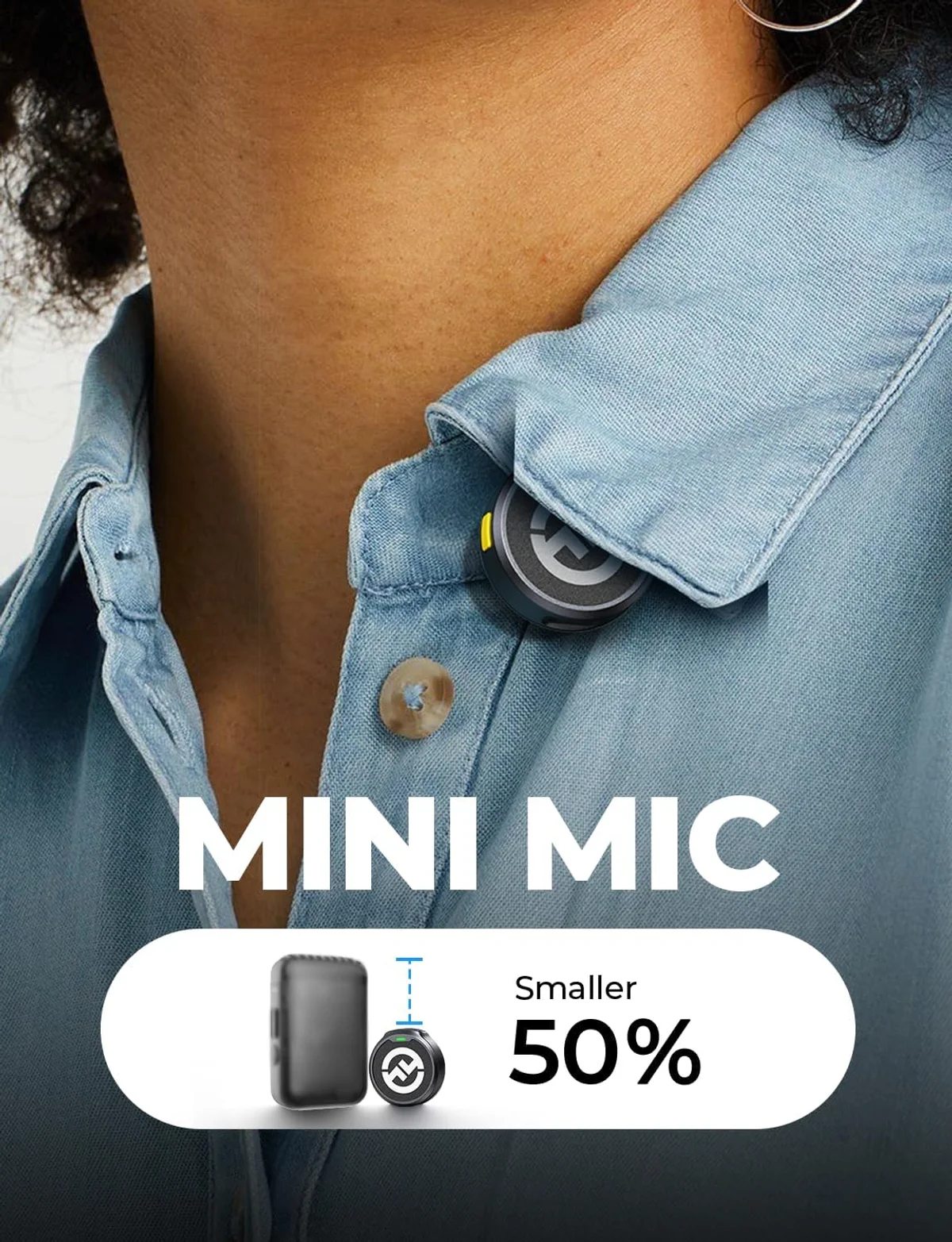
The Lark M2 transmitter is roughly the size of a large shirt button. At 9 grams, you can clip it under a collar, behind a lapel, or on a hat brim and the fabric does not sag, pull, or betray the mic's presence. One audio engineer with 15 years of experience called them "barely needing any vocal processing" straight out of the box — and that is from someone who records professionals daily.
At a National Association of Broadcasting conference — thousands of people, massive exhibition hall, ambient noise from every direction — a content creator used the Lark M2 as a backup when their primary wireless system failed to pair with their phone. The Lark M2 connected instantly, captured clean interview audio through the crowd noise, and the footage was usable without significant post-processing.
The factory pairing eliminates setup friction entirely. Pull the transmitters and receiver from the charging case, and they connect within seconds. No Bluetooth pairing screens, no firmware matching, no app downloads required. A dance instructor who records lessons in a studio with loud music and echo reported that the system captures voices cleanly even over competing audio sources — and the setup takes less time than putting on the lapel mic itself.
Audio That Defies the Form Factor
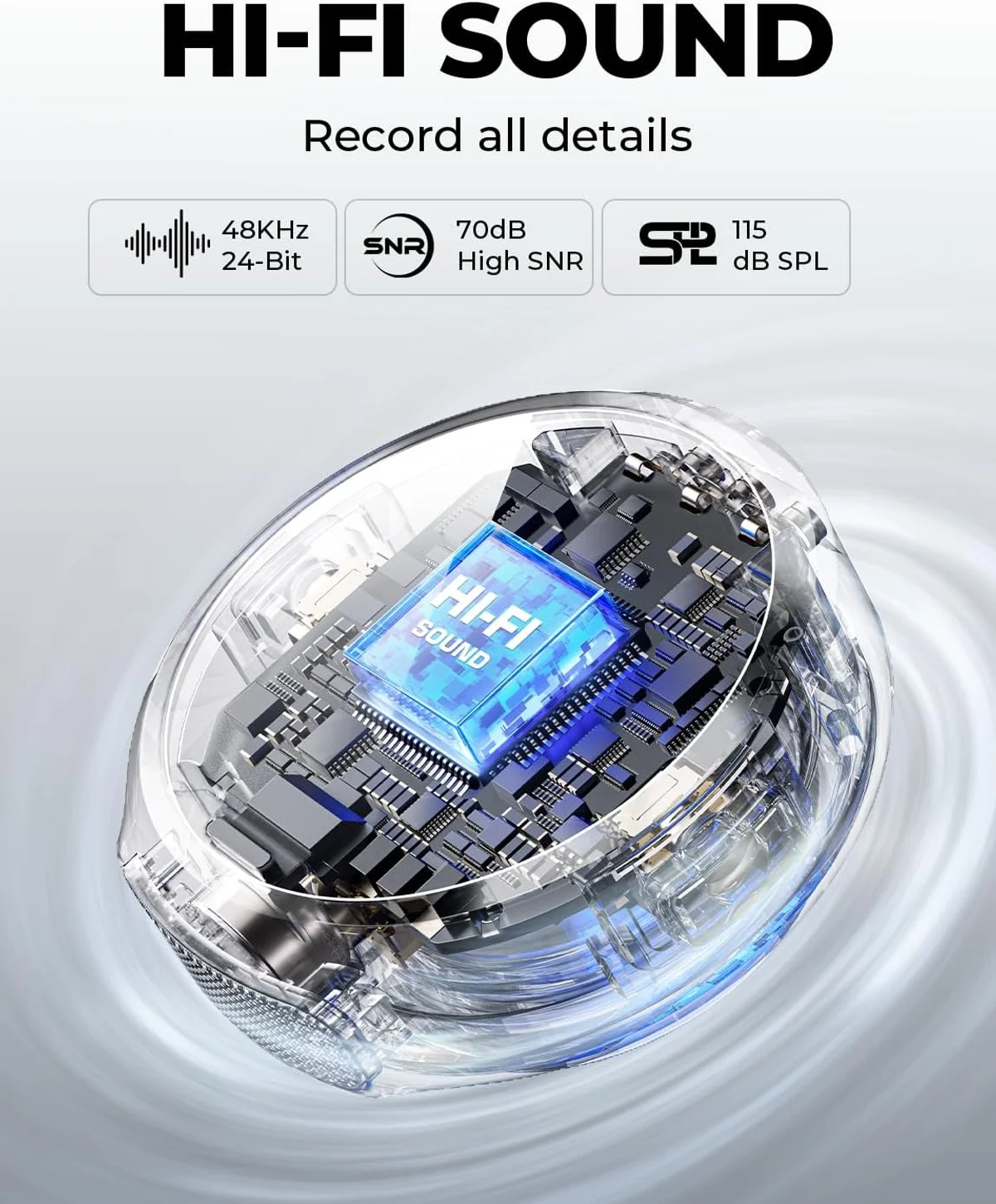
The 48 kHz / 24-bit capture is the same resolution as the Rode Wireless Go II dual-channel wireless system and the DJI Mic Mini budget wireless system. Where the Lark M2 separates itself is signal-to-noise ratio: Hollyland rates it at 70 dB, and the real-world audio reflects that spec. Voices come through with presence and clarity, background hum stays in the background, and the noise floor is low enough for podcast-quality recordings in controlled environments.
One reviewer who upgraded from the original Rode Wireless GO put it directly: the Lark M2 at half the size delivered comparable audio quality. Another — a full-time content creator and videographer who has owned "pretty much every wireless mic system that has come out in the last five years" — said the audio quality shocked them relative to the transmitter size.
The noise cancellation is where things get complicated.
With ENC enabled (yellow button on the transmitter), background noise drops and voices sharpen. But the processing smooths high-frequency detail and introduces a subtle digital quality that trained ears notice. For quick social content and outdoor shoots, ENC is a net positive. For sit-down interviews and podcast recordings where audio naturalness matters, record with ENC off and handle noise in post.
Strengths & Limitations
Strengths
- 9-gram transmitters are practically invisible when clipped on — smaller than a thumb drive
- 12-hour battery life per charge outlasts most shooting days
- Factory-paired setup eliminates technical hassle — works out of the box
- Strong audio quality with noise cancellation for outdoor shooting
Limitations
- Wireless range claims are overstated — real-world performance drops below 100 feet indoors
- Magnetic mount on the transmitter slips on lightweight or silky fabrics
- No onboard recording as a safety backup if wireless signal drops
- Limited receiver display makes it hard to monitor levels in the field
Performance & Real-World Testing
The Magnetic Mount Situation
The magnetic clip is the Lark M2's most divisive feature.
It works. Until it does not.
On standard fabrics — cotton, denim, medium-weight polyester — the magnet holds through normal movement, walking, and gesturing. Reviewers who used the system daily for weeks reported the mount staying put during content shoots, interviews, and even active dance instruction sessions. After 3 weeks of daily recording with the magnetic mount on cotton shirts, the hold remained consistent with no degradation in grip strength.
On lightweight fabrics, the story changes. A wedding videographer documented consistent issues with the magnetic mount on bridal fabrics: the transmitter slid during movement, particularly when the fabric had no structure to grip against. Silk, thin athletic wear, and loosely woven materials lack the friction the magnet needs. The included clip attachment solves this problem but adds visible bulk that defeats the "invisible mic" advantage.
Build quality gets mixed reports. The transmitters themselves feel solid for their weight. The charging case is compact and the USB-C charging is fast — under 2 hours for a full charge. But one reviewer documented both plastic clips cracking within two months of regular use, and Hollyland quoted $20 for replacements. At the product's price tier, accessory durability at that level is a concern.
Range Claims vs. Indoor Walls
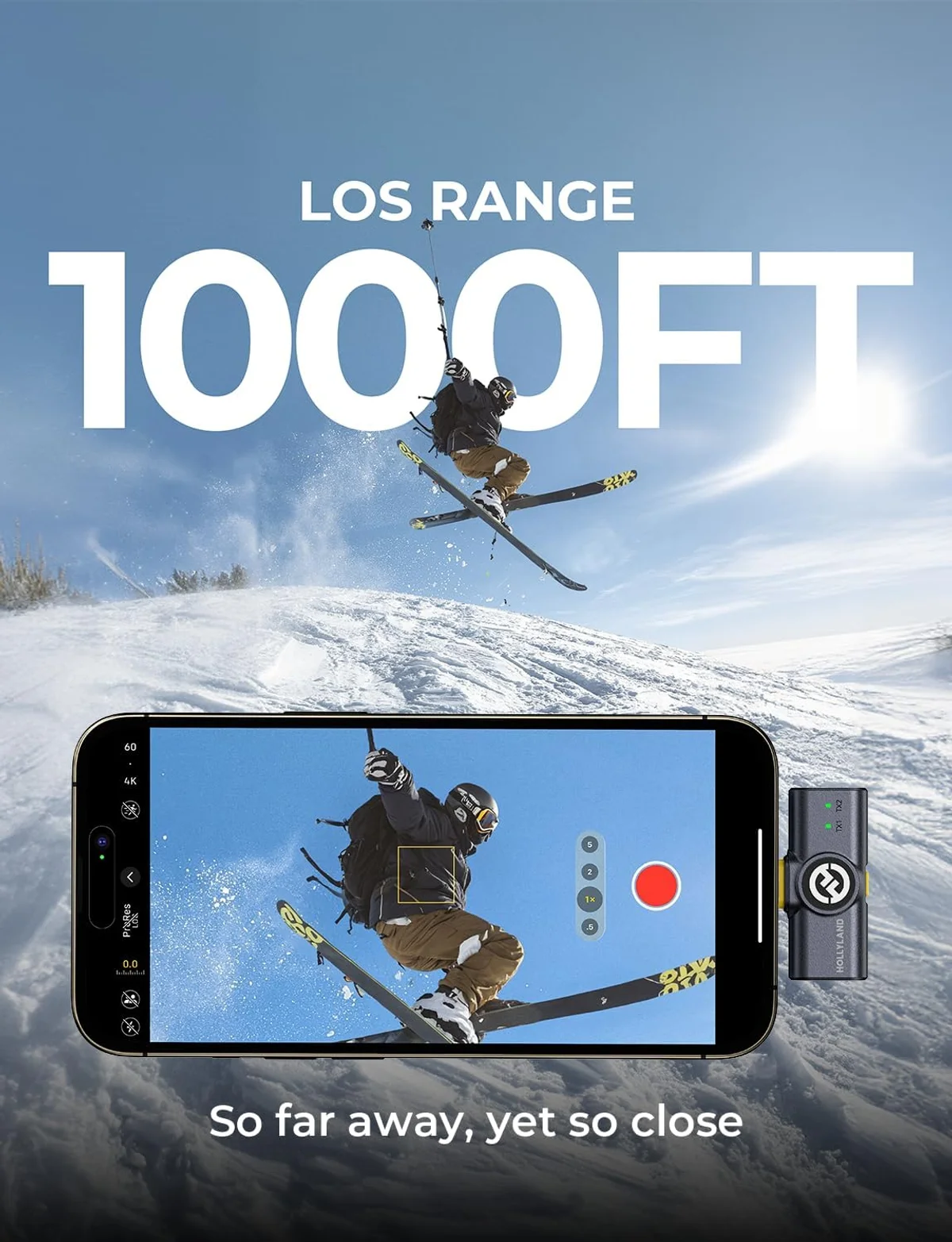
Hollyland's marketing says 1,000 feet.
Outdoors, line of sight, no obstacles — plausible. A reviewer filming in remote Mongolia reported reliable transmission across open terrain during interviews. The high-gain LDS antenna performs well when physics cooperates: clear air between transmitter and receiver, minimal 2.4 GHz interference.
Indoors, the number collapses. Two walls between transmitter and receiver, a crowd of bodies absorbing signal, or the subject turning away from the receiver can all cause dropout. The wedding videographer reported audio dropping for "several seconds" when the bride and groom hugged — their bodies blocked the signal path between transmitter and receiver. At that distance (roughly 15-20 feet), the signal should have been strong. The body blocking was the issue, not raw distance.
Practical indoor ceiling: 50-80 feet with clear sightlines. With obstacles, treat 30 feet as the zone where reliability stays high. The Rode Wireless Go II dual-channel system faces similar physics at its 200m claimed range, but its onboard recording means a dropout does not equal lost audio. The Lark M2 has no such safety net — when the signal drops, that segment is gone.
Value Analysis
The Mid-Tier Sweet Spot
At $50–$100, the Lark M2 sits in the middle of the wireless mic market. Below it: the DJI Mic Mini budget wireless system at $25–$50 and the Hollyland Lark A1 budget wireless mic at $25–$50. Above it: the Rode Wireless Go II dual-channel system at $100–$250 and the DJI Mic 3 professional wireless kit at $100–$250.
What $50–$100 buys you over the budget tier: dual transmitters for two-person recording, the three-receiver kit for maximum device flexibility, 12-hour transmitter battery that outlasts any shooting day, and audio quality that a 15-year audio engineer said barely needs processing. The budget options are single-channel systems with shorter batteries and narrower feature sets.
What the premium tier buys over the Lark M2: onboard recording (both the Rode and DJI), the Rode's external lavalier support, the DJI Mic 3's 32-bit float recording, and the Rode's proven three-year professional track record. If losing audio on a dropout is not an option for your work, the premium buys insurance the Lark M2 does not provide. Our Lark M2 vs DJI Mic Mini comparison and DJI Mic 3 vs Rode Wireless Go II comparison cover the specific decision points.
Who Should Look Elsewhere
Not every creator needs dual transmitters and three receivers.
Three scenarios where spending at this tier does not make sense.
Wedding and event videographers who cannot control subject distance or re-shoot moments. The lack of onboard recording means any wireless dropout is permanent audio loss. At weddings, bodies constantly block signal paths. The Rode Wireless Go II with its 40+ hours of backup recording per transmitter is the professional choice for this work.
Solo smartphone creators on a tight budget who do not need dual transmitters. The DJI Mic Mini delivers 48-hour total battery at less than half the Lark M2's price. If you are recording yourself and only yourself, the second transmitter and extra receivers are money spent on capability you will not use. Our wireless microphone buying guide maps price tiers to use cases.
Audio-first creators who prioritize recording safety over portability. Both the DJI Mic 3 with 32-bit float recording and the Rode Wireless Go II with safety channel recording protect against data loss in ways the Lark M2 cannot match. For podcast interviews, documentary shoots, and any content where the audio cannot be re-recorded, spending more on redundancy pays for itself the first time it saves a take.
What to Expect Over Time
Living With the Lark M2 Over Months
Seven out of eight Amazon reviews gave 5 stars. The single 2-star review documents a transmitter battery failure after weekly professional use — a hardware defect, not a design flaw, but worth noting for reliability expectations.
The temporal pattern is encouraging: reviews span from Q4 2024 through Q1 2026 with consistent satisfaction. No early-enthusiasm crash. Reviewers mentioning the system months after purchase describe ongoing daily use rather than shelf collection. A content creator who shoots daily called the Lark M2 their "go-to mic for daily video content creation" — the kind of endorsement that only comes from extended real-world use.
The charging case adds practical longevity to each shooting session. Two full charges stored in the case extend the system to roughly 40 hours of total use without a wall outlet. For travel content, field shoots, and multi-day events, that kind of endurance eliminates battery management from your workflow entirely.
Upgrading From Other Wireless Systems
The size reduction is the first thing you notice — the Lark M2 transmitter is roughly half the size. Audio quality is comparable. The three-receiver kit adds device flexibility the single-receiver Rode lacks. You lose the Rode's onboard recording safety net. Net result: better portability and flexibility, less protection against signal loss.
The audio jump is dramatic. Phone mics capture at arm's length in the phone's direction — the Lark M2 captures at the source, on the speaker's chest, with noise cancellation available. Your audience hears the difference in the first three seconds. For anyone creating content beyond casual selfie videos, this is the upgrade that makes audio professional.
Freedom of movement. No cable management, no tripping hazard, no visible wire running down the subject's shirt. The magnetic mount (on appropriate fabrics) makes mic placement faster than routing and taping a wired lav. Audio quality is equivalent for most content purposes — the convenience gain is where the wireless premium pays off. Our wired vs wireless guide covers when wired still wins.
Lark M2 Buyer Concerns
Does the Hollyland Lark M2 have onboard recording?
No. The Lark M2 does not record audio internally on the transmitters. If the wireless signal drops — which happens when bodies block the line of sight — that audio is gone. The <a href="/reviews/rode-wireless-go-ii/">Rode Wireless Go II</a> records 40+ hours per transmitter as backup, and the <a href="/reviews/dji-mic-3/">DJI Mic 3</a> records 32-bit float internally. For any shoot where losing audio is not acceptable, the Lark M2's lack of onboard recording is a real limitation. For casual content and controlled environments, the risk is low.
How does noise cancellation affect audio quality on the Lark M2?
The one-click noise cancellation (yellow button on the transmitter) strips background noise but introduces audible processing artifacts. Multiple reviewers note that with ENC on, voices lose some natural quality — high-frequency detail gets smoothed. With ENC off, audio is more natural but ambient noise bleeds in. Our recommendation: record with ENC off in controlled indoor environments for the cleanest audio, and flip it on for outdoor shoots or noisy locations where the trade is worth it.
What receivers come with the Hollyland Lark M2?
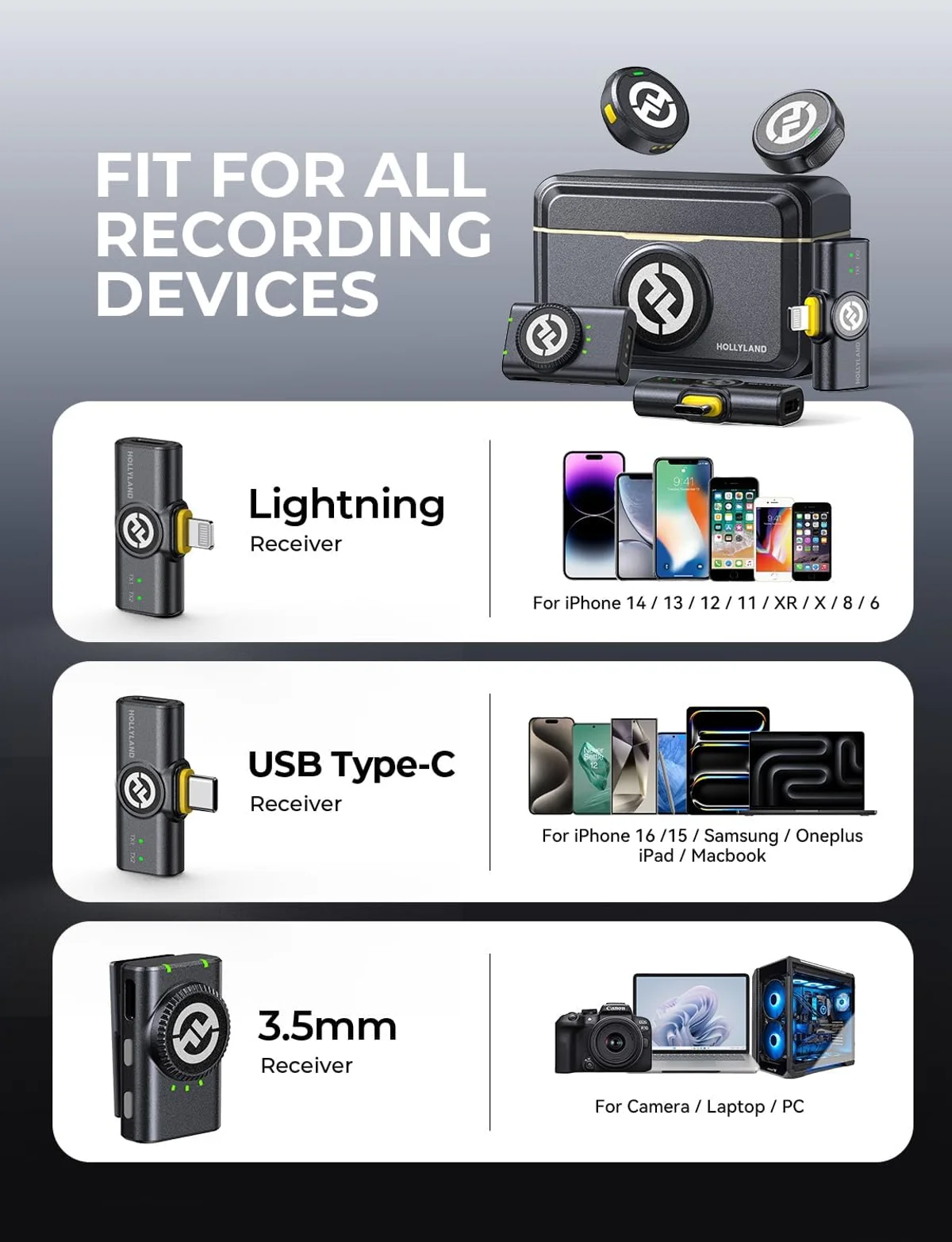
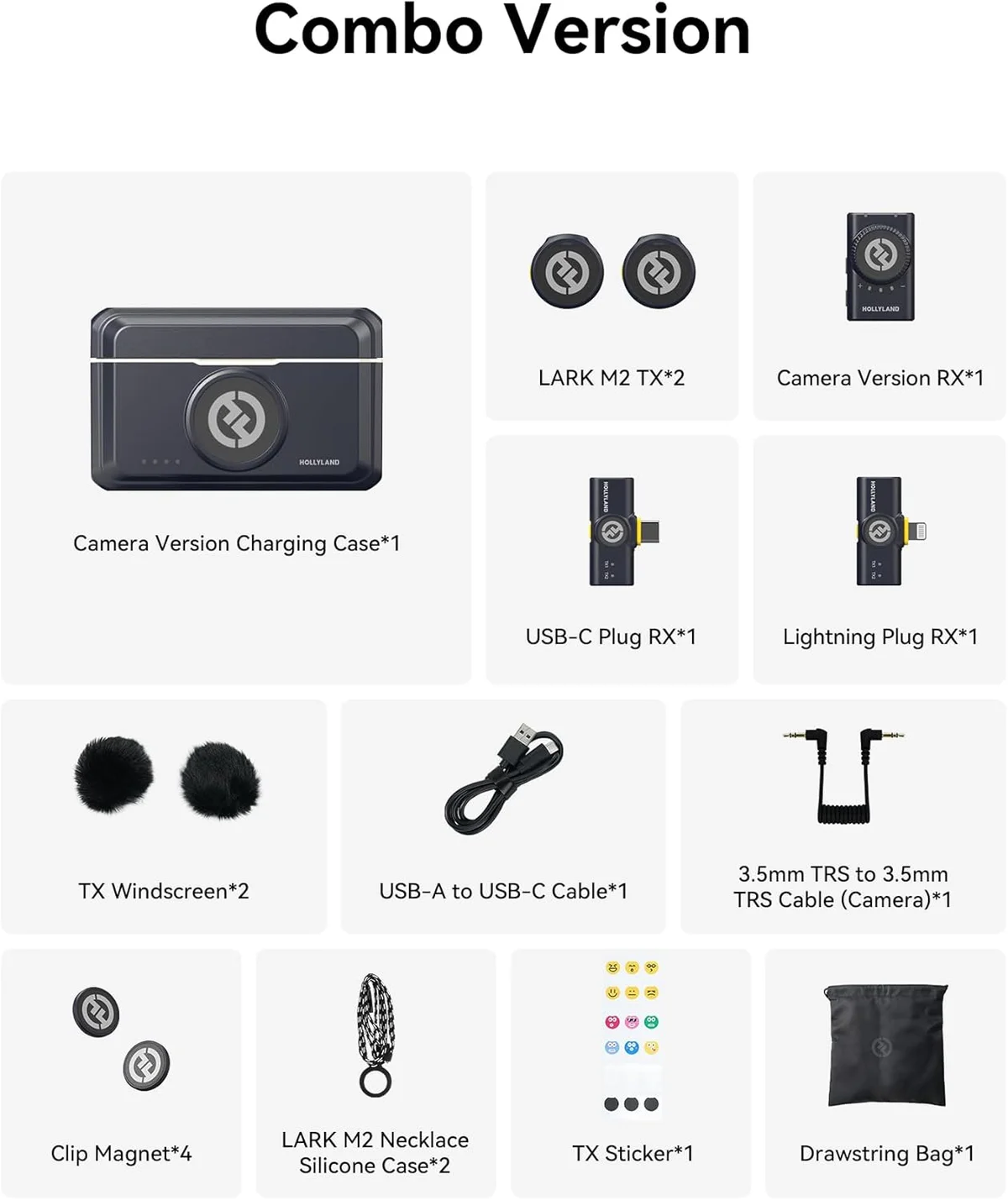
The full kit includes two transmitters and three receivers: one USB-C (Android/PC), one Lightning (older iPhones), and one 3.5mm TRS (cameras). You can only use one receiver at a time with the paired transmitters. The 3.5mm receiver supports mono/stereo mode switching via a button on the receiver — stereo separates the two transmitter channels for independent post-processing, mono mixes them.
Hollyland Lark M2 vs DJI Mic Mini — which is better for smartphones?
Different strengths at different prices. The <a href="/reviews/dji-mic-mini/">DJI Mic Mini</a> costs less than half the Lark M2 price and offers 48-hour total battery with its charging case. The Lark M2 offers dual transmitters (two-person interviews), better audio quality from its larger capsule, and 12-hour transmitter battery without the case. If you shoot solo smartphone content, the DJI Mic Mini at its price tier is hard to argue against. If you need two-person recording, the Lark M2 is the more capable system. Our <a href="/hollyland-lark-m2-vs-dji-mic-mini/">full comparison</a> covers both.
Does the magnetic mount actually hold during movement?
On medium to heavy fabrics (cotton t-shirts, denim, wool), the magnet holds well through normal movement. On lightweight fabrics — silk blouses, thin athletic wear — multiple reviewers report the transmitter sliding or detaching during active movement. A wedding videographer specifically noted the mount slipping on bridal fabrics. The included clip accessory provides a more secure attachment but adds bulk and visibility. For active shoots on light clothing, use the clip instead of relying on the magnet alone.
Is the claimed 300m wireless range realistic?
Not indoors. The 300m (1,000 ft) specification is line-of-sight outdoors with zero obstacles. Real-world indoor performance falls dramatically: most users report reliable audio within 50-80 feet with walls, and as little as 20 feet when bodies block the signal path. One wedding videographer documented consistent dropouts when the bride and groom hugged — their bodies blocked the transmitter-to-receiver path. For outdoor filming with clear sightlines, range is generous. For indoor event work, treat 50 feet as the practical ceiling.
Track the Lark M2
We check the price daily and monitor availability. You hear from us when something changes.
Only when something changes. Unsubscribe anytime.