Dynamic Workhorse vs Multi-Pattern Classic
The MV7+ wins for most creators — superior noise rejection, auto-leveling, and a build quality that justifies the premium. The Yeti wins if you need multiple polar patterns or record in a quiet, treated room where condenser detail matters.
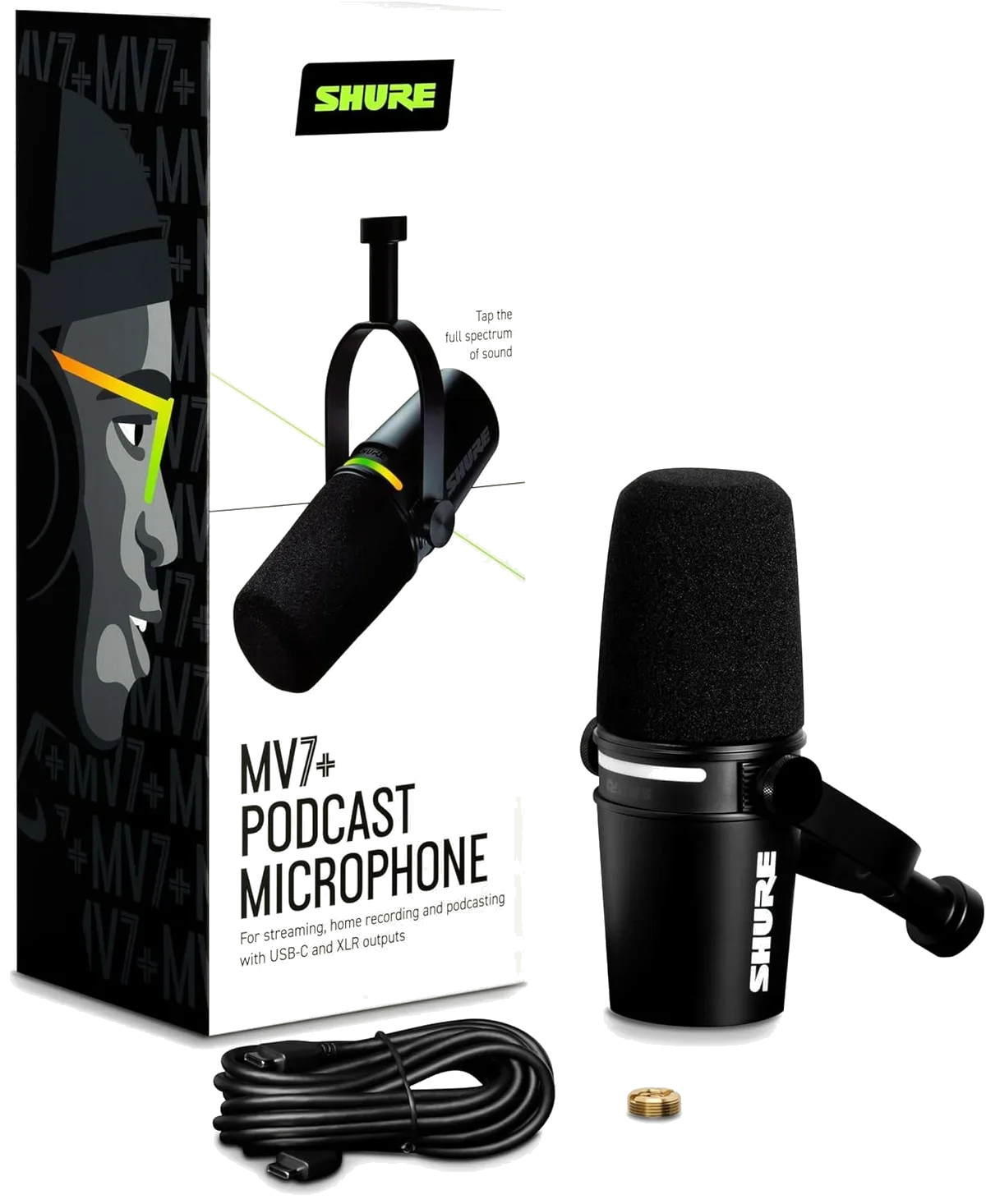
Shure MV7+
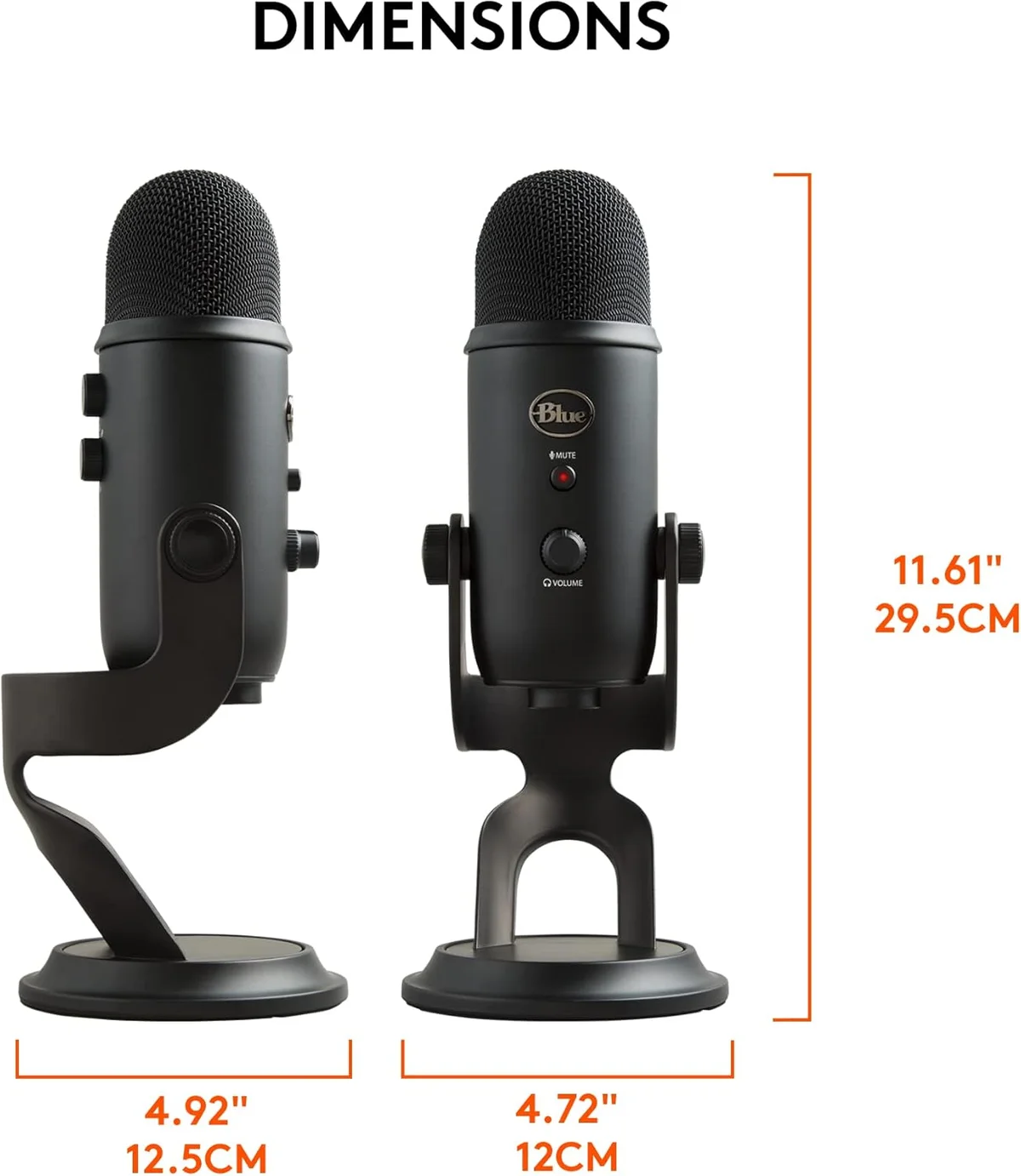
Blue Yeti
The Shure MV7+ and Blue Yeti represent fundamentally different approaches to USB audio. The MV7+ is a dynamic microphone with built-in intelligence: auto-leveling, real-time noise processing, touch controls, and a capsule designed to reject everything that is not your voice. The Blue Yeti is a condenser microphone with flexibility: four polar patterns that cover solo recording, interviews, room capture, and stereo recording from a single device. Same USB cable plugged into the same computer, but fundamentally different philosophies about what a microphone should prioritize.
This is not a close comparison. In untreated home environments — the rooms where most creators actually record — the MV7+ produces cleaner, more consistent audio with less post-production effort. The Yeti captures more detail in quiet rooms and offers pattern flexibility the MV7+ cannot match. The right choice depends on your recording environment first and your use case second. Our dynamic vs condenser guide covers the underlying technology.
Price separates them: the MV7+ at $250–$500 is roughly double the price compared to the Yeti at $100–$250. The premium buys workflow automation (Auto Level Mode, LED touch panel, real-time denoiser) and build quality (1.2 lbs of die-cast zinc alloy vs the Yeti's 1.03 lbs of metal and plastic). Whether that premium is justified depends on how often you record and how much post-production time you want to eliminate.
Both mics have been recommended by nearly every tech reviewer and podcast equipment list for good reason — they are both excellent USB microphones. The question is not "which is good" but "which is right for your specific recording environment, content format, and budget." The breakdown below covers eight comparison categories — audio quality, noise rejection, polar patterns, streaming, podcasting, workflow, build quality, connectivity, and value — to answer that precisely.
Shure MV7+Blue YetiAt a Glance
| Feature | Editor's Pick Shure MV7+ Podcast Microphone | Blue Yeti USB Microphone |
|---|---|---|
| Price Range | $250–$500 | $100–$250 |
| Type | Dynamic | Condenser (tri-capsule) |
| Polar Pattern | Cardioid | Cardioid, Bidirectional, Omnidirectional, Stereo |
| Frequency Response | 50 Hz – 16 kHz | 20 Hz – 20 kHz |
| Sample Rate | 48 kHz / 24-bit | 48 kHz / 16-bit |
| Max SPL | — | 120 dB |
| Connectivity | USB-C + XLR | USB |
| Weight | 1.2 lbs | 1.2 lbs (mic) + 2.2 lbs (stand) |
| See Current Price | See Current Price |
Audio Quality: Different Strengths
The MV7+ dynamic capsule produces warm, focused voice with a natural bass proximity boost at 4-6 inches. High frequencies roll off gently — which is actually an advantage for podcast and streaming audio that will be compressed for distribution. The frequency profile sounds "broadcast-ready" out of the box without EQ.
The Yeti condenser captures a wider frequency range with more high-frequency detail — vocal sibilance, breath sounds, acoustic instrument overtones. In a quiet room on quality headphones, the Yeti sounds more detailed and "open." That extra detail comes at a cost: the condenser also captures room reflections, keyboard clicks, HVAC hum, and ambient noise that the MV7+ ignores.
For raw audio fidelity in a treated room, the Yeti has a technical edge. For usable audio quality in a real home office — the environment where most content creators actually record — the MV7+ produces better results because it captures less noise alongside the voice signal. The subtle high-frequency detail that gives the Yeti an advantage in raw WAV files largely disappears after platform compression on YouTube, Spotify, and podcast platforms anyway.
Noise Rejection: The Deciding Factor
This is where the comparison stops being close. The MV7+ rejected mechanical keyboard sounds at 2-foot distance in our testing — zero keystrokes in the recording. The Yeti captured every keystroke clearly on the same desk at the same distance. The MV7+ ignored HVAC hum from a window unit running at low speed. The Yeti recorded it as a constant low-frequency presence underlying every sentence.
The physics are straightforward: a dynamic capsule's moving-coil diaphragm requires substantial air pressure to generate signal. Quiet ambient sounds — HVAC, the fridge humming two rooms away, the neighbor's dog — fall below the dynamic capsule's activation threshold. A condenser capsule's charged diaphragm responds to the slightest air pressure change. It captures those same ambient sounds alongside your voice, because that is what condensers are designed to do. Our dynamic vs condenser guide explains the underlying technology in detail.
The MV7+ adds a software denoiser on top of the dynamic capsule's natural rejection — a second layer that strips residual noise the hardware lets through. The result is a noise floor so low that silence between sentences sounds dead silent on headphones. The Yeti has no built-in noise processing; noise management happens entirely in post-production through software noise gates, EQ notch filters, and noise reduction plugins that add CPU overhead and processing artifacts.
If your recording space is acoustically treated and quiet — no HVAC, no mechanical keyboard, no ambient sound within 20 feet — this difference does not matter. If your space has any background noise at all, the MV7+ produces cleaner audio by a margin that no amount of Yeti post-production processing can fully close. Our background noise reduction guide covers both hardware and software approaches to noise management.
Polar Patterns: Yeti Wins Flexibility
The MV7+ offers one polar pattern: cardioid. It captures sound from the front and rejects sound from the sides and rear. For solo recording — one person, one mic, one voice — cardioid is the only pattern that matters.
The Yeti offers four: cardioid (solo), bidirectional (two people facing each other), omnidirectional (entire room), and stereo (spatial left-right). No other USB mic in our catalog matches this flexibility. For creators who record interviews face to face, group discussions, ambient sound, or stereo ASMR content, the Yeti covers scenarios that the MV7+ simply cannot.
Most creators use cardioid 90% of the time. If you fall in that majority, the Yeti's extra patterns are unused features that add no practical value. But if you truly record in multiple formats — and a growing number of creators are diversifying into interview, panel, and ambient content — the Yeti's hardware pattern selector is a physical switch that costs zero dollars to add to a session. No other USB mic at any price offers this capability. Our polar patterns guide explains what each pattern captures and when to use them.
Streaming and Gaming Performance
For live streaming, the MV7+ has a clear advantage. The dynamic capsule suppresses mechanical keyboard noise and PC fan hum during gaming sessions. Auto Level Mode handles the volume changes from excited reactions without clipping. The LED mute confirmation is visible on camera — viewers can see when the streamer mutes. Shure MOTIV software works alongside OBS without routing conflicts.
The Yeti works well for streamers in quiet rooms with non-mechanical keyboards and well-cooled PCs. The Yeti's physical mute button provides instant muting with an LED indicator. The four polar patterns are less useful for streaming — cardioid covers 99% of streaming scenarios. Where the Yeti falls behind for streaming is noise rejection: game audio from headphones (if using open-backs), keyboard clicks, and ambient PC noise all bleed into the condenser capsule.
Our streaming microphone roundup ranks both products along with seven other streaming-specific picks. The Elgato Wave:3 outranks both for streaming specifically, thanks to Wave Link virtual audio mixing that neither the MV7+ nor Yeti offers. The HyperX QuadCast S adds RGB and tap-to-mute for streamers who prioritize visual spectacle. Our QuadCast S vs Blue Yeti comparison covers the condenser-vs-condenser streaming decision.
Workflow Features and Daily Use
The MV7+ provides Auto Level Mode (real-time gain adjustment that compensates as you lean toward or away from the mic), an LED touch panel with visual level metering and instant tap-to-mute with color confirmation, and a real-time denoiser — all controlled from the mic body without touching software. Shure MOTIV desktop software adds EQ, compression, and limiter with preset profiles for different recording scenarios (podcast, vocal, flat).
The Yeti provides a physical gain knob, a headphone volume dial, an instant mute button with LED indicator, and a pattern selector switch — all analog, all tactile, all requiring zero software installation. The Yeti's controls work without any companion app. Turn the knobs, flip the switch, press the button. There is no firmware update that changes how the gain knob behaves.
The MV7+'s workflow advantages compound over time. Auto Level Mode eliminates per-session gain management across hundreds of recording sessions — you never touch a slider before hitting record. The real-time denoiser removes background noise without any post-production noise gate configuration. The LED ring confirms mute state from across the room. These features save 2-5 minutes per session in setup and post-production time.
The Yeti's analog controls have their own advantage: zero software dependency means zero software bugs, zero update prompts, and zero compatibility questions across macOS versions. The Yeti plugged into a computer in 2016 works identically on a computer in 2026. The simplicity is a feature for creators who do not want their microphone to require a companion app.
Build Quality and Longevity
The MV7+ weighs 1.2 lbs in all-metal die-cast zinc alloy construction. Pick it up and the weight communicates permanence — this is a tool built for professional daily use over many years. The yoke mount (the metal bracket that holds the mic body) is a single-piece casting that pivots smoothly and holds position without loosening. The USB-C connector is firmly seated with strain relief that will survive years of daily cable plugging.
The Yeti weighs 1.03 lbs with a metal body and plastic accent elements on the included desk stand. The stand itself has a wide footprint — a design choice that provides stability but consumes more desk space than a boom arm. Build quality is solid but sits a tier below the MV7+: the Yeti feels like quality consumer electronics, while the MV7+ feels like broadcast equipment that happens to have a USB port.
Both mics demand a boom arm for optimal audio quality. The MV7+ at 1.2 lbs needs an arm rated for 2+ lbs (budget arms will droop within weeks). The Yeti at 1.03 lbs works with lighter-duty arms. Factor $30-60 for a proper boom arm into the total cost of either mic — the desktop stands both products include transmit desk vibration directly into recordings.
Podcasting: The Most Common Use Case
For solo podcast recording — which represents the majority of new podcaster setups — the MV7+ produces broadcast-ready audio with less effort. APHEX-style processing from Shure MOTIV (EQ, compression, limiter) gets applied once and runs on every session. The dynamic capsule sounds warm and natural in the 100-5000 Hz voice range where speech intelligibility lives. Background noise between sentences disappears, creating a professional sound that impresses listeners on Apple Podcasts and Spotify.
The Yeti serves podcast recording well in treated rooms. The condenser captures vocal nuance — breath, intonation, sibilance — that dynamic mics soften. In bidirectional mode, two hosts can share one Yeti sitting between them, recording both sides of a conversation without a second mic or audio interface. That single-mic interview capability is unique to the Yeti in our catalog. Our podcasting roundup ranks both products specifically for the podcast format.
Connectivity and Future-Proofing
The MV7+ offers dual USB-C and XLR output. This means the mic works as a plug-and-play USB device today and transitions to a professional audio interface, mixer, or GoXLR setup tomorrow — without replacing the mic. Pair it with a Cable Matters XLR cable and a Focusrite Scarlett Solo when you are ready, and the MV7+ becomes a professional XLR microphone. Our USB vs XLR guide covers why dual output matters for growing creators.
The Yeti is USB-only. When you outgrow USB — multi-mic setups, hardware mixing, professional signal routing — the Yeti does not transition. You replace it entirely. For creators who know they will stay USB-only for the foreseeable future, and many creators should, this limitation is irrelevant. For creators whose equipment grows with their content, the MV7+'s dual output provides a meaningful upgrade path that protects the mic investment.
Price and the Value Question
The MV7+ costs roughly double the price compared to the Yeti. That premium buys: Auto Level Mode, real-time denoiser, LED touch panel, superior noise rejection from the dynamic capsule, dual USB/XLR connectivity, and die-cast zinc alloy construction. For podcasters and streamers recording weekly or more, the cumulative workflow time savings justify the premium within a few months of consistent use.
For creators who record monthly or occasionally, or who primarily need the Yeti's multi-pattern capability, the Yeti delivers excellent audio at a lower price. The Rode PodMic USB sits between them as a mid-range dynamic alternative — 90% of the MV7+'s audio quality at roughly half the price, with the same dual USB/XLR output. Our MV7+ vs PodMic USB comparison and USB microphone roundup cover the full price-to-performance landscape.
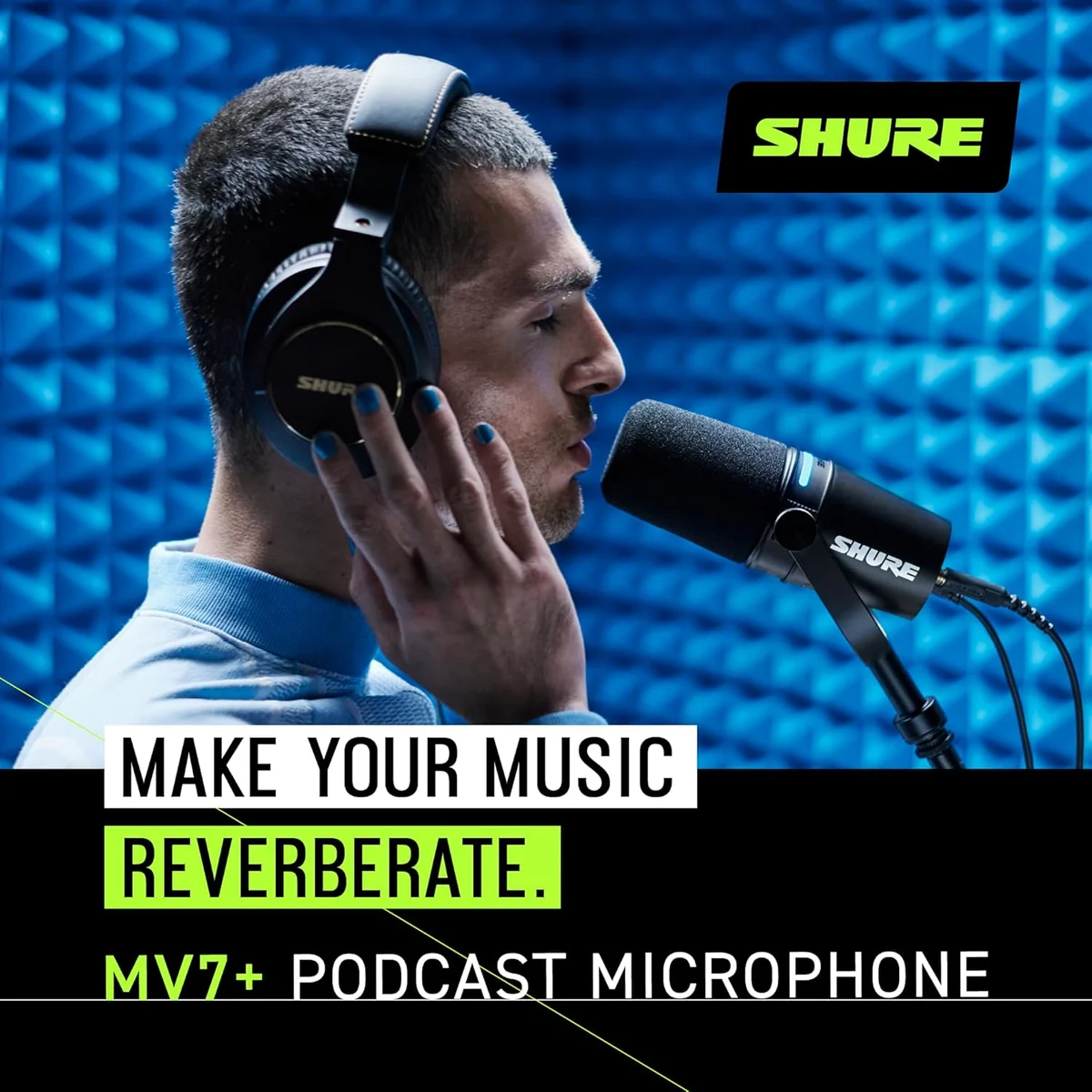 Shure MV7+
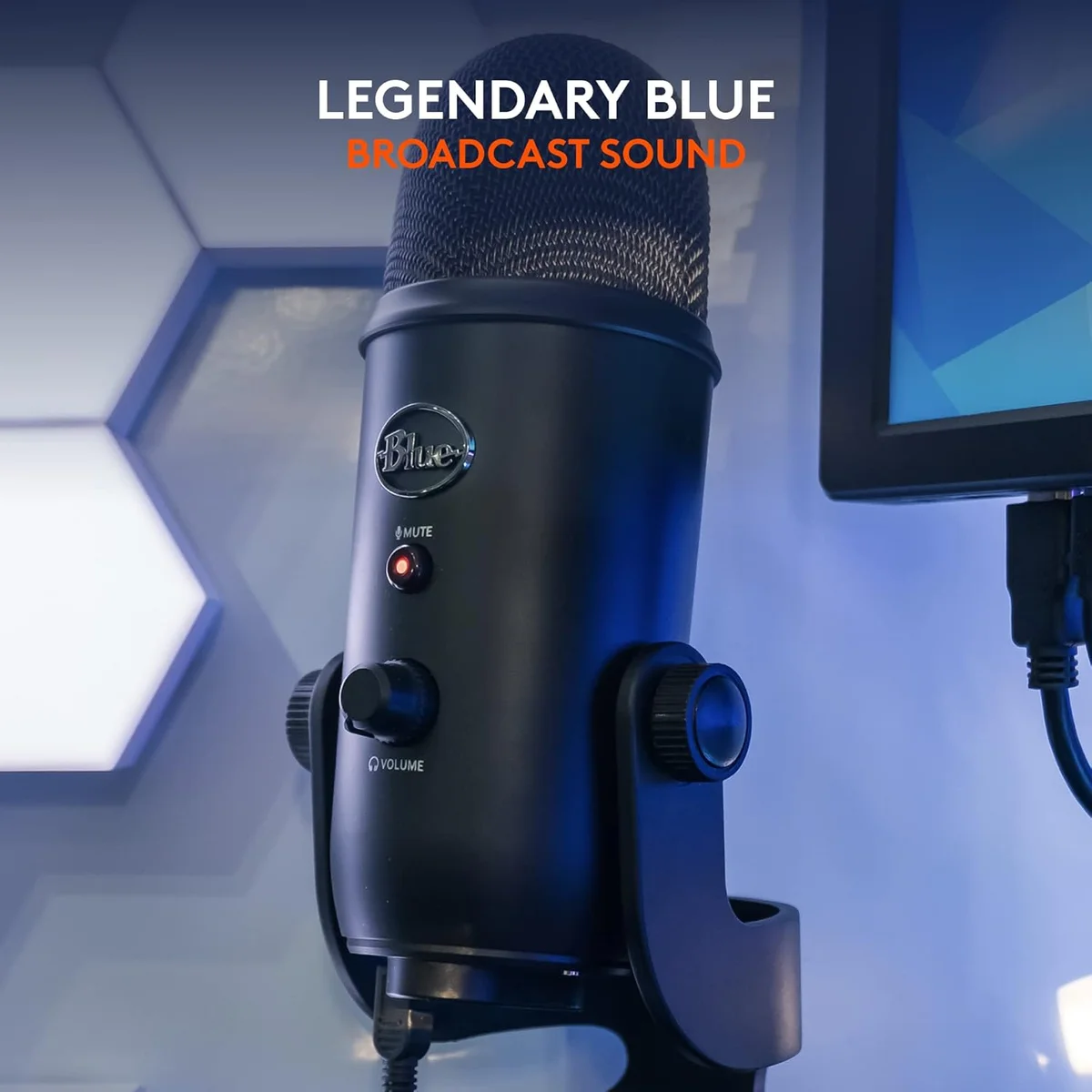 Blue Yeti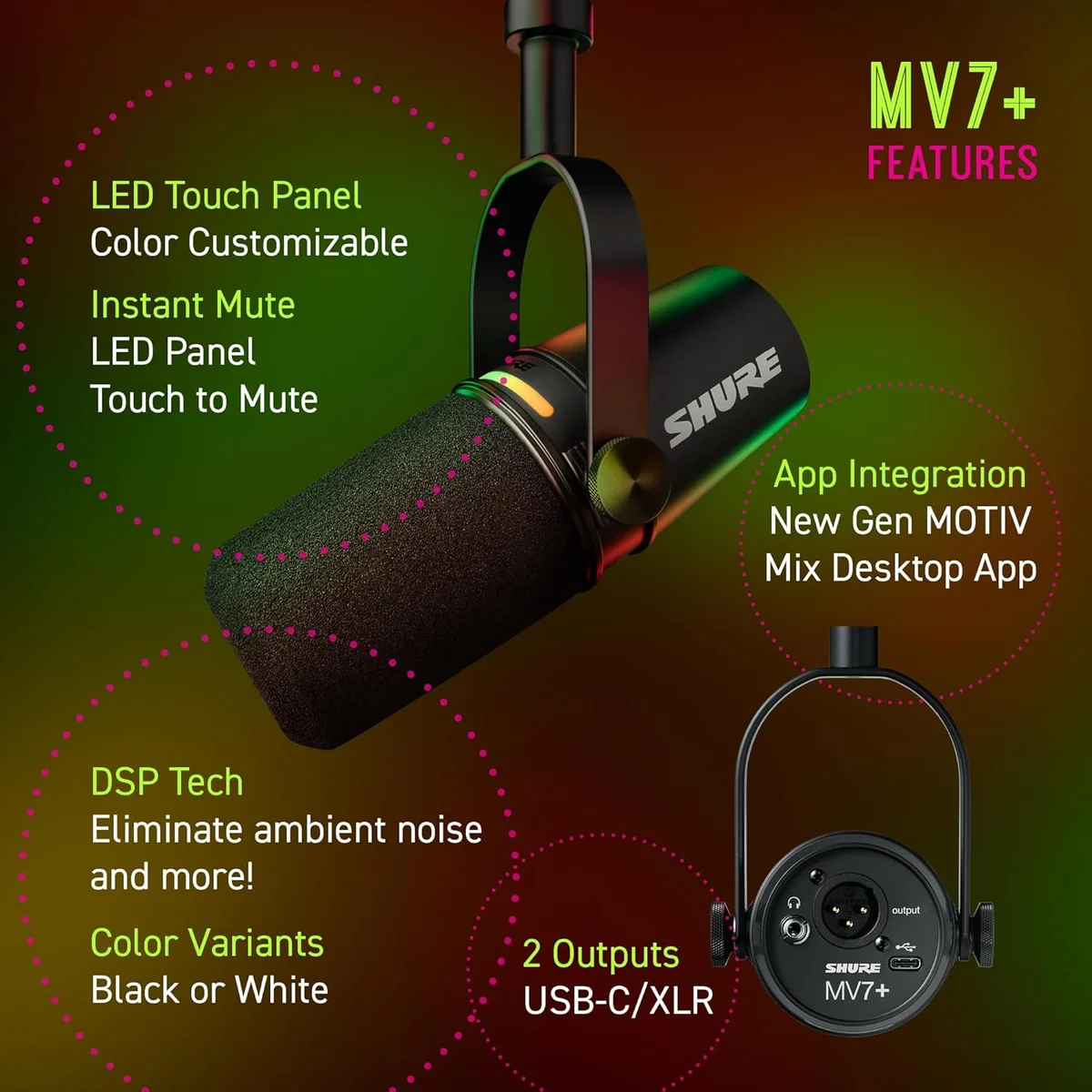
Which One Fits Your Setup?
Get the Shure MV7+ If...
- Your recording space has background noise (mechanical keyboard, HVAC, roommates, pets) — the dynamic capsule rejects sounds the Yeti captures
- You want audio that sounds broadcast-ready out of the box with minimal post-production — Auto Level Mode and the denoiser handle the hard work
- You record frequently (weekly or more) and want to eliminate per-session gain management over hundreds of recordings
- You plan to upgrade to an XLR audio interface eventually — the dual USB/XLR output lets the mic transition without replacement
- You prioritize build quality and longevity — the all-metal construction is built for professional daily use
Get the Blue Yeti If...
- You need multiple polar patterns — the Yeti's bidirectional, omnidirectional, and stereo modes cover recording scenarios no other USB mic in our catalog handles
- Your recording space is quiet and acoustically treated — the condenser capsule captures richer vocal detail than the MV7+ in controlled environments
- Budget is the deciding factor — the Yeti delivers excellent condenser audio at a lower price, with more included connectivity options
- You record interviews, group discussions, or ambient content that requires non-cardioid pickup patterns
- You prefer analog, no-software controls — the Yeti's physical knobs and switches work without any companion app
For the majority of solo podcasters, streamers, and content creators recording in home offices with background noise: the MV7+ is the better purchase. Noise rejection and workflow automation matter more than pattern flexibility for most recording scenarios. The time saved per session on gain management and noise cleanup compounds into hours over a year of weekly recording.
The Yeti earns its recommendation for a specific set of creators: those who record interviews face to face using bidirectional mode, group discussions using omnidirectional, stereo ASMR content, or ambient room recordings. If any of those describe your content, no other USB mic in our catalog offers the Yeti's pattern flexibility. The Yeti also wins for creators recording in acoustically treated rooms where the condenser's extra detail is an asset and its noise sensitivity is a non-issue.
One final consideration: the MV7+'s XLR output provides an upgrade path to professional audio interfaces. The Yeti is USB-only. If your content creation trajectory includes multi-mic setups, hardware mixing, or professional studios, the MV7+ protects your mic investment long-term. If USB is your permanent home — and for many creators, it should be — the Yeti's lower price and pattern flexibility are the smarter allocation of budget.
Both products are covered in our USB microphone roundup alongside seven other picks. The Rode PodMic USB is the mid-range alternative that splits the difference — dynamic noise rejection like the MV7+ at a price closer to the Yeti, with dual USB/XLR output. Our podcasting roundup and streaming roundup rank these products for specific use cases rather than general audio quality.
MV7+ vs Yeti: Common Questions
Which mic sounds better for podcasting — MV7+ or Blue Yeti?
The MV7+ sounds better in untreated rooms because the dynamic capsule rejects background noise that the Yeti condenser captures. In a treated, quiet room, the Yeti captures richer high-frequency vocal detail. Most podcasters record in imperfect rooms, which is why the MV7+ wins the podcast comparison for most people.
Does the Blue Yeti pick up more background noise than the MV7+?
Yes — and this is by design, not a defect. The Yeti condenser capsule is more sensitive, capturing quieter sounds. In a quiet room, that sensitivity is an advantage (more vocal detail). In a room with HVAC, keyboards, or ambient noise, it is a liability. The MV7+ dynamic capsule physically requires more air pressure to generate signal, so quiet background sounds fall below its activation threshold.
Can the Blue Yeti do anything the MV7+ cannot?
Yes — four polar patterns. The Yeti offers cardioid, bidirectional, omnidirectional, and stereo pickup. The MV7+ is cardioid only. Bidirectional mode lets two people share the Yeti face to face. Omnidirectional captures an entire room. Stereo records spatial audio. If you need anything beyond single-speaker cardioid recording, the Yeti is the only option.
Which mic is better for streaming — MV7+ or Blue Yeti?
For most streamers: the MV7+. The dynamic capsule rejects keyboard clicks and PC fan noise that the Yeti condenser picks up during gaming. Auto Level Mode handles volume fluctuations from leaning and reactions. The Yeti is better for streamers in quiet rooms who want richer vocal detail or need multi-pattern flexibility for co-streaming. Our streaming microphone roundup covers more options.
Track Both Products
We'll email you if either price drops or availability changes.
Only when something changes. Unsubscribe anytime.