Dual-Channel Value vs Single-Channel Simplicity
The Lark M2 wins for most creators — two transmitters, longer per-charge battery, and dual adapter compatibility at a strong mid-range price. The Mic Mini wins for solo creators who value DJI's brand trust and the 48-hour case battery.
Lark M2
DJI Mic Mini
The Lark M2 and DJI Mic Mini represent the mid-budget wireless tier — the price range where wireless audio stops being a gamble and starts being a tool. Both produce audio quality that is a clear upgrade from smartphone built-in microphones. Both clip on in seconds with zero technical configuration required. Both charge via compact USB-C cases that double as protective storage. The decision comes down to a simple question: do you need one microphone or two?
The Lark M2 ships as a dual-channel system: two transmitters and one receiver at $50–$100. Interview capability, dual-speaker content, and redundancy are built into the purchase price. The DJI Mic Mini ships as a single-channel system: one transmitter and one receiver at $25–$50. Solo content creation — vlogging, TikTok, presentations, talking head — is the target use case. Buying two DJI Mic Mini kits for interview capability costs more than the single Lark M2 kit and adds complexity.
Both systems appear in our wireless microphone roundup and budget roundup. The Lark M2 ranks #3 in wireless (best mid-range value) and the Mic Mini ranks #4 (best budget branded wireless). Understanding when the extra Lark M2 transmitter justifies the price difference — and when the Mic Mini's simpler, cheaper approach is the smarter purchase — is the core of this comparison. Our wireless microphone buying guide covers the technology behind both systems.
Lark M2DJI Mic MiniAt a Glance
| Feature | Editor's Pick Hollyland Lark M2 | DJI Mic Mini |
|---|---|---|
| Price Range | $50–$100 | $25–$50 |
| Type | Wireless System (2TX + 1RX) | Wireless System (1TX + 1RX) |
| Polar Pattern | Omnidirectional | Omnidirectional |
| Frequency Response | 50 Hz – 20 kHz | 50 Hz – 20 kHz |
| Sample Rate | 48 kHz / 24-bit | 48 kHz / 24-bit |
| Connectivity | USB-C, Lightning, 3.5mm TRS | USB-C or Lightning |
| Features | Noise cancellation, magnetic clip, OLED display | Charging case, noise cancellation, magnetic clip |
| Wireless Range | 1000 ft (300m) claimed | 984 ft (300m) claimed |
| See Current Price | See Current Price |
Channel Count: The Fundamental Difference
The Lark M2 includes two transmitters that record to one receiver simultaneously. Two speakers, two independent audio channels, one recording. For interview podcasts, two-person YouTube videos, reaction content, and any format where more than one person needs wireless audio, the Lark M2 covers it from the box. The two 9-gram transmitters are small enough that neither speaker notices the weight when clipped on.
The DJI Mic Mini includes one transmitter. Solo content only — one voice, one channel, one recording. To match the Lark M2's interview capability, you need to purchase a second DJI Mic Mini kit, which means two separate receivers, two separate charging cases, and a total cost that exceeds the single Lark M2 kit while adding complexity (two separate wireless connections rather than one coordinated dual-channel system). For solo creators who will never need a second channel, the single Mic Mini is simpler and cheaper. For anyone who might need two channels — even occasionally — the Lark M2 is the smarter upfront investment.
Audio Quality: Similar in Practice
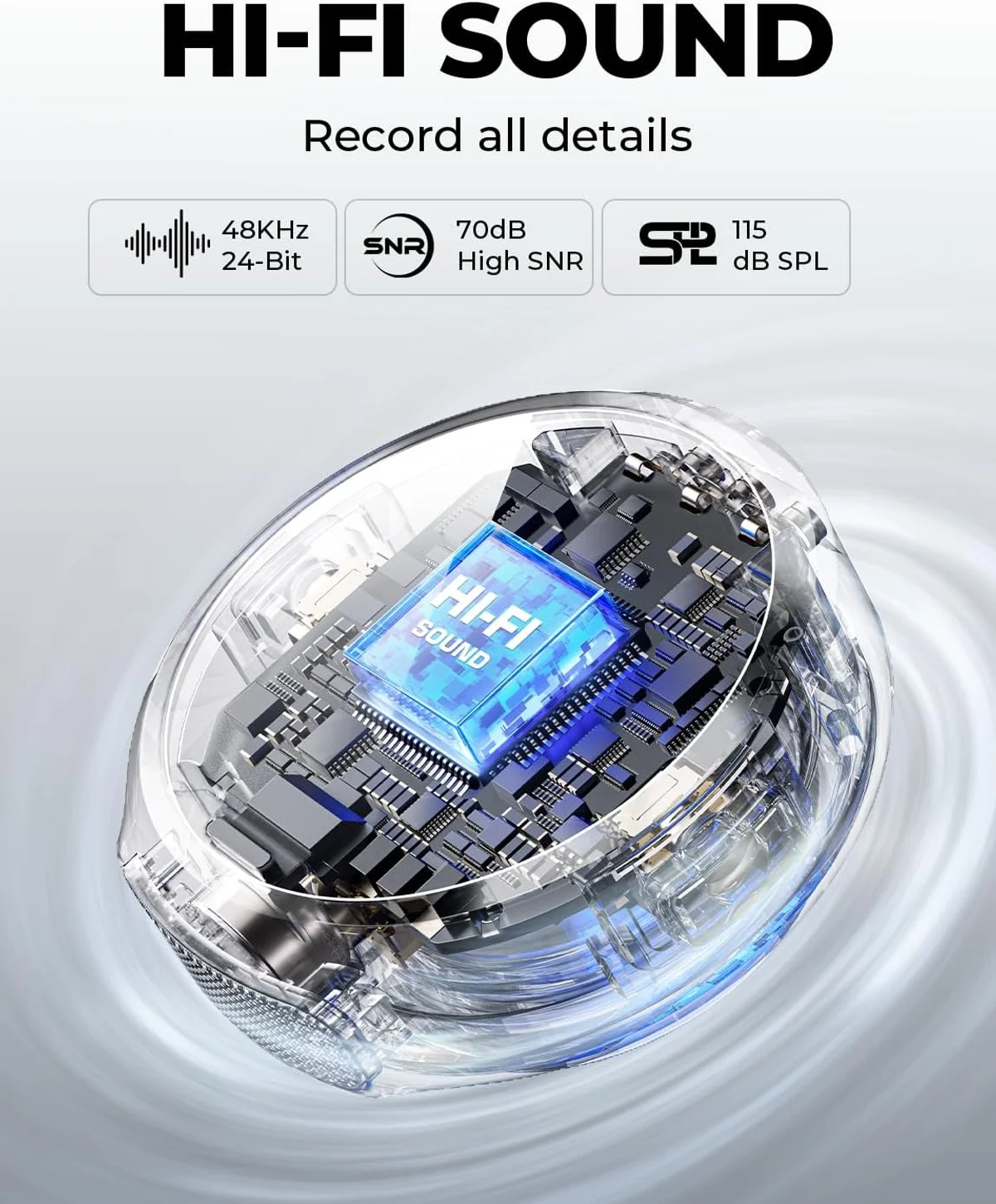
Both systems use omnidirectional capsules with digital wireless transmission at 48 kHz / 24-bit. In controlled indoor testing at matching distances, voice recordings from both systems are comparable — clean, clear, and a clear upgrade from phone microphones. The Lark M2 produces slightly warmer audio with a touch more low-frequency body. The Mic Mini produces slightly crisper audio with a bit more high-frequency presence. Neither difference is dramatic; both fall within the range of "good wireless audio" that serves YouTube, TikTok, and podcast distribution well.
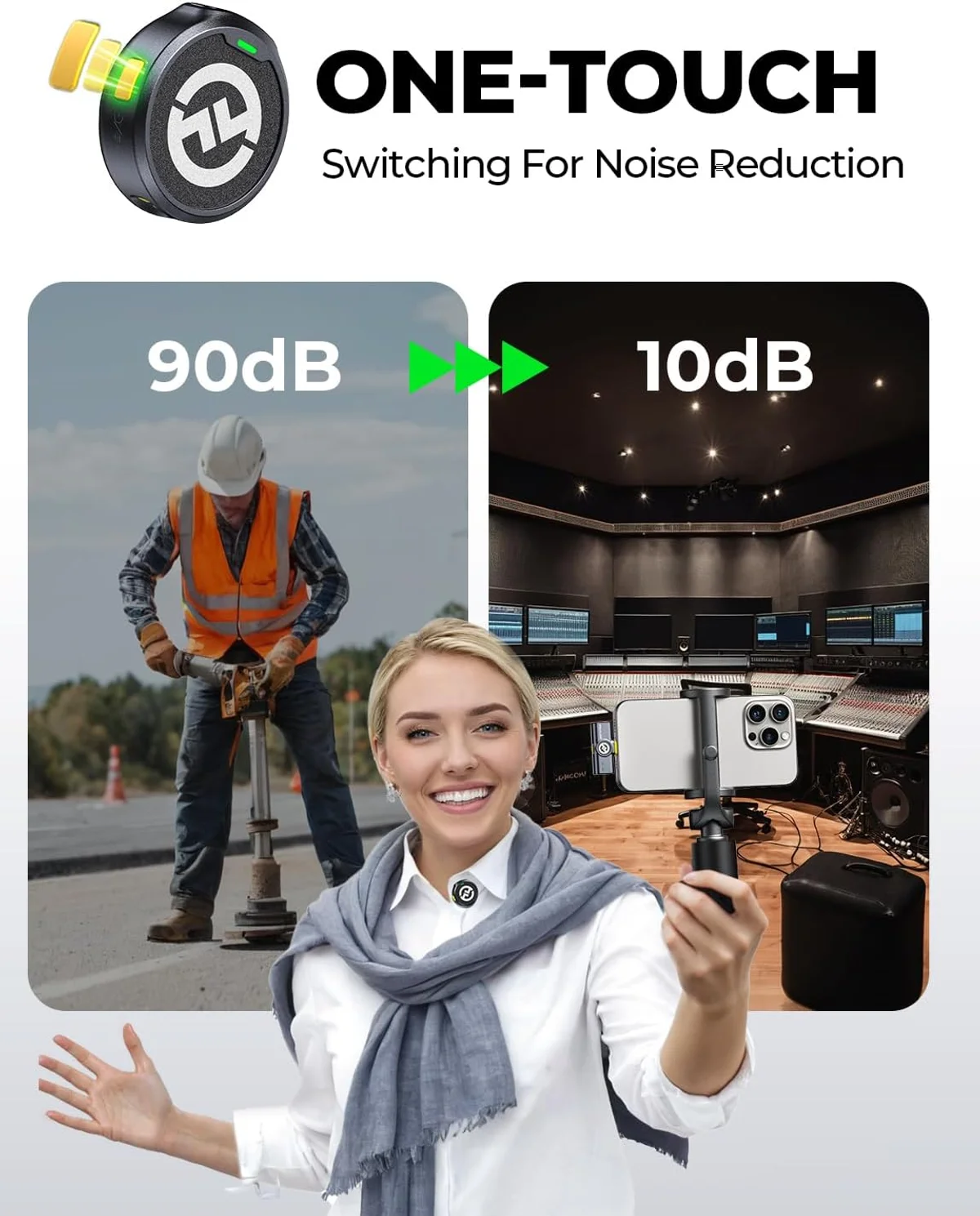
The Lark M2 noise cancellation algorithm handles outdoor wind noise and ambient room sounds more effectively than the Mic Mini's basic noise cancellation. In outdoor testing with moderate wind, the Lark M2 maintained intelligible voice audio where the Mic Mini's recording became noticeably noisier. Indoors in calm conditions, both produce clean audio. If you frequently record outdoors — walking vlogs, street interviews, outdoor events — the Lark M2's noise processing provides a measurable advantage. If you record indoors in controlled environments, the difference narrows to negligible.
Neither system records internally — both rely entirely on wireless transmission to the receiver. If wireless signal drops because of interference, range limits, or physical obstacles between transmitter and receiver, that audio segment is lost with no way to recover it. This is the most important limitation both systems share, and it is the primary concession that the mid-budget price tier demands.
The premium wireless systems in our catalog — the DJI Mic 3 and Rode Wireless Go II — both include onboard recording as a safety backup. The Wireless Go II stores 40+ hours per transmitter; the DJI Mic 3 records at 32-bit float internally. If wireless drops, the onboard recording survives. For professional work where lost audio is unacceptable (weddings, live events, paid interviews), this backup is worth the premium price. For casual content creation where a retake is possible, the mid-budget tier's lack of onboard recording is an acceptable trade. Our DJI Mic 3 vs Wireless Go II comparison covers the premium tier in detail.
Battery Life and Charging Ecosystem
The Lark M2 delivers 12 hours of continuous recording per transmitter charge and approximately 6 hours for the receiver — enough for a full day of shooting without anxiety. The charging case recharges both transmitters simultaneously when stored. For multi-day trips, the case provides multiple full recharges before the case itself needs to be charged via USB-C.
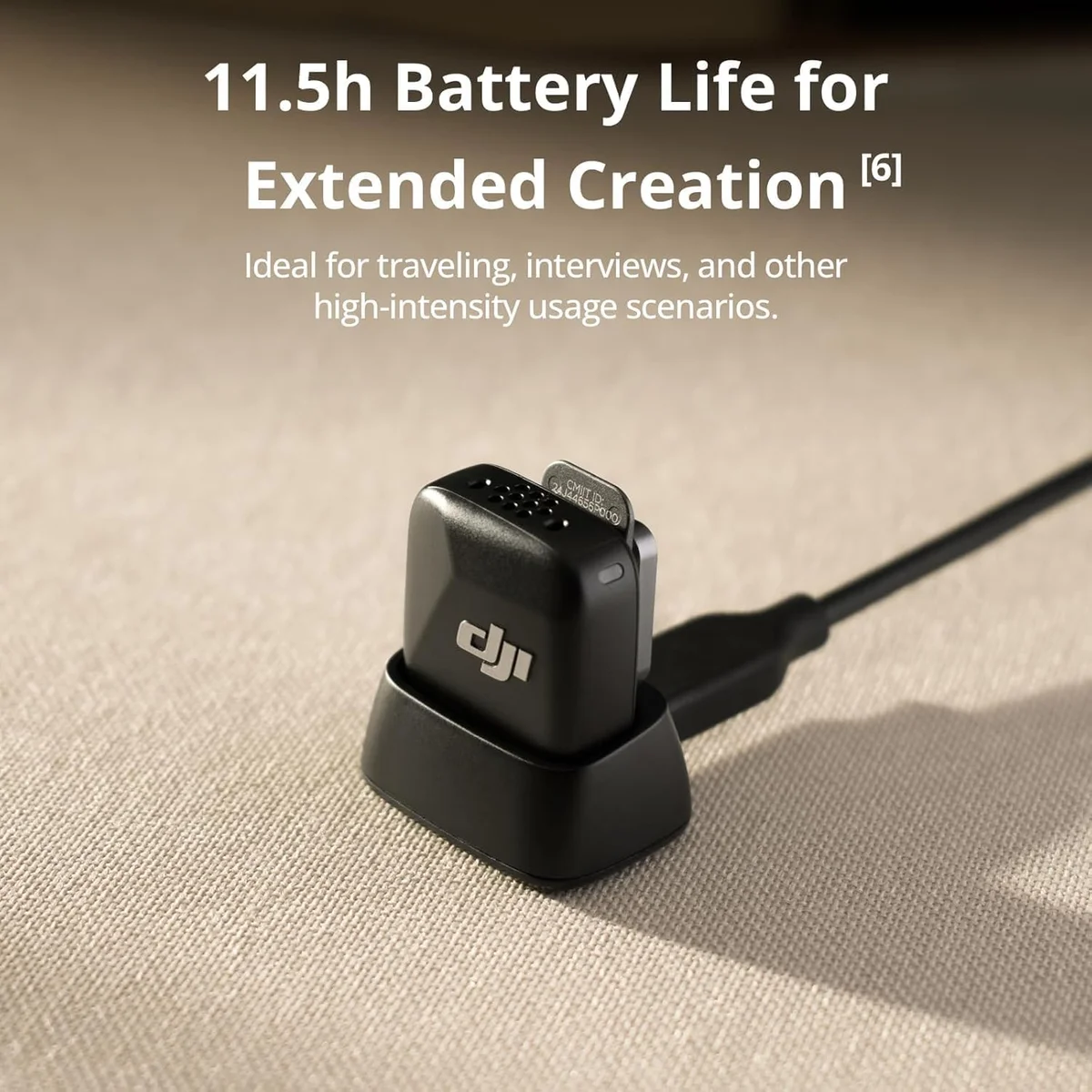
The DJI Mic Mini provides 12 hours per transmitter charge — matching the Lark M2 per-session. Where the Mic Mini pulls ahead is the total battery ecosystem: 48 hours of cumulative battery life across multiple case recharges. The case holds enough power to recharge the transmitter multiple times, which means weeks of casual daily shooting (30-60 minute sessions) before the case needs a wall charge. For creators who shoot short clips daily — TikTok, Instagram Reels, quick YouTube shorts — the Mic Mini's case battery system is a real workflow advantage.
For long, continuous recording sessions (interviews, event coverage, documentary shooting), both provide sufficient per-charge endurance. For cumulative daily shooting over multiple days without USB access, the Mic Mini's deeper case battery is the stronger option.
Device Compatibility and Adapters
The Lark M2 ships with USB-C and Lightning adapter receivers in the box — covering every iPhone (old and new), every Android phone, and every USB-C camera. One purchase works with every device you own or might own. No version guessing required. This dual-adapter approach eliminates the "did you buy the right version?" frustration that single-adapter systems create.
The DJI Mic Mini sells USB-C and Lightning versions separately. You must choose the correct version for your phone at purchase time. iPhone 15 and newer use USB-C (USB-C version works). iPhone 14 and older use Lightning (Lightning version required). Buying the wrong version means a return and exchange. If you switch phones or use both iPhone and Android, you need two separate Mic Mini receivers.
This compatibility difference is a practical usability advantage for the Lark M2 — especially for creators who shoot on multiple devices, share equipment with collaborators, or plan to switch phones within the mic's lifespan.
Physical Design and Clip Mechanisms
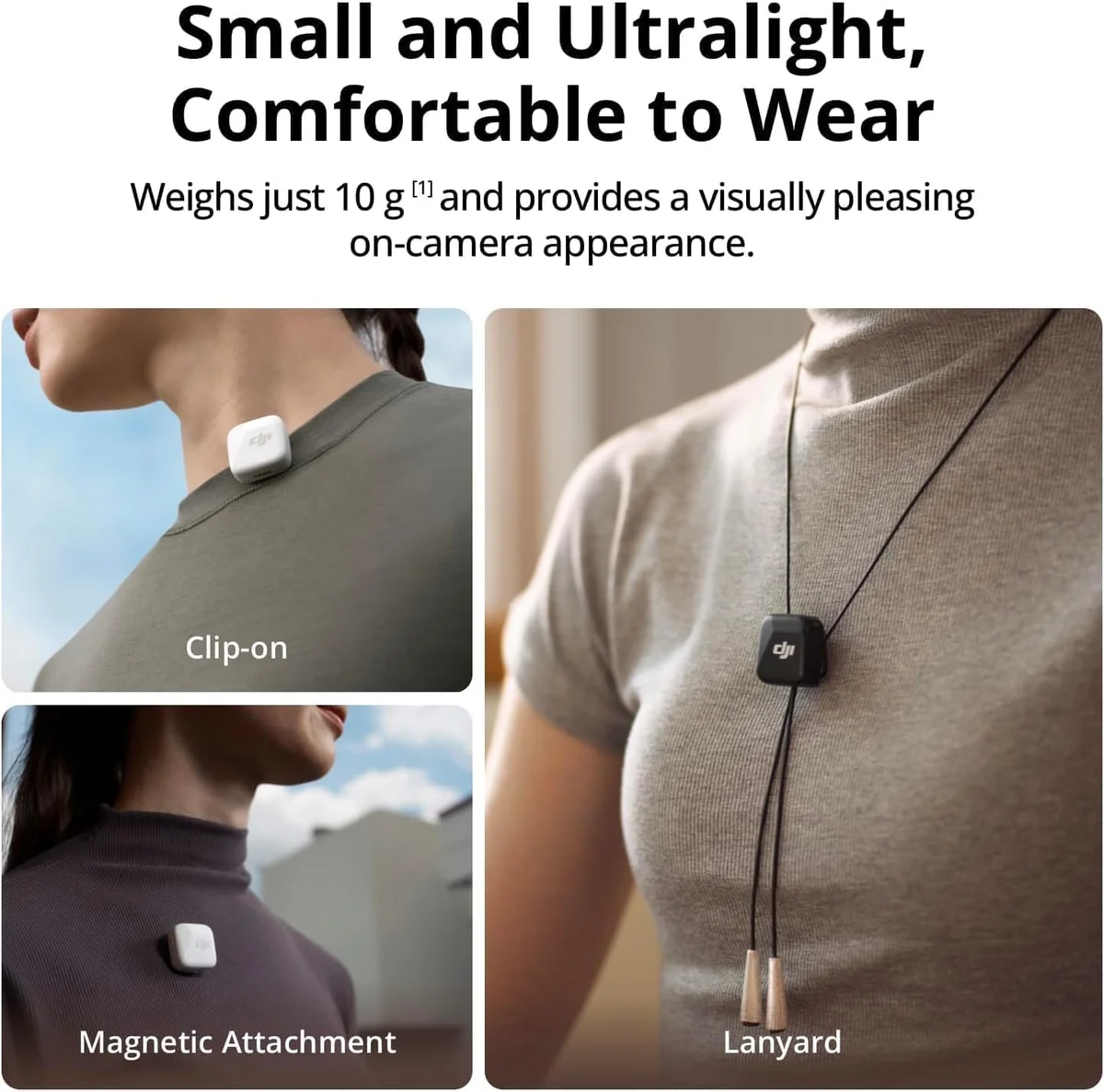
The Lark M2 transmitters weigh 9 grams each — lighter than a single AirPod. The magnetic clip attachment is clever and quick to deploy: hold the transmitter near a collar or thin fabric, and the magnet grabs. The limitation is that magnetic clips slip on lightweight, silky, or loose-weave fabrics — they need something with substance to grip. A backup stick-on mounting pad is included for fabrics where the magnet struggles.
The DJI Mic Mini transmitter uses a magnetic clip with a clip-through design that grabs fabric from both sides. The grip is secure on most clothing types including thinner fabrics that challenge the Lark M2's magnetic approach. DJI's industrial design heritage shows in the fit and finish — the case opens smoothly, the transmitter seats precisely, and every surface has intentional texture.
Brand Trust and After-Purchase Support
DJI is a global technology brand with established customer support, warranty service centers, and a product ecosystem (drones, gimbals, cameras, action cameras) that demonstrates long-term engineering commitment. When DJI puts its name on a product at any price tier, the brand accountability follows. Firmware updates, compatibility patches, and bug fixes are part of the DJI ecosystem expectation.
Hollyland is an established audio brand — the Lark M1, Lark M2, and professional Pyro series have built a reputation for quality wireless audio. Hollyland is well-known in the video production community and has earned credibility through expert reviews and professional adoption. Brand trust is not a concern with either product — both companies stand behind their wireless microphone offerings with warranties and support infrastructure. And it shows.
Wireless Range and Indoor Reliability
The Lark M2 claims 300 meters (1000 feet) of wireless range. In real indoor testing through drywall walls and around corners, reliable range dropped to approximately 80-100 feet — workable for most rooms and moderate-sized event spaces, but limiting in large venues or buildings with metal-framed walls. At distances under 50 feet indoors, the Lark M2 maintained connection without dropout.
The DJI Mic Mini claims 300 meters (984 feet) similarly. Indoor real-world range landed around 70-90 feet in our testing — comparable to the Lark M2 with a slight edge to the Lark M2 at the maximum reliable distance. Both systems use 2.4 GHz digital transmission that is susceptible to Wi-Fi router interference and Bluetooth device competition. For home shooting where the receiver sits on the desk and the transmitter is clipped on within 30 feet, both maintain rock-solid connections with zero audible artifacts or dropout. For larger indoor spaces, test your specific environment before relying on range claims from either manufacturer.
Specific Use Case Matchups
TikTok and Instagram Reels creation: The DJI Mic Mini's pocket-sized form factor and 48-hour case battery are ideal for creators who shoot multiple short clips daily. Clip the transmitter on, record 30-60 seconds, stow it in the case, repeat throughout the day. The Lark M2's larger case and dual-transmitter kit are more hardware than a solo TikTok creator needs. For this specific workflow, the Mic Mini is the better tool.
YouTube vlogs and on-location content: The Lark M2's dual-adapter compatibility (USB-C + Lightning included) handles the variety of devices YouTube creators use — phone for quick shots, camera for planned segments, different phones when borrowing a friend's device. The superior outdoor noise cancellation helps in street and location shooting. For YouTube content that varies between solo and guest format, the dual-channel Lark M2 covers both scenarios without additional equipment.
Podcast interviews on location: The Lark M2 is the clear winner — two transmitters for host and guest, factory-paired for instant dual-channel recording. The Mic Mini requires buying two complete kits and managing two separate wireless connections. Our podcasting roundup covers both systems ranked for the podcast interview format. For desk-bound podcast recording, a USB mic like the Samson Q2U or Rode PodMic USB produces better audio than either wireless system.
Business presentations and public speaking: Either system works well. The Mic Mini's DJI branding may carry more recognition and perceived reliability in professional settings. The Lark M2's dual-transmitter provides a backup unit if the primary develops issues during an important presentation. Both clip onto business attire cleanly — though test with specific fabrics before a critical event.
Price and Value Analysis
The Lark M2 at $50–$100 includes two transmitters, one receiver, USB-C and Lightning adapters, and a charging case. The DJI Mic Mini at $25–$50 includes one transmitter, one receiver, one adapter type, and a charging case. For solo content creation, the Mic Mini costs less for essentially the same capability (one channel). For interview content, the Lark M2 is far better value — a single Lark M2 kit replaces two Mic Mini kits at lower total cost with coordinated dual-channel recording instead of two independent single-channel systems.
The mid-budget tier below both these systems includes the Hollyland Lark A1 at approximately half the Mic Mini's price — a single-channel gateway wireless mic with 54-hour case battery. Above both sits the premium tier: the Rode Wireless Go II and DJI Mic 3 with onboard recording, professional audio quality, and lavalier input (Wireless Go II only). Our wireless roundup places both the Lark M2 and Mic Mini in the full full ranking.
 Lark M2
 DJI Mic Mini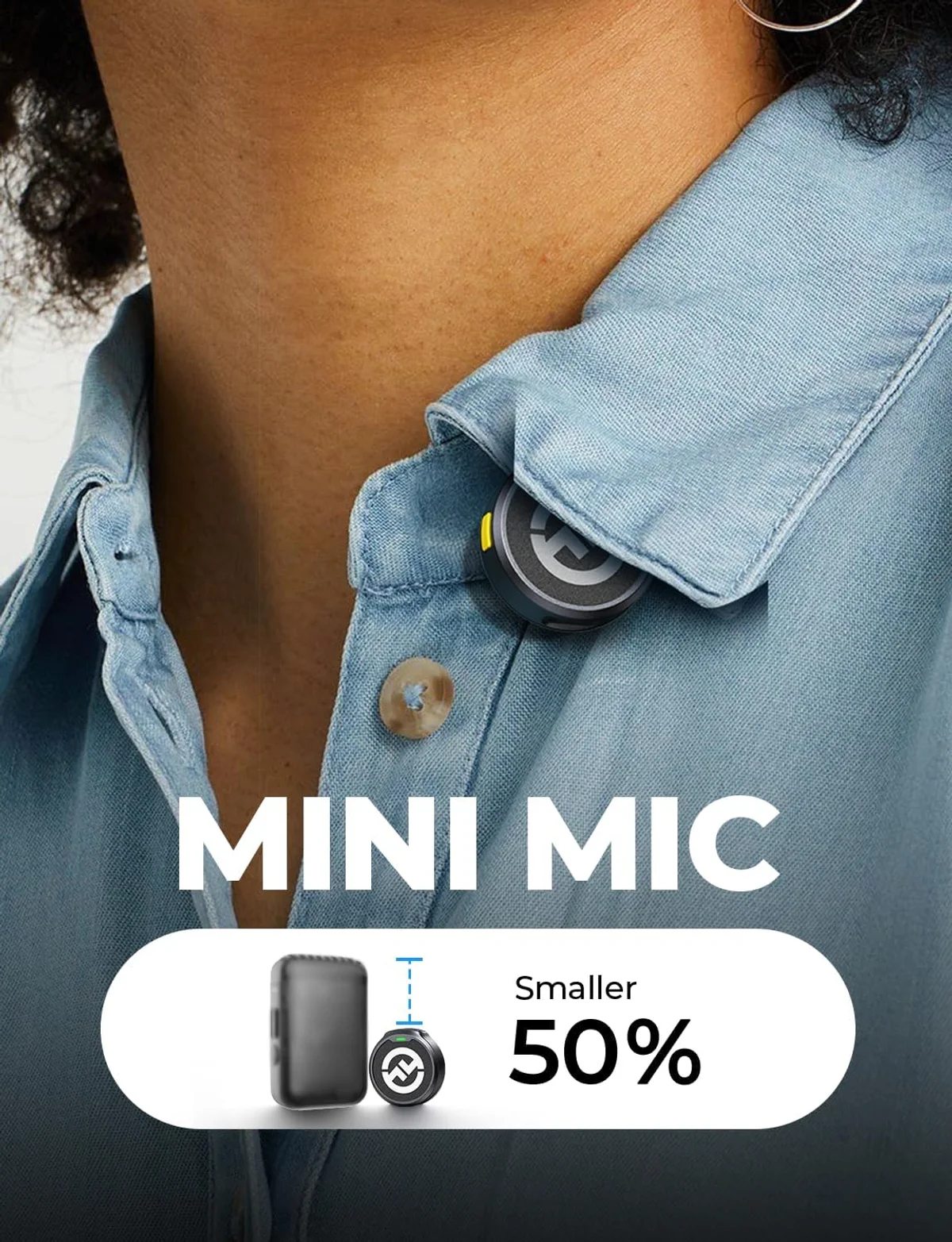
Solo Content or Interview Capability?
Get the Hollyland Lark M2 If...
- You create any content with two speakers — interviews, collaborations, reaction videos, or two-person podcasts — the dual-channel kit covers this from the box
- You use or might use multiple devices (iPhone, Android, camera) — the included USB-C and Lightning adapters cover every device without buying the "right version"
- You record outdoors where wind noise and ambient sound are factors — the Lark M2's noise cancellation outperforms the Mic Mini's in outdoor conditions
- 12-hour continuous recording per transmitter fits your typical session length without case recharging mid-shoot
- You want the most wireless capability per dollar — two channels, dual adapters, strong audio, and 12-hour battery at a mid-range price
Get the DJI Mic Mini If...
- You create solo content only — vlogging, TikTok, presentations — and a second channel would go permanently unused
- The 48-hour total case battery matters for your shooting pattern — daily short-form content creation over multiple days without USB charging access
- DJI's brand accountability and product ecosystem alignment matter to your purchasing confidence
- The lower single-unit price fits your budget better and solo content is your confirmed format
- You already know which adapter type (USB-C or Lightning) you need and will not switch devices
For the majority of content creators: the Lark M2 is the recommendation. The dual-channel capability, dual-adapter compatibility, and superior outdoor noise handling provide more capability at the mid-range price. Even solo creators benefit from having a second transmitter available for occasional guest content, backup if one unit has issues, or lending to a friend.
For solo creators on the tightest budget who shoot indoors and need the simplest possible wireless setup: the Mic Mini delivers excellent DJI-branded wireless audio at a lower single-unit price. The 48-hour case battery is a real workflow advantage for creators who shoot daily without access to USB charging — TikTok creators, Instagram content producers, and anyone who shoots 30-60 second clips throughout the day will appreciate never thinking about battery for weeks at a time.
For creators who are unsure whether they will ever need a second channel: get the Lark M2 anyway. The second transmitter costs nothing extra in the kit, and having it available when a friend wants to record together, when a guest appears on your channel, or when your first transmitter needs charging mid-session is a flexibility that the single-channel Mic Mini cannot provide. The marginal price difference between these systems is small enough that the dual-channel capability is worth having even if you only use it occasionally.
Below both of these systems, the Hollyland Lark A1 at roughly half the Mic Mini's price provides gateway wireless audio — adequate for testing whether wireless improves your content before investing further. Above both, the Rode Wireless Go II and DJI Mic 3 add onboard recording backup, professional audio quality, and (for the Wireless Go II) external lavalier input. Our wireless roundup and budget roundup cover the full spectrum of wireless options at every price tier.
The bottom line: for content creators who shoot both solo and collaborative content, the Lark M2 is the default recommendation at the mid-budget tier. It provides more capability per dollar than any other wireless system in our catalog when dual-channel recording, universal device compatibility, and outdoor noise handling are weighted alongside raw audio quality.
Lark M2 vs Mic Mini — Decided
Which budget wireless mic is better — Lark M2 or DJI Mic Mini?
The Lark M2 is the better system because it includes two transmitters for interview capability, 12-hour battery life per unit, and USB-C plus Lightning adapters in the box. The DJI Mic Mini is a single-transmitter system — you need to buy a second unit separately for interviews. The Mic Mini wins on battery system (48 hours total with case) and brand trust (DJI). For solo content, the Mic Mini is slightly cheaper. For interviews, the Lark M2 is far better value.
Does the Lark M2 sound better than the DJI Mic Mini?
Audio quality is comparable in controlled indoor conditions. The Lark M2 noise cancellation algorithm handles moderate wind and ambient noise slightly better in outdoor testing. The DJI Mic Mini noise cancellation is simpler and less effective outdoors. Indoors at close range, most listeners cannot distinguish between them. Both produce audio that is a clear step above smartphone built-in microphones.
Which wireless system has longer battery life?
The DJI Mic Mini has longer total battery life: 48 hours with the charging case (12 hours per transmitter charge). The Lark M2 has longer per-charge battery: 12 hours per transmitter versus the Mic Mini at 12 hours. The difference is the case — the Mic Mini case holds additional charges, while the Lark M2 case also charges both transmitters but stores fewer total recharges. For daily casual use, both last well beyond a typical shooting session.
Can the DJI Mic Mini do interviews with two people?
Not with a single kit. The DJI Mic Mini ships with one transmitter and one receiver. For two-person interviews, you need to buy a second DJI Mic Mini separately. The Hollyland Lark M2 ships with two transmitters — dual-channel interview capability out of the box. If interview content is part of your plan, the Lark M2 provides far better value.
Track Both Products
We'll email you if either price drops or availability changes.
Only when something changes. Unsubscribe anytime.