Two-Pack Quality vs Single-Cable Savings
Cable Matters wins on every metric: OFC conductors, braided shielding, gold-plated connectors, and a 2-pack that costs roughly the same as two AmazonBasics singles. The per-cable price difference is about two dollars. Buy the Cable Matters and never think about XLR cables again.
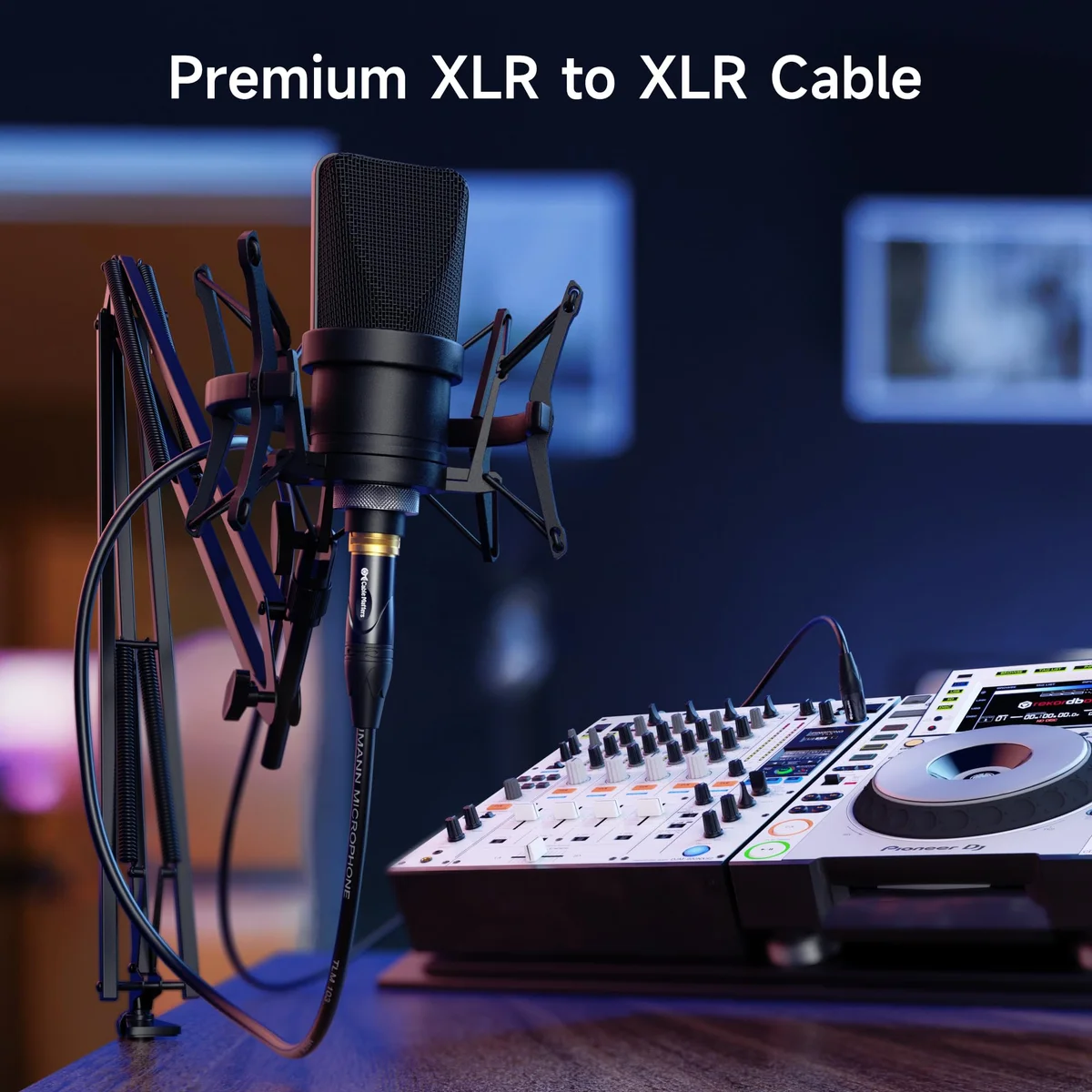
Cable Matters XLR
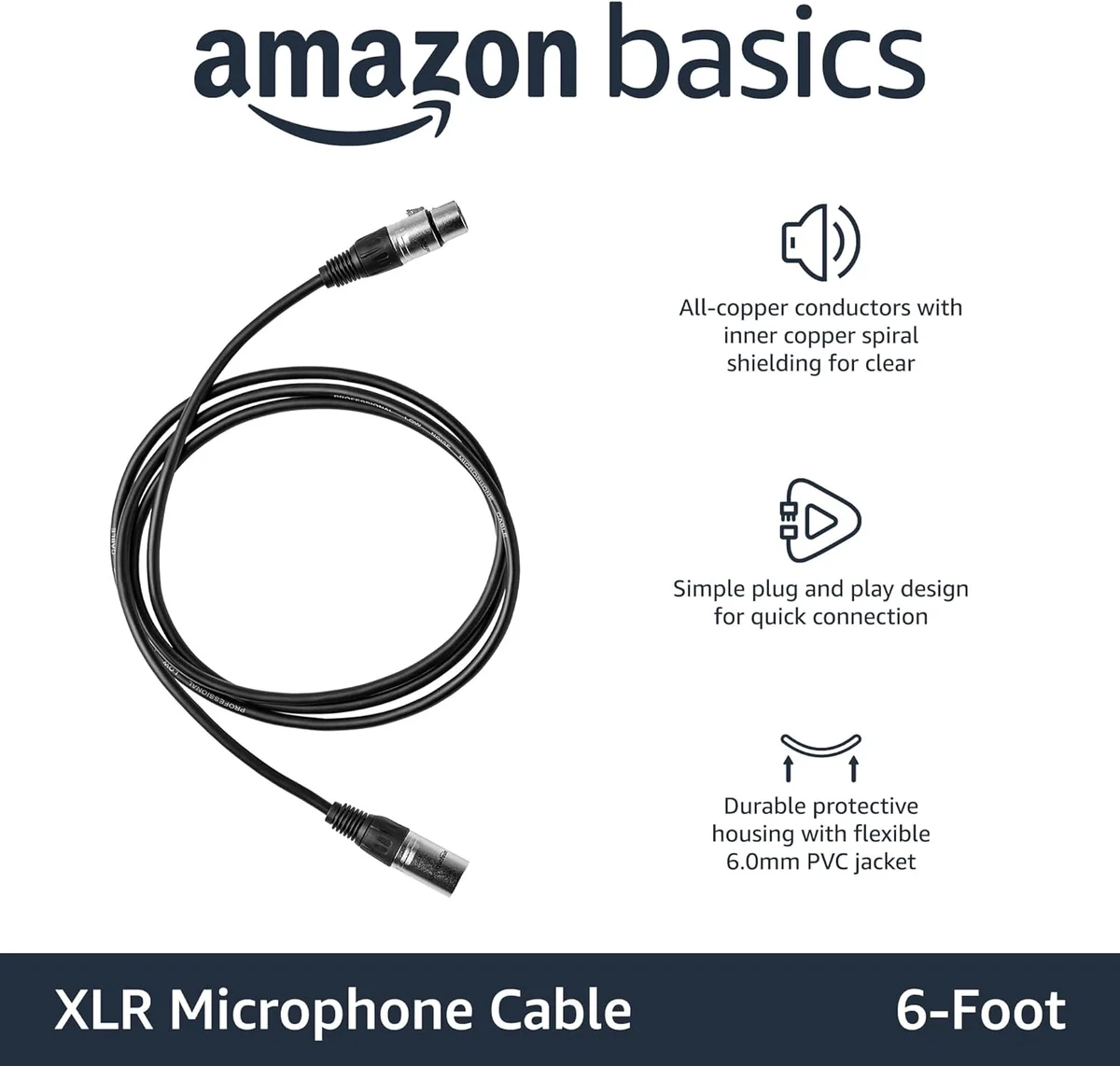
AmazonBasics XLR
The Cable Matters XLR 2-pack and the AmazonBasics XLR single cable represent the two approaches to buying the most boring but necessary piece of audio equipment: the XLR microphone cable. Every USB/XLR hybrid mic in our catalog — the Shure MV7+, Rode PodMic USB, Samson Q2U, FIFINE AM8 — uses this cable when connected to an audio interface for professional recording. The Cable Matters 2-pack at Under $25 costs roughly double the price compared to the AmazonBasics single at Under $25.
XLR cables are not exciting gear. They do not improve your voice, add features, or change your recording workflow. What they do is carry the analog audio signal from your microphone to your audio interface without introducing noise, interference, or signal degradation. A good cable does this job invisibly for years. A bad cable does this job until it doesn't — then introduces crackling, intermittent dropouts, or RF interference at the worst possible moment during a recording session. The difference between these two cables is not what you hear today but what you hear in two years.
The decision between these cables is not about audio quality under normal home studio conditions — both transmit a clean balanced signal at desk distances. The decision is about how long "works fine" lasts before connector corrosion, shielding gaps, or solder joint fatigue introduces an intermittent problem that disrupts recording sessions. One cable is engineered for longevity. The other is engineered for the lowest possible sticker price.
Our USB vs XLR guide covers when the XLR upgrade path makes sense and what audio interface to pair with it. Our buying guide covers the full microphone and accessory range. Both cables appear in our product catalog — Cable Matters as the buy-once recommendation, AmazonBasics as the budget option for buyers who want the absolute lowest entry price into XLR connectivity.
Cable Matters XLRAmazonBasics XLRAt a Glance
| Feature | Editor's Pick Cable Matters Premium XLR Cable 2-Pack | Amazon Basics XLR Microphone Cable |
|---|---|---|
| Price Range | Under $25 | Under $25 |
| Type | XLR Cable (Male to Female) | XLR Cable (Male to Female) |
| Features | OFC conductors, braided shielding, 2-pack | Spiral shielding, flexible PVC jacket |
| Cable Length | 6 ft (1.8m) | 6 ft (1.8m) |
| Connector Type | Gold-plated XLR | Nickel-plated XLR |
| See Current Price | See Current Price |
Conductor Material: OFC vs CCA
The Cable Matters XLR uses oxygen-free copper (OFC) conductors. OFC is copper refined to remove oxygen content that creates microscopic voids in the conductor material. These voids increase electrical resistance, and while the resistance increase is small, it compounds over cable length. OFC conductors maintain lower, more consistent resistance across the full cable run. For home studio runs under 10 feet, the practical impact is negligible. For longer runs — studio to control room, stage to mixer, multi-room installations — OFC's lower resistance preserves signal integrity where cheaper conductors introduce measurable loss.
The AmazonBasics XLR uses copper-clad aluminum (CCA) conductors. CCA is an aluminum core wrapped in a thin copper layer. It conducts audio signals adequately at short distances and is cheaper to manufacture than solid copper. The trade-off: aluminum has higher resistivity than copper (2.65 vs 1.68 microohm-centimeters), which means more signal loss per foot. At 6-foot home studio distances, the loss is inaudible. At 25+ foot professional runs, the accumulated resistance can contribute to a slightly reduced signal-to-noise ratio.
Both conductor types transmit a balanced audio signal that your audio interface receives as a clean microphone signal. The balanced XLR connection cancels common-mode interference regardless of conductor material — that is the fundamental engineering advantage of XLR over unbalanced connections like 3.5mm TRS. In a home studio with a 6-foot cable between mic and interface, both OFC and CCA cables produce identical audible results.
Shielding: Braided vs Spiral
The Cable Matters cable uses braided shielding — a woven mesh of copper strands surrounding the conductor pair. Braided shielding provides 85-95% coverage of the cable's circumference, creating a Faraday cage that blocks electromagnetic interference (EMI) from external sources: power supplies, LED monitors, Wi-Fi routers, Bluetooth devices, fluorescent lighting ballasts. The braided construction maintains consistent coverage even when the cable is bent, coiled, or routed around corners. For home studios where the XLR cable runs alongside USB cables, power adapters, and monitor power cords, braided shielding provides measurably better EMI rejection.
The AmazonBasics cable uses spiral (serve) shielding — a single layer of copper strands wound in a helix around the conductors. Spiral shielding provides approximately 70-85% coverage and is cheaper and more flexible than braided construction. The coverage percentage drops when the cable is bent sharply — the spiral strands separate at bend points, creating gaps in the electromagnetic barrier. For straight cable runs in quiet electromagnetic environments, spiral shielding is adequate. For cables that route around desk legs, behind monitors, or near power strips, the coverage gaps at bend points can allow EMI to reach the conductor pair.
The audible difference between shielding types in a typical home studio: none under normal conditions. The difference under edge conditions — cable routed alongside a power strip, USB hub generating EMI, or a cable touching the back of an LED monitor: braided shielding stays quiet, spiral shielding may introduce a faint hum or buzz that appears in recordings as a low-frequency noise floor. The probability of encountering these conditions increases with desk clutter and cable density, which describes most home studios.
Connectors: Gold-Plated vs Standard
The Cable Matters XLR connectors are gold-plated with machined housings. Gold plating on the contact pins resists oxidation and corrosion — the surface stays conductive without degradation over years of use in varying humidity conditions. The machined housing provides a precise, tight fit in XLR jacks with a solid locking mechanism. The strain relief where the cable meets the connector housing absorbs bend stress that would otherwise fatigue the solder joints inside.
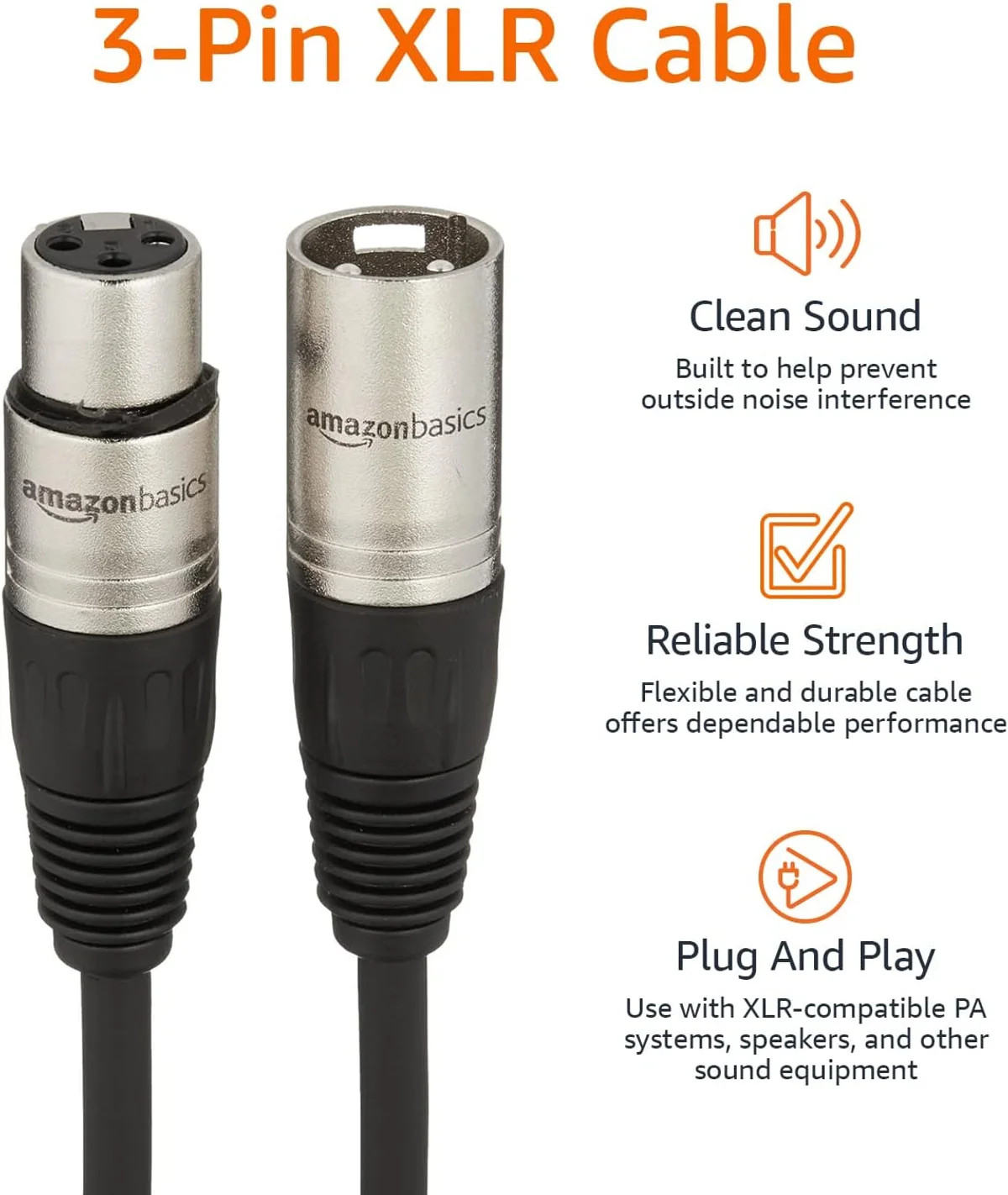
The AmazonBasics XLR connectors use standard nickel-plated contacts with molded plastic housings. Nickel plating is durable and adequate for indoor studio use. The molded housing is lighter and less precise than machined alternatives — the locking mechanism works but feels less authoritative when seating into jacks. Strain relief is basic, which means the solder joints inside the connector bear more stress from cable bending and pulling over time.
The practical difference: gold-plated connectors maintain reliable contact for 5-10+ years of regular plugging and unplugging. Nickel-plated connectors on budget cables develop increased contact resistance after 2-3 years of frequent connection cycles, which manifests as intermittent crackling or signal dropout that resolves temporarily when you wiggle the connector. For a cable that stays plugged into a home studio interface permanently, connector quality matters less. For a cable that gets packed, transported, and reconnected regularly, gold-plated connectors last longer before developing connection issues.
Durability Under Real Studio Conditions
Home studio cables endure conditions that professional studio cables rarely face: desk chair wheels rolling over them, accidental yanks when a boom arm swings too far, sharp bends around monitor stands, and months of contact with desk surfaces that accumulate moisture from drinks and humidity. The Cable Matters cable's thicker jacket and braided shielding construction absorb physical abuse better than the AmazonBasics cable's thinner build. A sharp kink in a braided-shield cable damages shielding coverage but preserves conductor integrity because the braided mesh distributes stress. A sharp kink in a spiral-shield cable can displace the helical wrap and create a permanent gap in coverage at the kink point.
Connector durability matters more than cable body durability for most home studio users. The XLR connector endures the most mechanical stress — the point where you grip, twist, push, and pull during connection and disconnection. Gold-plated machined connectors maintain their dimensional tolerances over thousands of connection cycles. Budget molded connectors gradually deform the plastic housing, loosening the internal solder joints that carry the audio signal. The first symptom of connector failure is intermittent signal — audio that cuts out momentarily when the cable is touched, bumped, or shifted. By the time you notice this during a recording, the cable needs replacement.
The Cable Matters cable's strain relief — the rubber boot where cable meets connector — absorbs the bending force that would otherwise concentrate at the solder joint. The AmazonBasics cable has minimal strain relief, concentrating bend stress at the weakest structural point. Over 12-18 months of regular use, this stress accumulation is the most common failure mechanism in budget XLR cables.
Flexibility, Handling, and Coiling
The AmazonBasics cable is noticeably more flexible than the Cable Matters cable. The thinner jacket and lighter shielding create a cable that bends easily, coils without resistance, and routes around desk obstacles with minimal effort. For tight desk setups where the cable needs to make sharp turns, the AmazonBasics cable cooperates without the stiffness that thicker cables introduce.
The Cable Matters cable is stiffer — the braided shielding and thicker jacket create a cable that holds its shape more aggressively. Fresh out of the package, it retains coil memory and may need manual straightening before routing. On a desk with limited cable management, the stiffer cable can push against routing channels and resist clean organization. Once routed and settled, the stiffness becomes invisible. The stiffer construction also means the cable is more resistant to kinking — a sharp bend that permanently damages the conductor geometry and can create an intermittent signal fault.
For live performance and portable recording: the AmazonBasics cable is easier to pack and unpack. For permanent studio installation: the Cable Matters cable's stiffness is irrelevant once installed and provides better kink resistance over the cable's lifetime.
The 2-Pack vs Single Purchase Math
The Cable Matters 2-pack at Under $25 delivers two cables with OFC conductors, braided shielding, and gold-plated connectors. The AmazonBasics single cable at Under $25 delivers one cable with CCA conductors, spiral shielding, and nickel-plated connectors. Two AmazonBasics cables cost roughly the same as the Cable Matters 2-pack — at which point the Cable Matters pair provides objectively superior specifications at equal total cost.
The per-cable math: each Cable Matters cable costs approximately $9, each AmazonBasics cable costs approximately $7. The two-dollar per-cable premium buys OFC over CCA, braided over spiral shielding, and gold-plated over nickel connectors. There is no audio equipment category where a two-dollar upgrade delivers a more measurable specification improvement.
The second Cable Matters cable is either a backup (stored in a drawer for the day your primary cable develops an issue) or a second connection (dual-mic setups, connecting a mic and an instrument simultaneously, running a cable to a different room). Having a backup XLR cable eliminates the recording-session-ruining scenario where a cable fails and you have no replacement. Having two cables enables dual-mic podcast recording — host mic and guest mic into a two-input audio interface — without a separate cable purchase. For anyone who might add a second XLR microphone to their setup in the future, the Cable Matters 2-pack eliminates a future shopping trip for the same product at the same price.
When the AmazonBasics Cable Makes Sense
Look, the AmazonBasics XLR cable works. It transmits a clean balanced audio signal at home studio distances. It connects a microphone to an audio interface without audible degradation under normal conditions. For a buyer who needs exactly one XLR cable today and has a single-digit dollar bill as the total budget, the AmazonBasics cable gets the job done. It is not a bad cable — it is a cable built to a price point that delivers adequate performance for the conditions most home studio users encounter.
The specific scenario where AmazonBasics is the rational choice: you are testing whether the XLR connection from your Samson Q2U or FIFINE AM8 into a borrowed audio interface sounds better than USB, and you want to spend the absolute minimum on the test. If the XLR upgrade path does not work for you, you are out seven dollars instead of eighteen. If it does work, you will likely replace the AmazonBasics cable with something better within a year — and the seven-dollar test cost is a reasonable trial investment. Our USB vs XLR guide covers the full upgrade decision in detail.
For every other scenario — your primary studio cable, a cable that will be plugged in for years, a cable you take to recording sessions, a cable for a dual-mic setup — the Cable Matters 2-pack is the smarter purchase by a wide margin.
 Cable Matters XLR
 AmazonBasics XLR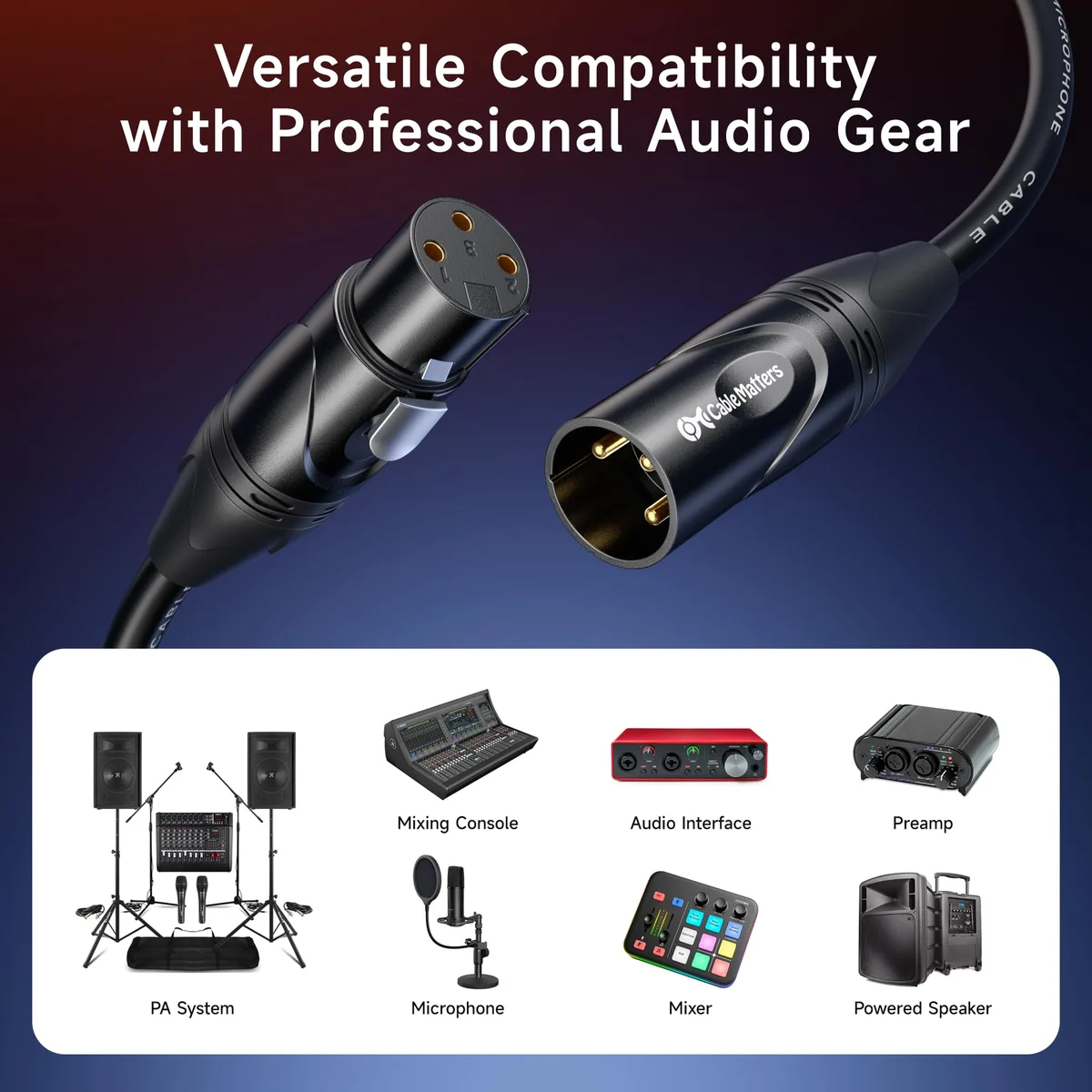
Buy Once or Buy Cheap?
Get the Cable Matters Premium XLR 2-Pack If...
- You want to buy XLR cables once and never think about them again — OFC conductors, braided shielding, and gold-plated connectors are built for 5-10+ years of reliable service
- You need two cables for a dual-mic podcast setup, a backup cable, or simultaneous mic and instrument connections
- Your cable routes near power strips, USB hubs, LED monitors, or other EMI sources — braided shielding maintains 85-95% coverage even at bend points
- You plug and unplug the cable regularly — gold-plated connectors resist the oxidation and contact resistance that degrades nickel-plated connectors after hundreds of connection cycles
- You are connecting a Shure MV7+, PodMic USB, or any other XLR mic to an audio interface as your primary recording chain
Get the AmazonBasics XLR Cable If...
- You need the absolute cheapest cable to test whether XLR sounds better than USB with your current mic and a borrowed or new audio interface
- The cable will be plugged in once and left permanently connected in a quiet electromagnetic environment — under these conditions, the AmazonBasics cable performs identically to more expensive options
- Budget is measured in single-digit dollars and the Cable Matters price is a barrier — the AmazonBasics cable works and any XLR cable is better than no XLR cable
The Cable Matters 2-pack is the default recommendation. The per-cable cost difference is roughly two dollars. Two dollars buys a specification upgrade across every measurable cable characteristic: conductor purity, shielding coverage, connector durability, and strain relief quality. The second cable in the pack is either a backup or an expansion path for dual-mic recording. There is no logical argument for buying two AmazonBasics cables when the Cable Matters 2-pack costs the same and delivers better specifications on both cables.
For home producers recording vocals or acoustic instruments through XLR, the cable is the one component in the signal chain that should never be the source of a quality question. If a recording sounds off, you want to troubleshoot mic placement, room acoustics, interface gain staging, or software settings — not wonder whether the cable is introducing noise. The Cable Matters 2-pack removes cable quality as a variable in your recording chain permanently.
Cables are the most boring purchase in any audio setup. That is exactly why buying them right the first time matters — because a cable that works invisibly for years is the goal, and a cable that develops intermittent crackling 18 months into a podcast run is a frustrating interruption to content creation. The Cable Matters 2-pack achieves the boring-but-reliable goal. The AmazonBasics cable achieves it for a shorter window with more risk at the edges.
Both cables appear in our product catalog alongside every XLR-capable microphone. The Samson Q2U, MV7+, PodMic USB, and FIFINE AM8 all use standard 3-pin XLR connections compatible with both cables. Our USB vs XLR guide covers the upgrade path that makes these cables relevant — when the USB connection is good enough and when XLR through an audio interface is worth the additional equipment investment. Our podcast studio setup guide covers the full signal chain from microphone to audio interface to recording software.
XLR Cable Questions
Can you hear the difference between a cheap XLR cable and an expensive one?
Between these two cables in a home studio with runs under 10 feet: no. Both transmit a clean balanced audio signal. The difference shows up as reliability over time — braided shielding (Cable Matters) resists interference in environments with power cables, LED monitors, and Wi-Fi routers better than spiral shielding (AmazonBasics). The audible impact is not in normal conditions but in edge cases: long runs, high-RF environments, or cables routed near power lines.
How long do cheap XLR cables last?
AmazonBasics XLR cables last 1-3 years of regular home studio use. The failure point is usually the connector housing — the solder joints loosen from repeated plugging and unplugging, introducing crackling or intermittent signal dropout. Cable Matters XLR cables with gold-plated connectors resist corrosion and maintain tighter contact over 5+ years. For a cable you plug in once and leave connected, even the AmazonBasics cable lasts years. For a cable that travels to sessions, gets coiled and uncoiled, or gets plugged and unplugged weekly, build quality is the longevity factor.
Is the Cable Matters 2-pack a better deal than buying two AmazonBasics cables?
Yes. Two AmazonBasics cables cost roughly the same as the Cable Matters 2-pack. For the same total price, Cable Matters provides OFC conductors, braided shielding, and gold-plated connectors on both cables. Two AmazonBasics cables give you CCA conductors and spiral shielding on both. Same price, different quality tier.
Do XLR cables affect microphone sound quality?
Not in normal home studio conditions with cable runs under 25 feet. The balanced XLR connection cancels electromagnetic interference regardless of cable quality. Both of these cables transmit the microphone signal without audible degradation at typical home studio distances. Cable quality matters for professional installations with runs over 50 feet, cables routed through walls alongside AC power, or live performance venues with heavy lighting rigs generating electromagnetic interference.
Track Both Products
We'll email you if either price drops or availability changes.
Only when something changes. Unsubscribe anytime.