Microphone Frequency Response Explained
What Frequency Response Numbers Actually Tell You
Every microphone spec sheet lists a frequency response range — something like "20 Hz - 20 kHz." These numbers describe the lowest and highest frequencies the mic picks up, measured in Hertz. Lower numbers mean deeper bass; higher numbers mean more treble. But the range endpoints are the least useful part of the spec.
The shape of the response between those endpoints is what determines how a microphone actually sounds on your voice. Two microphones with identical "20 Hz - 20 kHz" ratings can sound completely different — one warm and bassy, the other bright and cutting — because they boost and attenuate different frequency bands along that range.
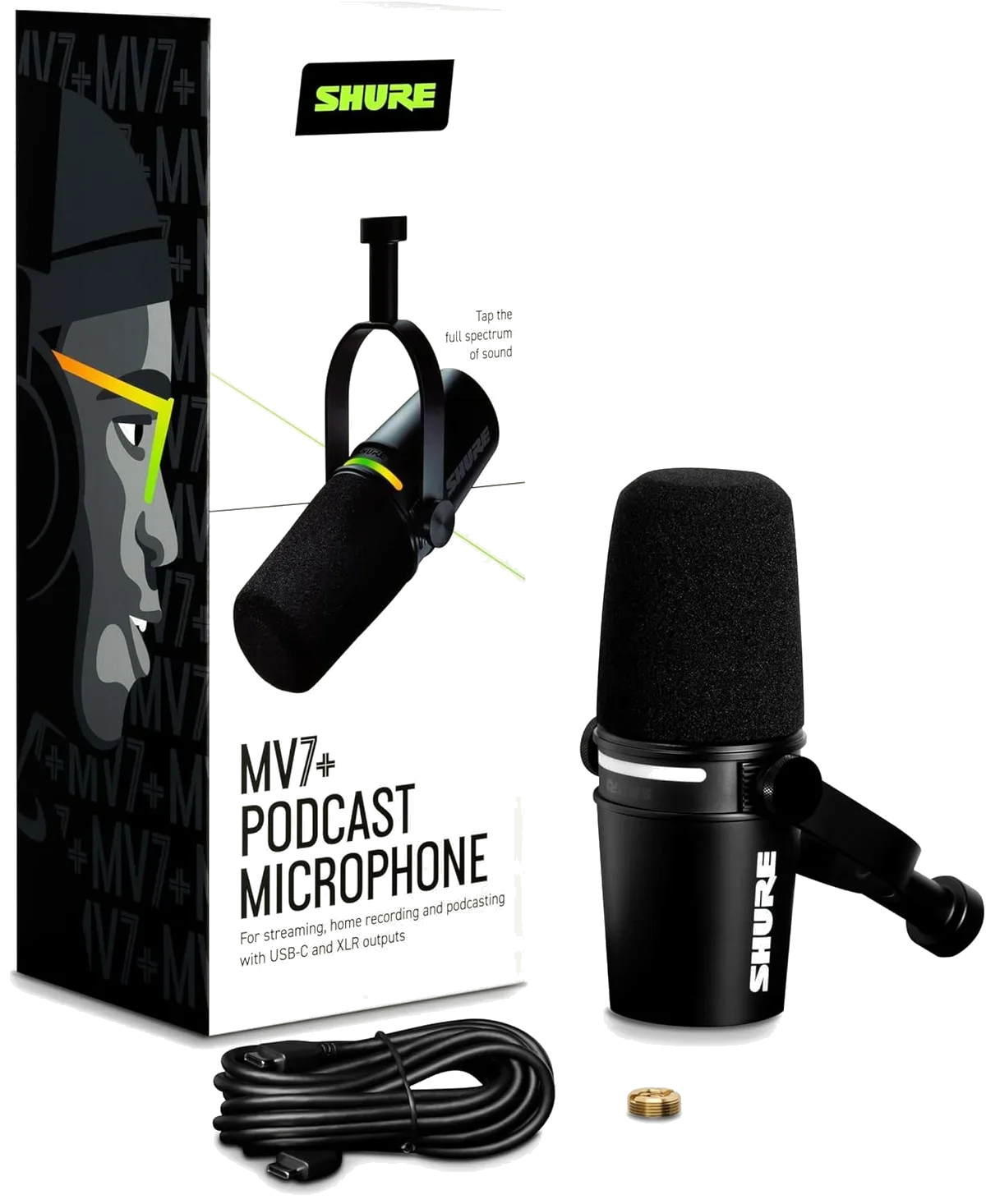
That shape is called the frequency response curve, and understanding it gives you more information about a mic's character than any other single specification. Every mic in our catalog — from the budget FIFINE AmpliGame dynamic microphone to the premium Shure MV7+ podcast microphone — has a distinct curve shape that defines its personality on voice. Knowing how to read that curve helps you predict whether a mic will suit your voice before buying it.
The Four Frequency Bands That Matter for Voice
Human speech occupies a specific slice of the frequency spectrum. Most of the energy in a male voice sits between 85 Hz and 180 Hz (fundamental pitch), with harmonics and consonants extending up to 8 kHz. Female voices run slightly higher, with fundamentals between 165 Hz and 255 Hz. Everything above 8 kHz is air and sibilance — the "s" and "t" sounds that add presence but can also cause harshness.
Chest resonance, room rumble, HVAC hum. A mic that boosts this range sounds warm but can also sound muddy or boomy in untreated rooms. Roll-off below 80 Hz is desirable for speech — it removes noise without affecting vocal warmth.
The body of human speech. This is where most of your vocal tone lives. A flat response here produces natural-sounding voice. Dips create a hollow, thin sound. Boosts create a nasal, honky quality. Most well-designed mics keep this range relatively flat.
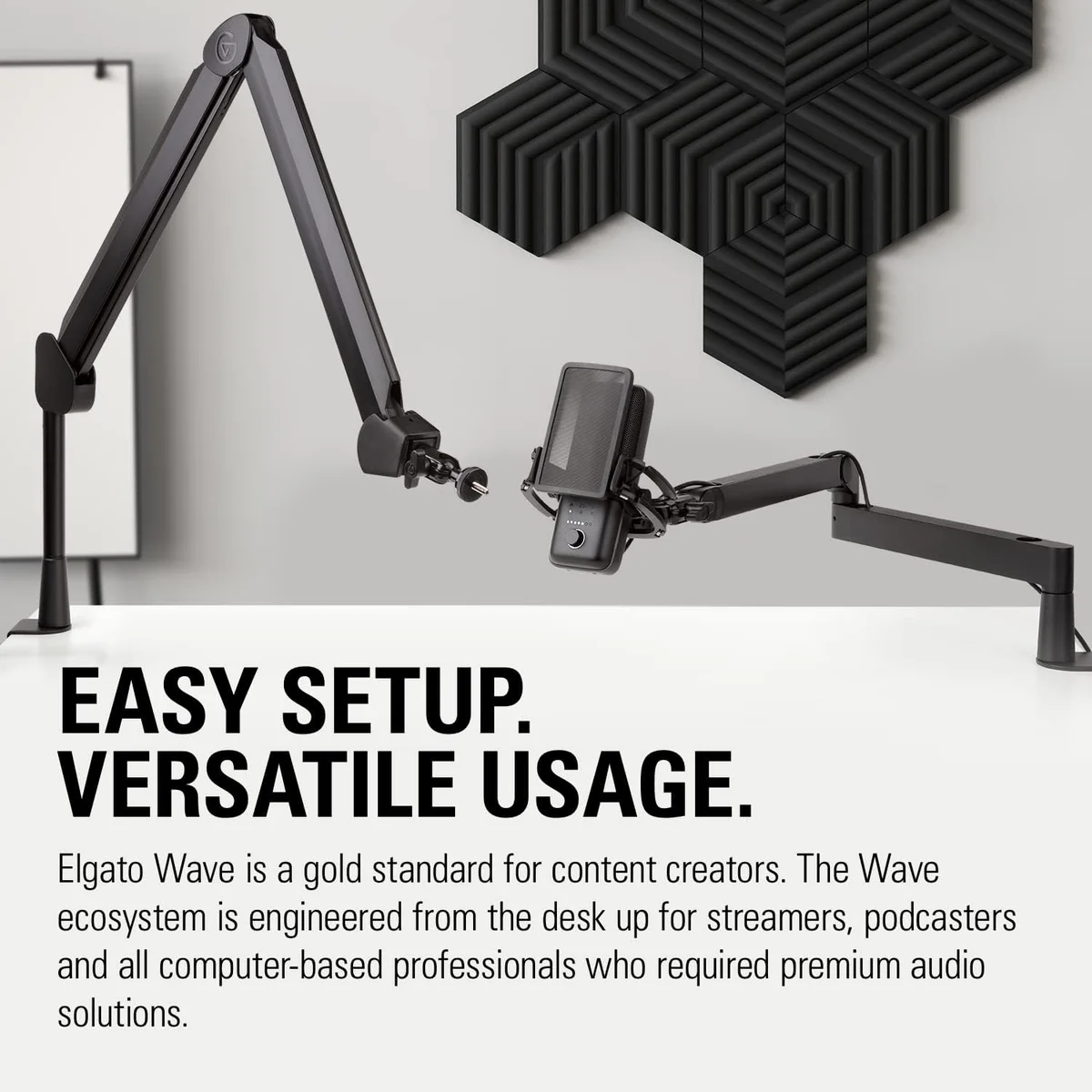
Clarity and intelligibility. Boosting this range makes speech cut through a mix — the reason you can hear a podcast host over background music. The Shure MV7+ podcast microphone and Elgato Wave:3 streaming mic both have deliberate presence boosts tuned for voice.
Sibilance, breath sounds, and the sensation of "openness." Too much here and your recording sounds harsh and hissy. Too little and it sounds dull. Condenser mics extend further into this range than dynamics — which is why condensers sound "airy" and dynamics sound "warm."
Why "Flat Response" Is Not Always Best
Studio reference microphones aim for flat frequency response — capturing sound exactly as it is, with no coloring. That sounds ideal on paper, but for most content creators, a perfectly flat mic actually sounds worse than a shaped one.
A flat mic in an untreated room captures the room faithfully — including every reflection, resonance, and standing wave. A mic with a gentle low-cut and presence boost sounds better in the same room because it reduces the rumble and adds clarity to your voice. The shaping compensates for the imperfect recording environment.
This is not a trick or a compromise. Professional broadcast microphones have been intentionally shaped this way for decades. The Shure SM7B — the industry-standard podcast mic — has a pronounced presence peak and bass roll-off built into its capsule design. Every USB mic in our catalog that targets podcasters follows the same philosophy.
Dynamic vs Condenser: Different Response Curves
The mic type — dynamic or condenser — affects the frequency response curve more than any other single factor. Here is why.
Gentle bass warmth, smooth midrange, presence boost around 3-5 kHz, then roll-off above 12-15 kHz. The heavier diaphragm naturally attenuates high frequencies. Result: warm, forgiving tone that sounds good on almost any voice without post-processing.
Extended bass response, detailed midrange, wider presence peak, strong treble extension to 20 kHz and beyond. The lighter diaphragm captures high-frequency detail that dynamics miss. Result: bright, detailed tone that reveals room acoustics — great in treated spaces, problematic in bedrooms.
For most home creators, the dynamic response curve is more forgiving. Condensers reward good rooms and punish bad ones. That is not opinion — it is the pattern we see in thousands of user reviews. Negative reviews on condenser mics correlate strongly with untreated recording spaces. Our microphone buying guide covers this decision in depth.
One exception worth noting: the Elgato Wave:3 condenser microphone partially compensates for its extended response with Clipguard — a hardware feature that prevents clipping when the presence peak amplifies sudden loud sounds. Most condensers clip hard when a loud plosive or shout hits the capsule. The Wave:3 catches that peak and dials it back in real time. It does not change the frequency response, but it prevents the most common consequence of a bright, extended response curve in hands that are not managing gain carefully.
Proximity Effect: The Spec Sheet Does Not Mention
Frequency response specs are measured at a fixed distance — usually 12 inches. But microphone behavior changes as you move closer. This is called the proximity effect, and it affects cardioid and bidirectional microphones (which includes nearly every podcast mic on the market).
Move closer to the mic and bass frequencies increase. Move back and they decrease. At 2 inches from a cardioid mic, bass can be boosted by 10-15 dB over the spec sheet measurement. That is a huge change — enough to transform a thin-sounding mic into a warm, radio-broadcaster tone.
Professional podcasters and voice actors exploit proximity effect deliberately. They work at 3-4 inches from the mic to get a warm, intimate sound that the spec sheet would never predict. The Rode PodMic USB broadcast microphone has a particularly smooth proximity effect that adds warmth without muddiness — one reason broadcast engineers favor it.
Proximity effect is free EQ. Learn it before buying plugins.
The opposite is also true — if your voice sounds boomy or muddy, the fix might be moving 2 inches further from the mic rather than cutting bass in software. Many negative reviews in our data describe problems that are pure proximity effect: "too bassy up close" or "thin and hollow at arm's length." These are not mic defects. They are physics that every cardioid microphone obeys, from a $25 budget condenser to a $400 broadcast dynamic.
How to Read a Frequency Response Chart
Some manufacturers publish frequency response charts — a graph with frequency (Hz) on the x-axis and sensitivity (dB) on the y-axis. Here is what to look for, in order of importance for voice recording:
This is where 95% of your voice lives. Ignore the extreme bass and treble extensions — they affect room rumble and air, not vocal tone. A smooth, gently rising curve through this range is ideal for spoken word.
Look for a bump between 2-6 kHz. A 3-5 dB boost here is normal and desirable for voice mics. A 10+ dB peak can cause harshness on sibilant voices. No peak at all means the mic will sound dull on voice without EQ.
A gentle slope starting below 100-150 Hz reduces room rumble without thinning your voice. A sharp cliff below 200 Hz will make baritone voices sound hollow. The FIFINE AmpliGame dynamic microphone has a natural low-frequency roll-off that works well in noisy rooms.
A chart with a y-axis range of ±5 dB looks dramatically different from one with ±20 dB, even if the actual response curve is similar. Always check the dB scale before judging how "bumpy" a response looks.
EQ Cannot Replace Good Frequency Response
A common argument: "just buy any mic and fix the frequency response with EQ in post." This works in theory and fails in practice for two reasons.
First, boosting frequencies that a mic does not capture well amplifies noise in that band. If a dynamic mic rolls off above 14 kHz and you boost 15 kHz by 6 dB in post-production, you are mostly boosting the noise floor in that range, not useful audio. You cannot add information that was never captured.
Second, cutting frequencies with EQ works far better than boosting them. A mic with too much presence can be tamed with a 2-3 dB cut at 4 kHz — clean and natural-sounding. A dull mic boosted by 6 dB at 4 kHz sounds harsh and processed. The asymmetry is real: it is always easier to remove energy than to add it convincingly.
The practical lesson: choose a mic whose natural frequency response is close to what you want. The HyperX QuadCast S gaming condenser has a bright, forward character that suits energetic streaming commentary without any EQ. The Rode PodMic USB broadcast microphone has a warm, smooth character that suits calm podcast narration. Neither needs correction — they are tuned for their target use case.
The Practical Bottom Line
Honestly, frequency response specs matter less than most buyers think. Two things have a bigger impact on how your voice sounds in a recording:
Mic placement. Moving 2 inches closer changes your bass response by 6-10 dB. No frequency response curve can predict or replace that. The spec sheet is measured at a single, fixed distance that you will almost certainly not replicate.
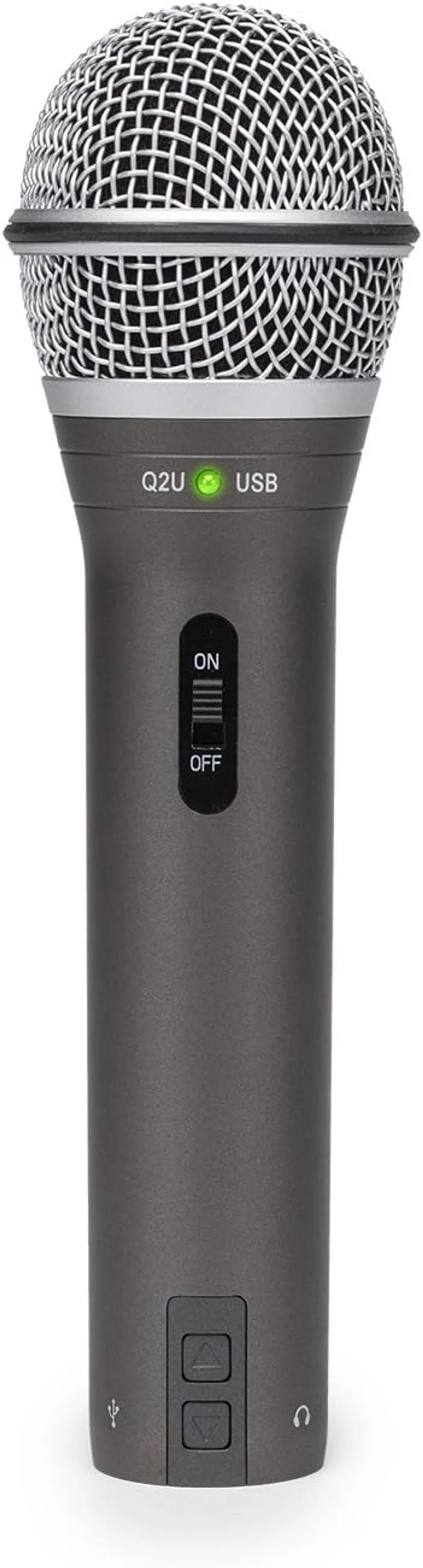
Room acoustics. A flat-response condenser in a reflective room sounds worse than a shaped dynamic in the same room. The room imposes its own frequency response on top of the mic's response. In untreated spaces, a mic with built-in shaping (like the Shure MV7+ podcast microphone or Samson Q2U recording mic) compensates for problems the room creates.
Your ears are the final spec sheet.
Read reviews. Listen to audio samples. Trust what people report hearing over what the manufacturer reports measuring. A frequency response chart tells you how a mic measures in an anechoic chamber with calibrated test equipment at a fixed distance. Your recording happens in a bedroom with reflective walls, a humming computer, and a voice that is uniquely yours. The spec sheet cannot account for any of that.
Frequently Asked Questions
What frequency response is best for voice recording?
A response curve that slightly boosts the 2-6 kHz presence range while rolling off below 80 Hz. This combination makes speech cut through a mix while reducing low-frequency rumble from air conditioning, footsteps, and desk vibrations. Most quality podcast mics are tuned this way from the factory.
Does a wider frequency response mean better sound?
No. A mic rated 20 Hz - 20 kHz does not automatically sound better than one rated 50 Hz - 18 kHz. The shape of the response curve — where it boosts and where it dips — matters far more than the endpoints. A mic with a flatter response in the vocal range (100 Hz - 8 kHz) will sound more natural for speech than one with extreme extension at both ends.
What is the presence peak and why does it matter?
The presence peak is a deliberate boost in sensitivity between 2 kHz and 6 kHz — the frequency range where human speech carries most of its clarity and intelligibility. Microphones designed for vocals intentionally boost this range so your voice cuts through background noise and music. The Shure MV7+ and Elgato Wave:3 both have prominent presence peaks tuned for voice.
Should beginners worry about frequency response specs?
Not much. Frequency response tells you what a mic can capture, but it does not tell you how it sounds in your specific room with your specific voice. Mic placement, room treatment, and gain staging affect your recorded tone far more than frequency response numbers. Read user reviews and listen to audio samples instead of comparing spec sheets.
What does a low-cut filter do to frequency response?
A low-cut filter (also called a high-pass filter) removes frequencies below a certain point — typically 80 Hz or 100 Hz. This eliminates rumble from HVAC, traffic, footsteps, and desk vibrations without affecting vocal clarity. Some mics like the Rode PodMic USB have this built in. Others apply it via software or audio interface controls.
Why do dynamic and condenser mics have different frequency responses?
Dynamic mics use a heavier moving-coil diaphragm that naturally rolls off high frequencies above 12-15 kHz. Condensers use a lighter diaphragm that extends easily to 20 kHz and beyond. For spoken word, this difference is subtle. For music recording — especially acoustic instruments, cymbals, and breathy vocals — condensers capture high-frequency detail that dynamics miss.
Our Top Recommendation
Based on our research, the Shure MV7+ is our top pick — serious podcasters and streamers who want a single mic that works with both usb-c and xlr, especially in untreated rooms..
Get Mic Picks Delivered
One email per week. Honest reviews, zero spam.
Only when something changes. Unsubscribe anytime.