Proven Entry-Level vs Unverified Bargain
The Lark A1 wins. Higher audio resolution, lighter transmitter weight, far longer battery life, expert-verified quality, and a brand with proven products up to the professional tier. The price gap is negligible. The quality gap is not.

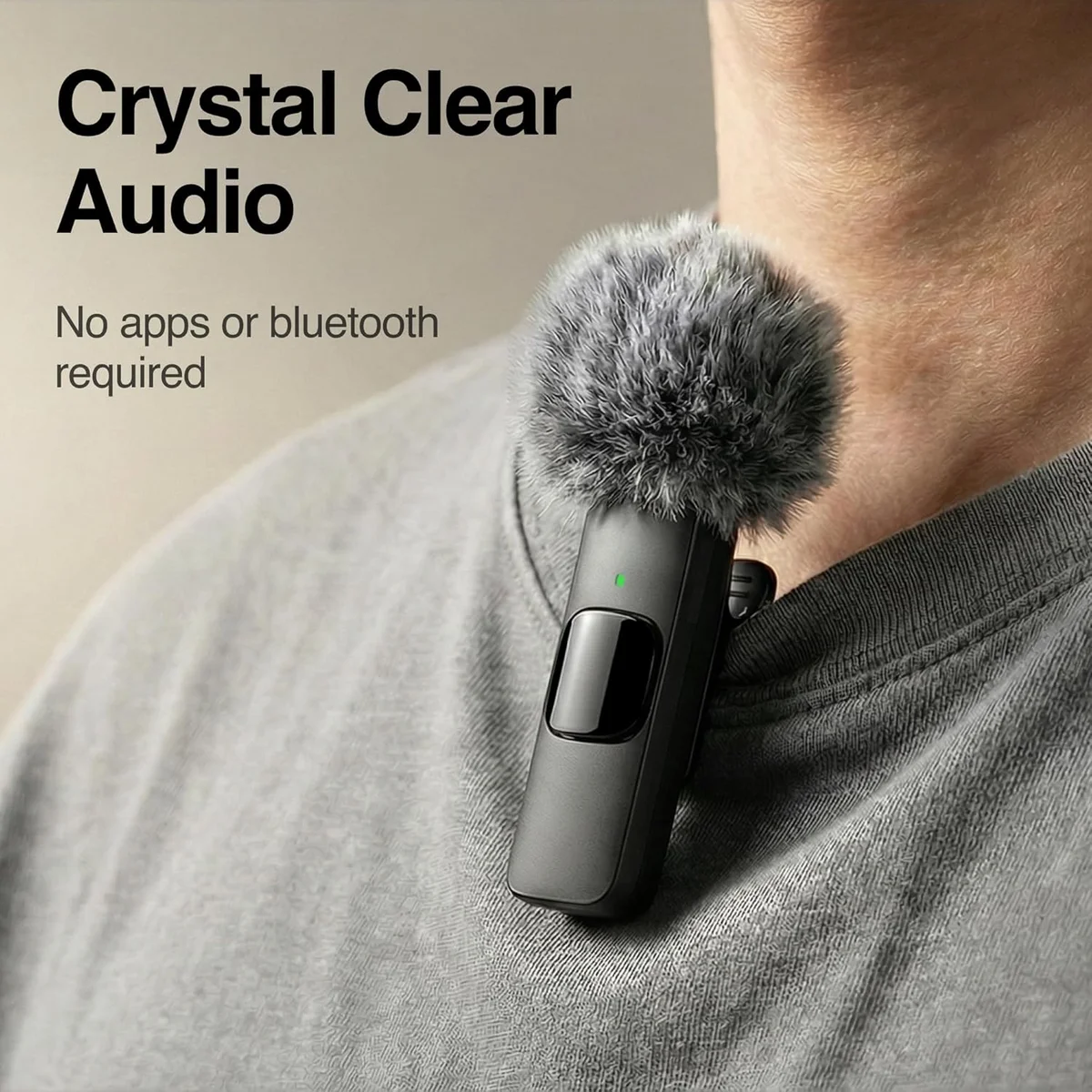
Lark A1
Mini Mic Pro
The Lark A1 and Mini Mic Pro sit at the absolute floor of wireless microphone pricing — the tier where the question is not "which sounds better" but "which one actually works." Both cost less than a mid-range lunch. Both promise wireless audio that improves on smartphone built-in microphones. Both clip on and connect to a phone receiver with zero setup. The Lark A1 at $25–$50 costs modestly more expensive compared to the Mini Mic Pro at Under $25.
The price gap between them is roughly five dollars. What that five dollars buys — or doesn't buy — is the entire comparison. The Lark A1 is made by Hollyland, a company whose wireless microphone line extends from this entry point through the Lark M2 mid-range system to professional broadcast equipment. The Mini Mic Pro has zero expert reviews from any recognized publication. No independent audio tests. No verified performance measurements. The manufacturer's claims are the only data available.
Both products appear in our wireless microphone roundup and budget roundup. The Lark A1 ranks as the budget gateway wireless pick. The Mini Mic Pro ranks as the ultra-budget option for the most price-constrained buyers. Our wireless microphone buying guide covers wireless technology fundamentals, and our Lark M2 vs DJI Mic Mini comparison covers the next tier up for buyers who can stretch their budget.
Lark A1Mini Mic ProAt a Glance
| Feature | Editor's Pick Hollyland Lark A1 | Mini Mic Pro Wireless Lavalier |
|---|---|---|
| Price Range | $25–$50 | Under $25 |
| Type | Wireless System (1TX + 1RX) | Wireless Lavalier |
| Polar Pattern | Omnidirectional | Omnidirectional |
| Frequency Response | 50 Hz – 20 kHz | — |
| Sample Rate | 48 kHz / 24-bit | — |
| Connectivity | USB-C or Lightning | USB-C or Lightning |
| Features | Noise cancellation, charging case, 8g transmitter | Multiple audio modes, clip-on design |
| Wireless Range | 656 ft (200m) claimed | — |
| See Current Price | See Current Price |
Audio Specifications: Documented vs Unknown
The Hollyland Lark A1 records at 48 kHz/24-bit — a specification verified by Hollyland's published product data and confirmed by third-party reviewers. At this sample rate and bit depth, the Lark A1 captures voice audio with enough resolution for YouTube, TikTok, Instagram Reels, and podcast distribution without audible quality limitations. 24-bit recording provides headroom for volume variation — if you speak louder or quieter than expected, the extra bit depth preserves the signal without clipping distortion or noise floor issues that 16-bit recording creates at low volumes.
The Mini Mic Pro does not publish sample rate or bit depth specifications. The product listing mentions "multiple audio modes" (music, podcast, standard) but does not document the actual recording resolution behind those modes. Without verified specs, there is no way to confirm whether the Mini Mic Pro records at 16-bit, 24-bit, or some proprietary compressed format. At this price tier, undocumented specs usually mean the manufacturer chose not to highlight numbers that would invite direct comparison — which is not a confidence signal.
The practical difference: the Lark A1's audio quality has been measured by people outside Hollyland. The Mini Mic Pro's audio quality has been described only by the company selling it and by Amazon reviewers who lack measurement tools. When you publish content on YouTube, TikTok, or a podcast feed, the platform applies its own compression. Audio that starts at 48 kHz/24-bit compresses cleanly. Audio that starts at an unknown resolution may compress with audible artifacts — or it may not. Without verified specs, you are making a bet instead of a decision.
The difference between 24-bit and 16-bit recording matters most at low volumes. 24-bit provides a wider dynamic range — 144 dB versus 96 dB — which means quieter speech passages retain clarity instead of disappearing into the noise floor. For outdoor recording where wind, traffic, and ambient noise compete with voice, that extra headroom can be the difference between usable audio and a re-shoot.
Battery Life: 54 Hours vs an Estimated 4
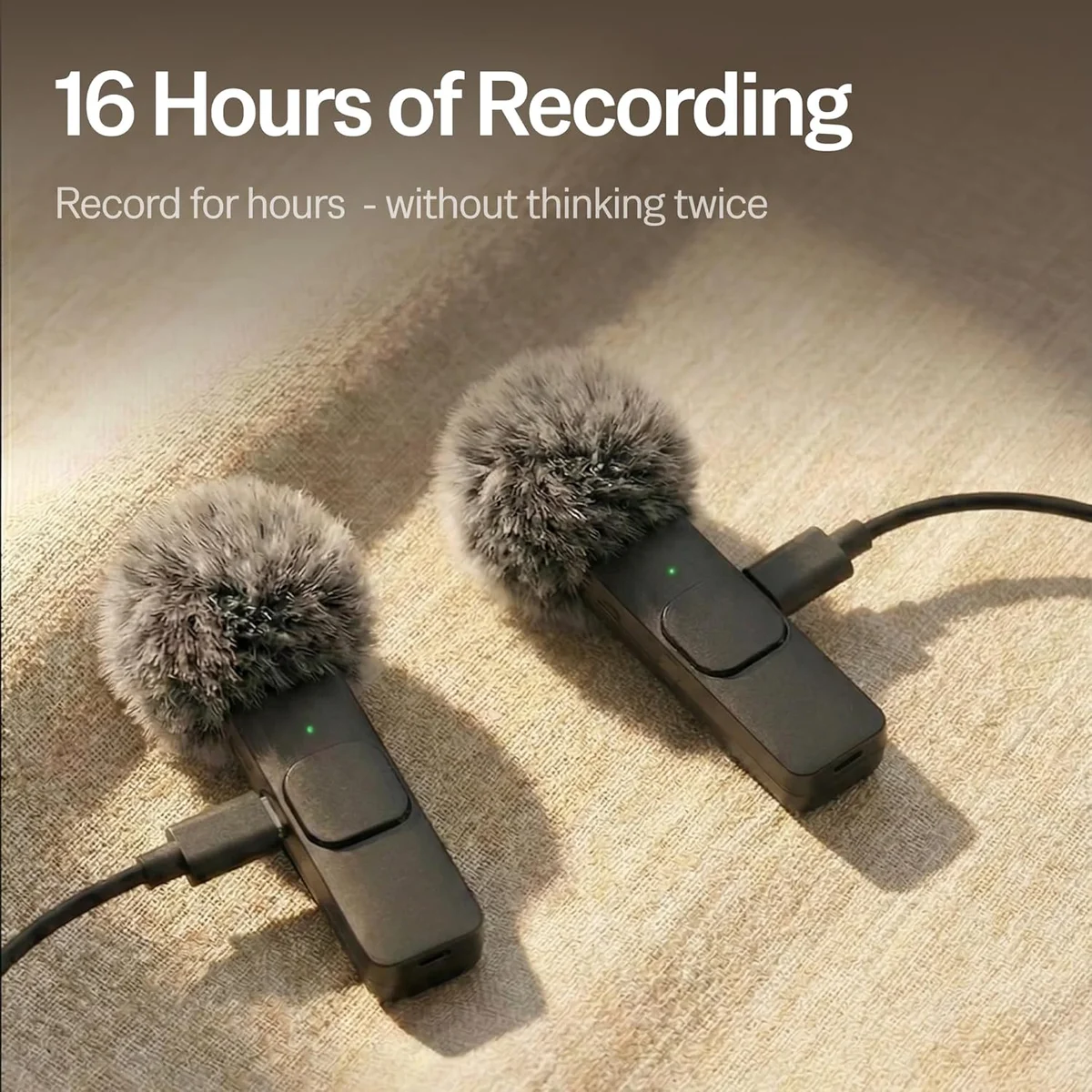
The Lark A1 transmitter runs for 9 hours per charge. The charging case holds enough power to recharge the transmitter multiple times, delivering approximately 54 hours of total recording time before the case itself needs a USB-C charge. For a content creator shooting 30-minute videos three times a week, the Lark A1 battery system lasts well over a month between case charges. You can realistically forget about battery management and just use it.
The Mini Mic Pro's battery life is not precisely documented by the manufacturer. User reports on Amazon suggest approximately 4 hours of continuous use — enough for a single extended recording session but requiring a charge between every other use for frequent creators. No charging case is included; the transmitter charges directly via USB. The disparity is not subtle: 54 hours of total system battery versus roughly 4 hours per charge with no case backup.
Battery life at this price tier is not a luxury specification — it determines whether the mic is a grab-and-go tool or a plan-around-charging tool.
Transmitter Weight and Wearability
The Lark A1 transmitter weighs 8 grams — roughly the weight of two sugar packets. Clipped to a shirt collar, lapel, or neckline, it is functionally invisible. The weight creates no fabric pull, no visible sag, no awareness that the mic exists during recording. Lighter than a house key. For talking-head content where the creator needs to forget the mic is there and focus on delivery, 8 grams achieves that.
The Mini Mic Pro does not publish a precise weight. User reports describe it as "lightweight" but noticeably heavier than branded competitors like the Lark A1. The clip mechanism is simpler — a basic spring clip rather than the Lark A1's magnetic attachment — and users report it can shift on thinner fabrics. For lightweight t-shirts and blouse collars, clip stability on unbranded budget mics is a recurring complaint across the ultra-budget wireless category. But not a dealbreaker.
Wireless Range: 200 Meters Claimed vs 20 Meters Real
The Lark A1 claims 200 meters (656 feet) of wireless range. In real-world indoor testing, reliable range drops to approximately 20-30 feet — well short of the claim but sufficient for home recording, small office setups, and single-room content creation. At distances under 15 feet indoors (the typical phone-to-creator distance for TikTok and YouTube), the connection is stable with no audible dropout or artifacts.
The Mini Mic Pro claims 65 feet (20 meters) of range — a lower claim that is more honest about the category's real-world limitations. User reports suggest actual reliable indoor range of 10-15 feet. At this range, the transmitter and receiver must stay in the same room without obstacles between them. Walking into a different room or behind a wall will likely cause signal dropout with no onboard recording to recover the lost audio.
Neither system records audio onboard the transmitter. Both rely entirely on the wireless connection between transmitter and receiver — if the connection drops, that audio segment is gone with no backup recording to recover. The premium wireless systems in our catalog — the DJI Mic 3 and Rode Wireless Go II — both record onboard as a safety net, but they cost several times more than either of these budget options.
For TikTok and short-form content where the creator stands 3-5 feet from the phone: both wireless systems maintain stable connections. For YouTube vlog-style content where the creator walks around a room: the Lark A1's extra range provides more freedom of movement before dropout risk. For any content where the creator and the recording device are in different rooms: neither system is appropriate.
Noise Cancellation: Functional vs Undocumented
The Lark A1 includes a noise cancellation mode that can be toggled on or off. When enabled, it processes the audio signal to reduce ambient environmental noise. The catch: Hollyland's own users report that the noise cancellation algorithm audibly degrades voice quality when active — introducing a slightly processed, compressed texture to the audio. The recommendation from experienced Lark A1 users is to leave noise cancellation off and rely on the capsule's natural pickup, accepting moderate ambient noise rather than the processed artifact the noise cancellation introduces.
The Mini Mic Pro lists "noise reduction" as a feature. The type, aggressiveness, and quality of this noise reduction are undocumented. Whether it is always on, toggleable, or just marketing language for the omnidirectional capsule's natural rejection pattern is not clear from the product listing or available user feedback. Without independent testing, the noise cancellation claim cannot be compared to the Lark A1's known (and known-to-be-imperfect) implementation.
At this price tier, noise cancellation on wireless mics is a feature best viewed skeptically on both products — the Lark A1's implementation is documented and flawed, the Mini Mic Pro's is undocumented and unverifiable. The safest approach with either mic: record in the quietest environment available and handle noise reduction in post-production if needed. Free tools like Audacity's noise reduction or the built-in audio cleanup in CapCut and DaVinci Resolve do a better job than onboard processing at this hardware tier.
Build Quality and Physical Design
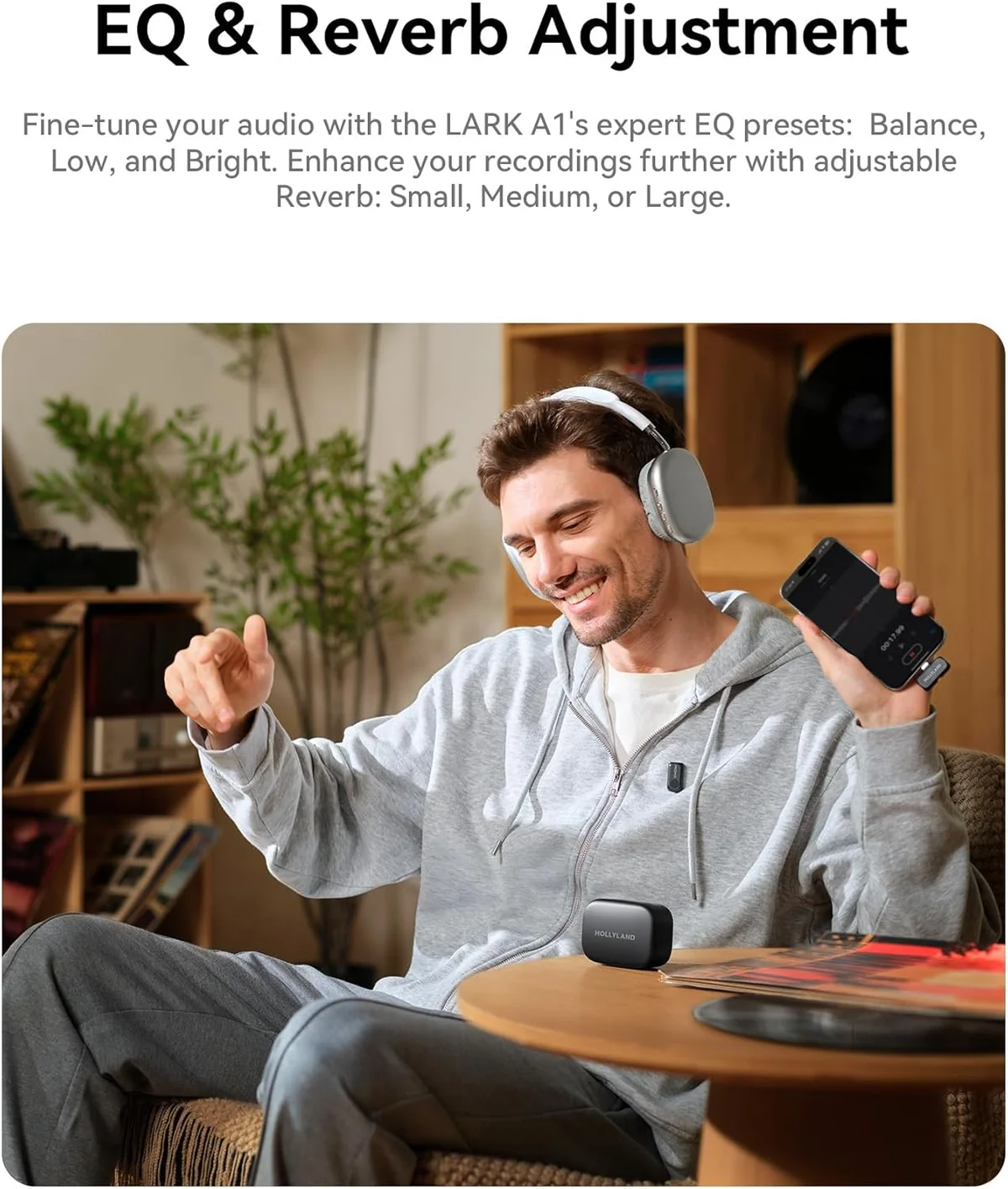
The Lark A1 charging case is a compact rectangle with a USB-C charging port and magnetic lid closure. The transmitter seats into a molded cavity and begins charging automatically when stored. The case design is borrowed from Hollyland's more expensive products — functional, pocketable, and designed to protect the transmitter during daily carry in a bag or pocket. The plastic construction is lightweight but sturdy enough for normal handling.
The Mini Mic Pro packaging is simpler. No charging case is included — the transmitter charges directly via USB cable. This means the transmitter lives loose in a bag, pocket, or desk drawer between uses, with no protective housing and no charging-while-stored convenience. The clip mechanism is a basic spring clip that provides adequate grip on thicker fabrics but can slip on thin materials like silk blouses, thin t-shirt collars, or lightweight athletic wear. The Lark A1's magnetic clip holds more securely on a wider range of fabric types.
The Lark A1 feels like the budget entry point of a product line that extends to professional broadcast equipment. The Mini Mic Pro feels like a standalone budget product designed entirely to a price point.
Brand Accountability and Long-Term Value
Hollyland makes professional wireless audio equipment used in film and broadcast production. The company has a support infrastructure, firmware update history, and a product line that demonstrates ongoing engineering investment. If the Lark A1 has a compatibility issue with a new phone or OS update, Hollyland has the organizational capacity and business incentive to address it. The Lark A1 is the entry point of a product ecosystem that extends upward through the Lark M2 to professional Pyro series transmitters.
The Mini Mic Pro is manufactured by "Mini Mic Pro" — a brand with no other known products, no visible company history, and no public engineering team. This does not mean the product is defective. It means that if the Mini Mic Pro has a compatibility issue, a firmware bug, or a hardware failure outside the Amazon return window, there is no documented support infrastructure to resolve it. The product exists as a standalone listing with no ecosystem around it.
The difference matters when a phone OS update breaks wireless mic compatibility — which happens regularly. Branded products get firmware patches. Unbranded products get abandoned.
The Five-Dollar Question
The Lark A1 costs roughly five dollars more than the Mini Mic Pro. That five dollars buys: verified 48 kHz/24-bit recording, an 8-gram transmitter, a 54-hour battery system with charging case, a 200-meter claimed wireless range (20-30 feet real), a brand with documented professional products and support, and independent expert reviews confirming performance. The Mini Mic Pro at five dollars less offers: undocumented audio specs, an approximately 4-hour battery with no charging case, a 65-foot claimed range (10-15 feet real), an unknown brand, and zero independent expert verification.
Five dollars is not a budget decision — it is less than a streaming subscription, less than a fast food combo, less than the markup on any other piece of content creation equipment in any category. The savings from choosing the Mini Mic Pro over the Lark A1 do not fund any other equipment purchase. The quality gap they create is measurable across every specification category.
 Lark A1
 Mini Mic Pro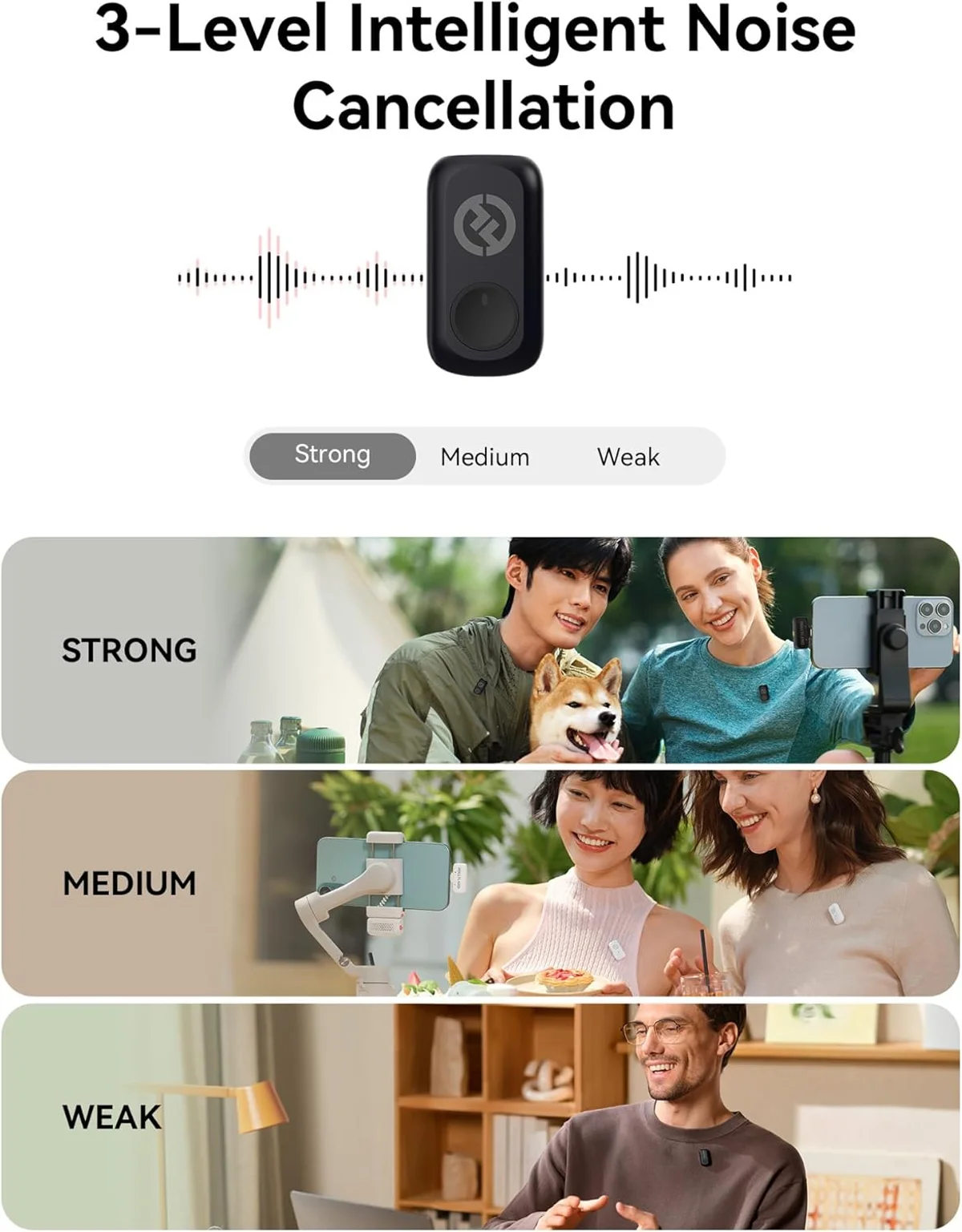
Branded or Bargain?
Get the Hollyland Lark A1 If...
- You want the cheapest wireless mic from a brand that makes professional audio equipment — the Lark A1 is Hollyland's entry point with specs verified by independent reviewers
- Battery life matters — the 54-hour system means you charge the case every few weeks rather than the transmitter before every session
- You plan to upgrade later — the Lark A1 → Lark M2 → professional Pyro series is a documented upgrade path within one brand ecosystem
- Audio resolution matters — 48 kHz/24-bit recording is published, tested, and produces audibly better results than undocumented alternatives at similar prices
- You want the lightest possible clip-on at this price tier — 8 grams disappears on any fabric
Get the Mini Mic Pro If...
- You need the absolute lowest purchase price and cannot add five dollars to the budget — the Mini Mic Pro is cheaper
- You are testing whether wireless audio improves your content at all, and a lower-risk investment for a single trial run is the priority over long-term quality
- Short-session recording (under 4 hours) is your pattern, and the battery limitation does not affect your actual use case
- Amazon reviews from other buyers provide enough confidence for your purchasing decision without independent expert verification
The Lark A1 is the recommendation for every buyer at this price tier. Not because the Mini Mic Pro is necessarily bad — there is not enough independent data to make that claim in either direction — but because the Lark A1 provides verifiable quality at a price difference too small to register as savings. Spending five fewer dollars on a wireless mic to get undocumented specs, shorter battery, heavier weight, and no brand accountability is a false economy.
Honestly, the stronger comparison for most buyers at this budget is not Lark A1 vs Mini Mic Pro — it is Lark A1 vs no wireless mic at all. The Lark A1 is the cheapest wireless mic we can recommend with confidence as a real upgrade from phone built-in audio. Below the Lark A1's price point, the risk of buying something that works poorly or fails within months rises faster than the savings justify.
For specific content types: TikTok creators shooting 15-60 second clips indoors will get acceptable results from either mic — both work at close range in a single room. YouTube vloggers who move around while talking need the Lark A1's longer real-world wireless range and lighter 8-gram transmitter. Podcast guests recording remotely with a phone setup benefit from the Lark A1's 24-bit headroom that preserves voice quality during quieter passages. For any of these use cases, the five-dollar gap between these mics should not be the factor that drives the decision — the spec sheet, the battery system, and the brand accountability behind the product should be.
For creators who can stretch the budget further, the DJI Mic Mini adds DJI's brand trust and a 48-hour case battery at a higher price point. The Hollyland Lark M2 adds dual-channel interview capability and both USB-C and Lightning adapters. Our Lark M2 vs Mic Mini comparison covers the mid-budget tier. Our wireless microphone roundup ranks every wireless option from the Lark A1's entry price to the DJI Mic 3 and Rode Wireless Go II premium tier. Our wireless buying guide explains the technology differences that separate these price tiers and helps match features to actual content creation needs.
Budget Wireless Basics
Is the Hollyland Lark A1 worth the extra few dollars over the Mini Mic Pro?
Yes. The Lark A1 records at 48 kHz/24-bit versus the Mini Mic Pro's undocumented specs, weighs 8 grams versus roughly 12, has a 54-hour battery system versus an estimated 4 hours, and is manufactured by Hollyland — a brand with verified expert reviews and a product line extending to professional gear. The price gap between these two mics is roughly the cost of a coffee. The quality gap is the difference between verified performance and a gamble.
Has anyone professionally reviewed the Mini Mic Pro Wireless?
No. Zero expert reviews exist from recognized audio publications, YouTube tech channels, or professional reviewers. All available feedback comes from Amazon customer reviews. Without independent testing, the manufacturer's claims about audio quality, noise cancellation, and wireless range cannot be verified against objective measurements.
Can either mic record two people at once?
No. Both are single-channel systems — one transmitter, one receiver, one audio source. For interviews or two-person content, look at the Hollyland Lark M2 which ships with two transmitters.
Which budget wireless mic works with both iPhone and Android?
Both the Lark A1 and Mini Mic Pro sell USB-C and Lightning versions separately — you must buy the correct version for your phone. Neither includes both adapters in the box. The Hollyland Lark M2 at a higher price includes both USB-C and Lightning adapters, covering every device without version selection. If you anticipate switching phones or sharing the mic between devices, the Lark M2 avoids the adapter lock-in both budget mics impose.
Track Both Products
We'll email you if either price drops or availability changes.
Only when something changes. Unsubscribe anytime.