Best Microphones for ASMR
ASMR Flips Every Normal Mic Recommendation
For every other content type in this guide series, we recommend dynamic microphones first. ASMR is the exception. Dynamic mics reject quiet sounds by design — and quiet sounds are the entire content. ASMR needs a condenser microphone, a treated room, and a polar pattern that captures spatial audio.
The rules that protect podcasters from background noise become liabilities for ASMR. You want the mic to pick up whispers at 6 inches, fingertip taps on a wooden surface, the crinkle of paper being folded. A dynamic mic needs you to shout before it generates a clean signal. A condenser mic hears everything — which is exactly the point.
The Three Polar Patterns ASMR Uses
Polar pattern selection matters more for ASMR than for any other content type. Different ASMR triggers require different pickup patterns to achieve the spatial effect listeners expect.
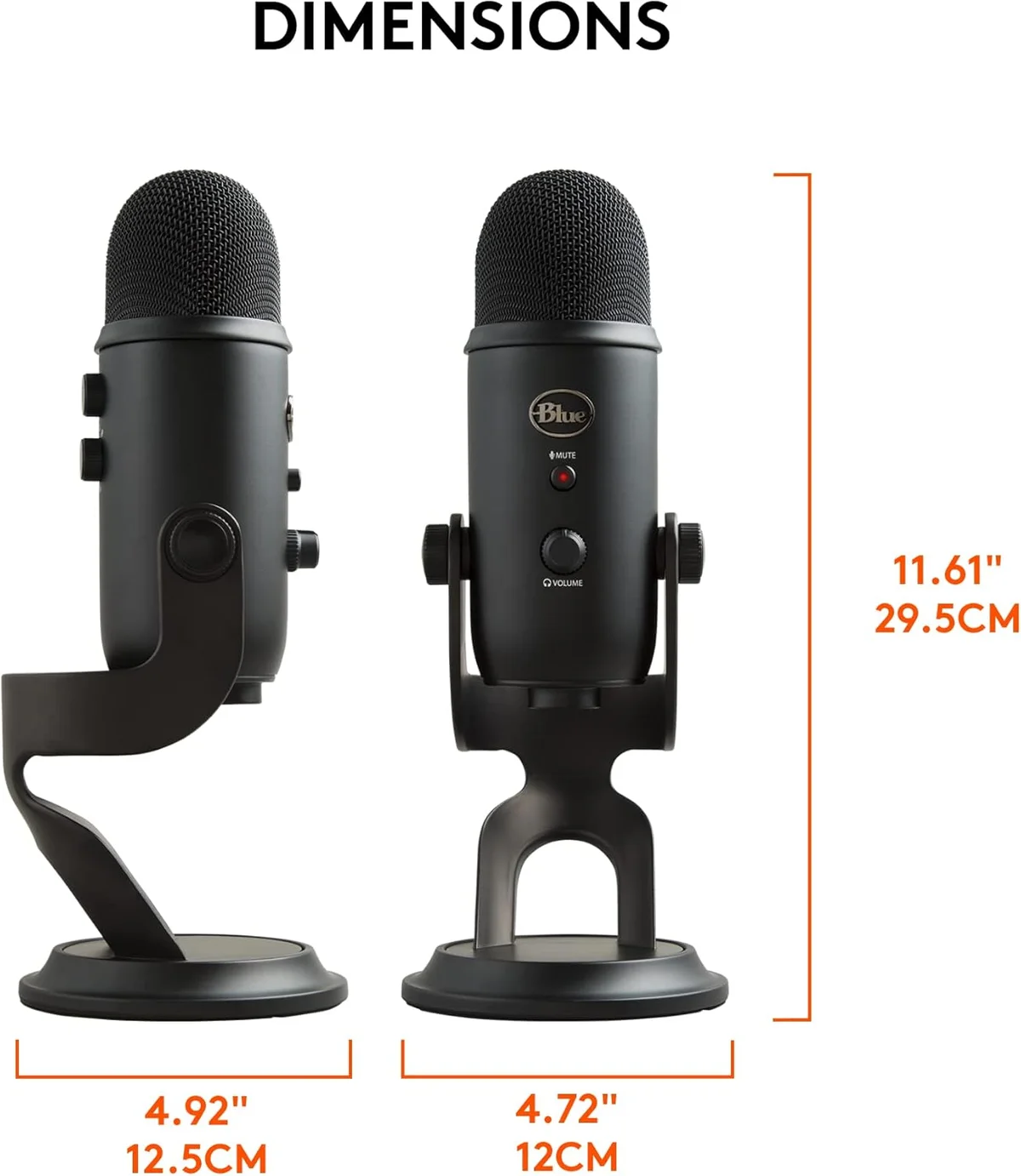
Ear-to-ear whispering, left-right tapping, sound movement across the stereo field. This is the signature ASMR pattern — the one that creates the "3D audio" sensation that headphone listeners chase. The Blue Yeti multi-pattern USB condenser and HyperX QuadCast S four-pattern gaming condenser both support stereo mode.
Single-source ASMR — whispering directly into the mic, mouth sounds, close-proximity triggers. Cardioid captures the front of the mic and rejects room noise from behind. Every USB condenser supports cardioid as the default pattern.
Room ambience, rain sounds, object manipulation (scissors, fabric, clay). Omnidirectional captures sound from all directions equally — useful when the sound source moves around the mic or when you want the room tone as part of the recording.
Why the Blue Yeti Dominates ASMR
The Blue Yeti multi-pattern USB condenser has been the entry-level ASMR standard for years, and the reason is simple: it is the most affordable mic with a dedicated stereo mode. The tri-capsule array creates genuine left-right spatial separation when switched to stereo — not simulated stereo from a single capsule, but real two-channel recording from physically separated diaphragms.
Here is the thing: the Yeti's weaknesses in other contexts become strengths for ASMR. Its high sensitivity picks up every ambient sound — terrible for podcasting, perfect for ASMR. Its wide frequency response captures the high-frequency sparkle of tapping and scratching that dynamics miss. The four polar patterns let you match the recording mode to the trigger type without changing mics.
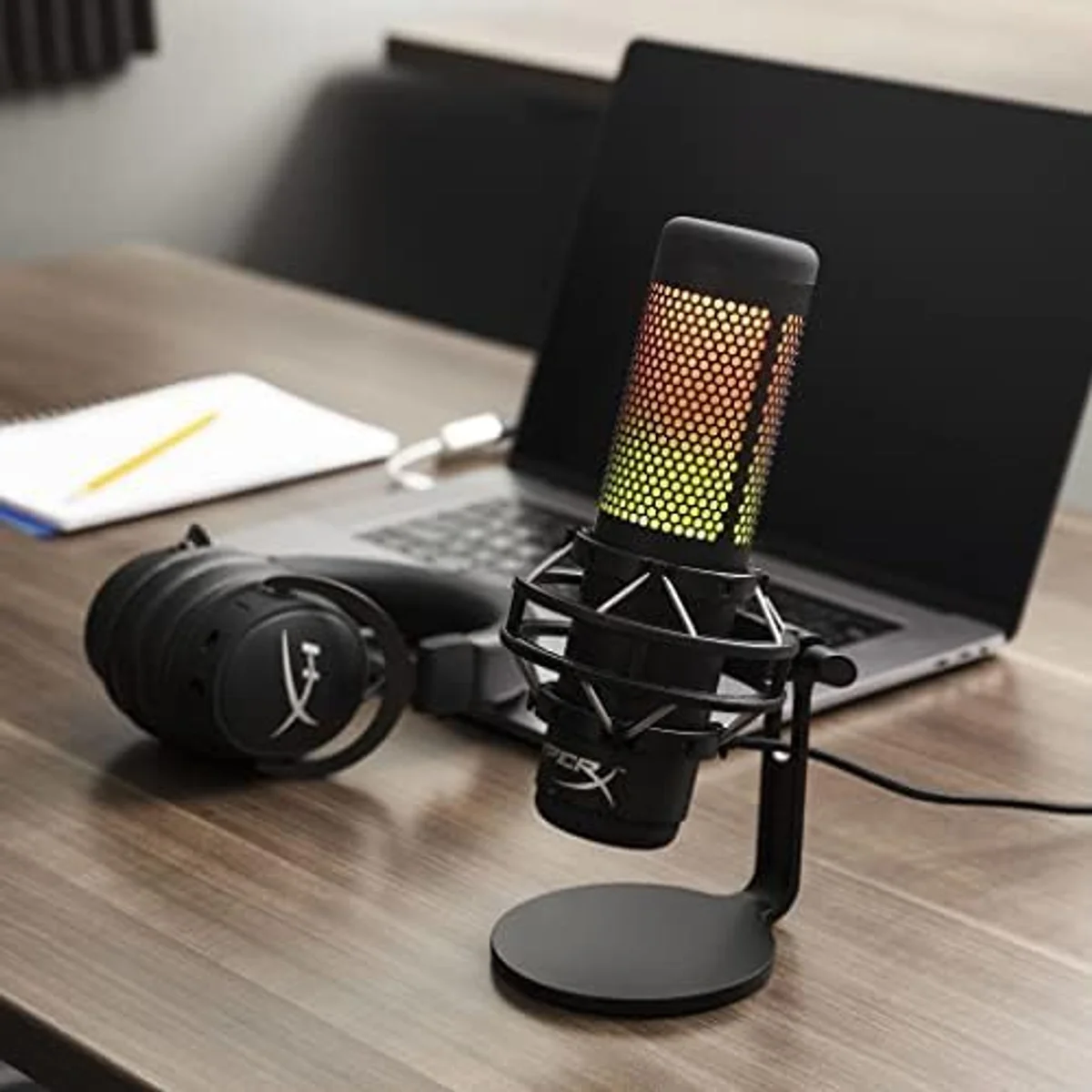
The downside is genuine: the Yeti is heavy, the included stand has no shock absorption, and the 16-bit/48 kHz spec is dated. But for ASMR specifically, the tri-capsule stereo mode at this price tier has no competitor. The HyperX QuadCast S four-pattern gaming mic offers the same four-pattern flexibility with a built-in shock mount that reduces handling noise — a real advantage for ASMR creators who tap or manipulate objects near the mic.
Room Treatment Is Non-Negotiable for ASMR
A condenser mic in an untreated room picks up room echo alongside the ASMR trigger sounds. In a podcast, listeners tolerate mild room echo because the voice is loud and dominant. In ASMR, the trigger sounds are quiet — sometimes barely above the noise floor — and room echo competes directly with the content.
Minimum ASMR room treatment:
Carpet or thick rugs on all hard floors. Curtains on windows (heavy fabric, not sheer). Soft furnishings — couches, pillows, blankets — absorb reflections that hard surfaces bounce back into the mic. The quieter the room, the more the mic captures your intended sounds instead of the room itself.
Sound reflects off the wall behind your mic and re-enters the capsule from behind. Even cardioid mics pick up some rear sound. Two panels directly behind the mic eliminate the strongest reflection path.
Low-frequency resonance builds up in corners and creates a subtle rumble that condenser mics capture. Bass traps in 2-4 corners reduce this — matters most for ASMR creators who record in small rooms where low-frequency buildup is most pronounced.
Our background noise reduction guide covers the full range of acoustic treatments from free (repositioning furniture) to professional (panel installation). For ASMR, this is not optional — it is part of the studio setup before any content goes live.
ASMR Mic Picks by Trigger Style
Captures breathy whispers and lip sounds with full high-frequency detail. Position 4-6 inches from mouth. Use a pop filter — plosives are amplified at this distance with a sensitive condenser.
Built-in shock mount isolates the mic from surface vibrations when tapping near the base. Tap-to-mute prevents handling thuds from reaching the recording. The shock absorption is the differentiator for physical trigger ASMR.
Genuine dual-capsule stereo creates the left-right spatial effect that binaural ASMR requires. Whisper from the left side, the listener hears it in their left ear. No other USB mic at this tier offers real stereo recording.
Captures sound from all directions equally — rain, wind, fire crackle, nature sounds. The room itself becomes the content. Works best in treated rooms where the ambient sound is intentional, not accidental.
Dynamic Mics and ASMR — An Honest Assessment
Look, we recommend dynamic mics for nearly every other content type. For ASMR, they are the wrong tool. The Shure MV7+ premium broadcast dynamic produces warm, authoritative vocals for podcasting — but it cannot capture a whisper at 6 inches without cranking the gain into audible noise floor territory. The Samson Q2U budget dual-output dynamic has the same limitation. Dynamic capsules need more air pressure to generate signal, and ASMR sounds produce very little air pressure.
The one exception: ASMR creators who speak at normal volume (not whispering) and use close-proximity technique can get acceptable results from a dynamic mic. But this limits the range of triggers available and removes the stereo capability that defines binaural ASMR. If you are committed to ASMR content, invest in a condenser from the start.
The Rode PodMic USB broadcast podcasting dynamic produces warm, intimate vocals at close range — some ASMR creators use it for "soft spoken" content where the voice is slightly above a whisper. But it cannot capture the tapping, scratching, and mouth sounds that define trigger-based ASMR. It handles one narrow slice of the ASMR spectrum; a condenser handles them all.
For creators considering the Samson Q2U budget dual-output dynamic for ASMR: skip it. The narrow frequency response and low sensitivity are optimized for speech, not for the high-frequency detail and quiet sounds that ASMR demands. Save the budget and put it toward the Blue Yeti instead — the audio quality difference for ASMR content is not marginal, it is fundamental. A condenser captures 100% of the trigger range. A dynamic captures maybe 30%.
Gain Staging for Quiet Content
ASMR requires higher gain settings than any other recording scenario because the source sounds are quiet. Higher gain amplifies the signal — and the noise floor. The balance between capturing quiet triggers and keeping noise manageable is the core technical challenge of ASMR recording.
Set gain high enough to capture whispers without clipping on louder moments (like an unexpected tap or laughter). Record a 30-second test with your quietest planned trigger and check the waveform — the peaks should reach roughly 60-70% of the maximum level. Leave headroom above that for surprises.
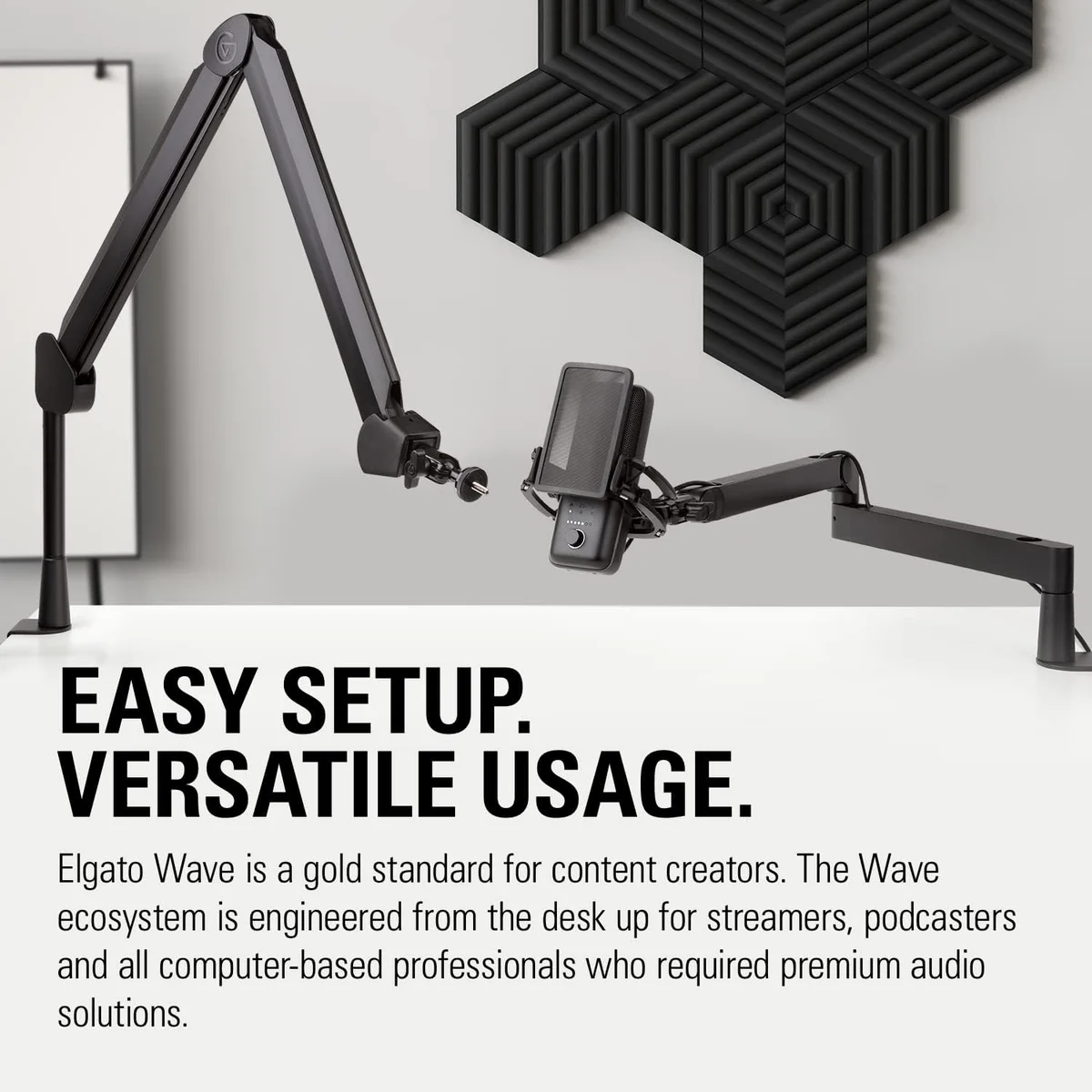
The Elgato Wave:3 condenser with Clipguard anti-distortion handles this automatically — Clipguard prevents clipping on loud peaks while preserving quiet detail. For ASMR creators who worry about gain management, Clipguard removes the anxiety. The audio quality is excellent for ASMR, though the single cardioid pattern limits it to mono triggers only.
Post-Production for ASMR Recordings
ASMR post-production is the opposite of podcast editing. Podcasts get compressed, normalized, and noise-gated to produce a consistent, loud signal. ASMR recordings need gentle handling — over-processing destroys the quiet detail that makes the content work.
The minimal ASMR editing chain: gentle noise reduction (remove only constant background hiss, not intermittent sounds), mild compression with a low ratio (2:1 at most, to even out volume without squashing the dynamics), and normalization to a target loudness that preserves the quiet passages. Use a slow attack time on the compressor — fast attacks will clip the transients of tapping and scratching triggers.
Avoid noise gates entirely for ASMR. Gates cut audio below a threshold, which removes the quiet ambient bed that ASMR listeners expect between triggers. The silence between triggers should not be digital silence — it should be the natural room tone that your treated room produces. That continuity is part of the immersive experience.
Stereo vs Mono: When Each Matters
Stereo recording using the Blue Yeti USB condenser in stereo mode captures left-right spatial information. Mono recording captures a single channel. The choice depends entirely on your ASMR style.
Stereo is essential for: ear-to-ear whispering, panning triggers (tapping that moves from left to right), binaural roleplay, and any content where spatial positioning is part of the experience. About 60% of top ASMR channels use stereo for their main trigger content.
Mono is fine for: single-source whisper recordings, keyboard typing ASMR, rain and ambient sounds (which work equally well in mono and stereo), and voice-only relaxation content. Recording in mono simplifies post-production and produces smaller file sizes for the same quality.
The HyperX QuadCast S gaming condenser with four patterns offers stereo mode alongside cardioid, omnidirectional, and bidirectional — giving you the flexibility to switch styles between videos without changing equipment. The built-in shock mount adds physical handling isolation that matters when you are tapping objects near the mic base during recording sessions.
ASMR on a Zero Budget
The TONOR TC30 complete condenser starter kit is the absolute cheapest way to start recording ASMR content. It captures whispers, it picks up tapping sounds, and it includes a tripod stand and pop filter. The audio is thinner than the Blue Yeti, there is no stereo mode, and the noise floor is higher — but it proves whether ASMR is your content direction before committing to a mid-range investment.
The Razer Seiren V3 Mini compact super-cardioid condenser is another budget option with a tighter pickup pattern that reduces room noise. It lacks multi-pattern capability, so it is limited to cardioid ASMR triggers only — no stereo ear-to-ear content. But the 24-bit resolution and small footprint make it a viable starting point for mono ASMR content.
Our complete microphone buying guide covers the full decision matrix, and our dynamic vs condenser guide explains why condensers capture detail that dynamics miss — the same physics that makes condensers problematic for podcasting makes them essential for ASMR. The QuadCast S vs Blue Yeti comparison directly addresses the main ASMR mic decision between the two multi-pattern condensers in our catalog.
Our Top ASMR Microphone Pick
Compare ASMR Mics
Frequently Asked Questions
Why do ASMR creators use condenser microphones?
ASMR content relies on capturing extremely quiet sounds — whispers, tapping, scratching, page turns, mouth sounds. Dynamic microphones are designed to reject quiet sounds, which is exactly the opposite of what ASMR needs. Condenser mics have higher sensitivity that picks up sounds a dynamic mic would miss entirely. The Blue Yeti in stereo mode is the most common entry-level ASMR mic because it captures left-right spatial information.
What polar pattern works best for ASMR?
Stereo for binaural-style content (left-right spatial triggers), cardioid for single-source whisper recording, omnidirectional for ambient room recordings. The Blue Yeti and HyperX QuadCast S both offer all four patterns in one mic, letting you switch between ASMR styles without additional equipment.
Can dynamic mics work for ASMR?
Poorly. Dynamic mics require more sound pressure to generate signal, which means whispers produce weak, noisy recordings. You would need to crank the gain high enough that the noise floor becomes audible. ASMR is one of the few content types where condensers are the clear winner regardless of room treatment.
Does room treatment matter for ASMR?
More than any other content type. ASMR recordings are quiet, which means room reflections and ambient noise are proportionally louder relative to the signal. A quiet room with soft surfaces — carpet, curtains, soft furnishings — is the minimum requirement. Professional ASMR creators use foam panels and bass traps to eliminate every trace of room echo.
Is stereo recording necessary for ASMR?
Not for all ASMR content, but the most popular triggers — ear-to-ear whispering, tapping on different sides, sound movement from left to right — require stereo to create the spatial effect listeners expect. Mono ASMR works for single-source content like page turning or rain sounds, but the binaural experience drives the genre.
What budget mic can a new ASMR creator start with?
The Blue Yeti. Stereo mode, cardioid mode, and omnidirectional mode cover the three main ASMR recording scenarios. The price sits in the mid-range tier, and the decade of ASMR-specific tutorials available online makes it the easiest mic to learn ASMR technique with.
Our Top Recommendation
Based on our research, the Blue Yeti is our top pick — beginners who want a single mic for multiple recording scenarios in a quiet, treated room. strong for asmr stereo mode..
Get Our Top 3 Picks
Get our top 3 picks for your budget — one email, then only updates.
Only when something changes. Unsubscribe anytime.