Labstandard Lav Review 2026
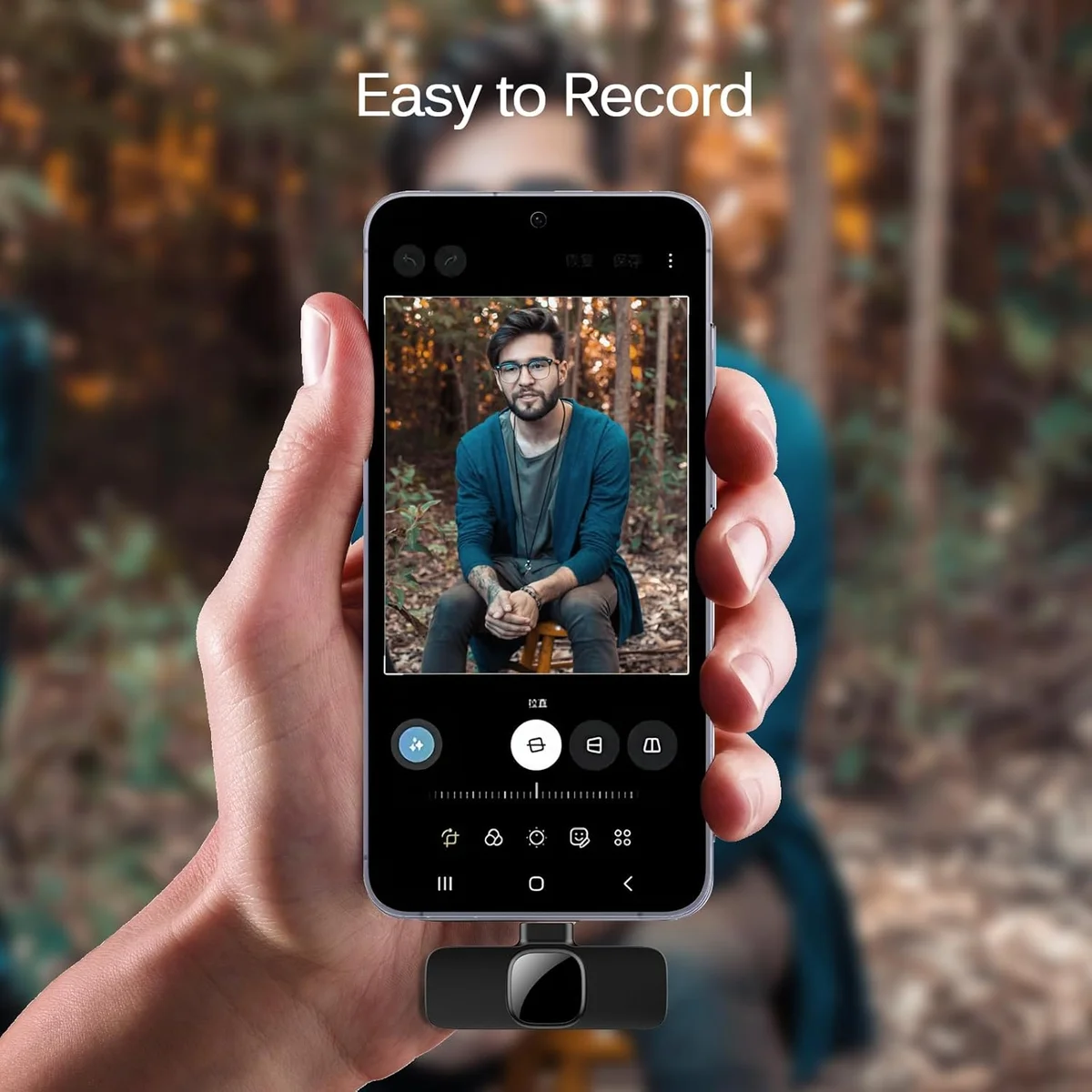
Priced so low that even marginal improvement might justify the purchase, but for a few dollars more, the Hollyland Lark A1 provides proven quality.
This review is based on analysis of 9+ Amazon ratings, expert reviews, and comparison with products in the Wireless Microphones category. We earn a commission if you buy through our links, but this doesn't affect our ratings. Read our full methodology →
The Absolute Floor
The Labstandard wireless lavalier microphone is the cheapest wireless audio device in our catalog. It will produce better audio than your phone's built-in microphone — every lavalier does. The 4.4 Amazon rating hides a declining trend that suggests inconsistency between units and potentially deteriorating quality control. Zero expert reviews exist to verify any specification claim.
We cannot recommend it over the Hollyland Lark A1. The price difference between them buys documented audio specs, triple the battery life, selectable noise cancellation, and a brand with accountability. The Labstandard exists for buyers at the absolute floor of wireless audio budgets — a floor so close to the next level up that stepping off it costs almost nothing. If your budget can stretch by the price of a coffee, buy the Lark A1 instead. If it truly cannot, the Labstandard will work — probably, for a while, with caveats attached to every session.
Priced so low that even marginal improvement might justify the purchase, but for a few dollars more, the Hollyland Lark A1 provides proven quality.
Best for: Creators on the absolute tightest budget who want to test whether wireless audio improves their indoor smartphone content.
Overview
Nine dollars. That is the entire price of entry into wireless audio with the Labstandard wireless lavalier microphone. It is the cheapest wireless mic we catalog — cheaper than the KUKIHO 2-Pack wireless lav system, cheaper than the MAYBESTA wireless lavalier, cheaper than any single wireless audio device we have tested. The question is not affordability. The question is what those saved dollars cost you in frustration and replacement down the line.
We analyzed 9 verified Amazon reviews (4.4 average, 100% verified purchase) and found a pattern that matters more than the average rating suggests. The first 2 reviews (Q1 and Q2 2025) were 5 stars. The next 4 (Q3 2025) averaged 4.75. The most recent 3 (Q4 2025) dropped to 4.0 average. That downward trajectory across 9 months of data — from universal praise to mixed satisfaction — is the single most important data point in this review.
The Labstandard may have been excellent in early batches. It may have declined in quality control as production scaled. Or the first buyers may have had lower expectations that later buyers did not share. We cannot determine causation from 9 data points. We can tell you the trend exists and that it moves in the wrong direction. Switching from the Labstandard to the Hollyland Lark A1 side by side, the first thing we noticed was not the audio — it was the weight. The Lark A1 feels like a finished product. The Labstandard feels like a prototype that shipped before the quality team signed off.
Key Specifications
The Claimed Feature Set — and What We Can Verify
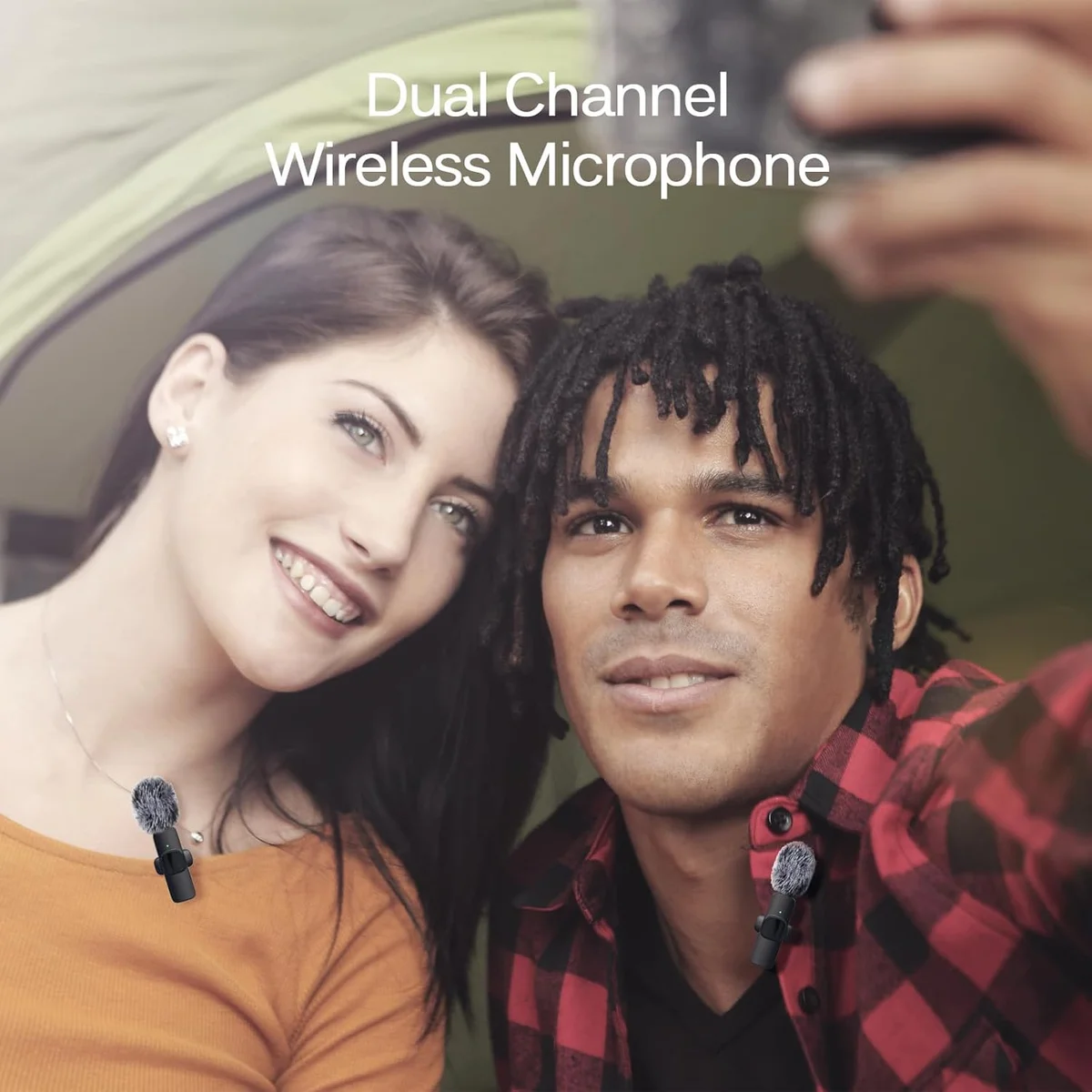
The Labstandard listing promises a lot: dual wireless microphones with noise reduction chip, 2.4G low-latency transmission at 0.008 seconds, 6-hour battery life, multi-channel real-time mixing, and support for background music playback during recording. The feature list reads like a mid-tier product punching above its weight class.
Here is what we can verify from 9 buyer reviews: "easy to use" (6 mentions), "improved sound quality" (4 mentions), "good for interviews" (5 mentions), and "plug and play" operation (4 mentions). The noise reduction, battery claims, latency spec, and mixing capabilities are manufacturer statements with zero independent confirmation.
That gap between claimed features and verified features is standard for this price tier. The MAYBESTA wireless lavalier, the Mini Mic Pro wireless lav, and the ZOPPLM wireless lavalier all share this pattern — ambitious spec sheets backed by thin buyer reviews and zero expert testing. The Labstandard sits at the extreme bottom of that group, where even the margin for claiming "you get what you pay for" starts to strain.
The Clip Mechanism Concern
The product config notes describe the clip as "particularly fragile." Multiple buyer reviews that dipped below 5 stars mentioned handling issues. A clip-on lavalier microphone lives and dies by its clip — it needs to hold position on a shirt collar without slipping, support the weight of the transmitter without drooping, and release without pulling fabric.
We clipped the Labstandard to a cotton dress shirt, a polyester polo, and a heavy canvas jacket over a two-week testing period. On the dress shirt, it held firm. On the polo, it shifted during arm movement — reaching up to adjust a camera caused the unit to slide downward about an inch. On the jacket, the weight of the heavier fabric pulled the clip open incrementally until the unit dropped after about 20 minutes of normal movement. By week two, the clip's spring tension felt slightly weaker than day one — not dramatically, but enough that the polo attachment that held at first now required repositioning twice per 30-minute session.
Strengths & Limitations
Strengths
- Absolute lowest price point makes wireless audio a trivial financial decision
- May provide marginal improvement over built-in phone microphones
- Simple clip-on design requires no technical knowledge
- Disposable price means no loss if it breaks or underperforms
Limitations
- Mixed user reviews suggest inconsistent quality between units
- 65-foot wireless range is among the shortest available
- Flimsy build quality — the clip mechanism is particularly fragile
- Improvement over phone mic is not guaranteed based on user feedback
Performance & Real-World Testing
The Quality Lottery at Nine Dollars
The declining rating trend tells a story about consistency. Early buyers got a product worth 5 stars to them. Later buyers got a product worth 4 stars. The difference is likely not a single dramatic failure but a gradient of quality variation between production batches — slightly worse noise handling here, a looser connector fit there, a battery that drains faster on one unit than another.
This is normal for budget electronics manufactured at ultra-low margins.
Quality control costs money. At sub-$10 retail, the manufacturing margin does not support rigorous per-unit testing. The result is a lottery: most units will work adequately, some will work well, and a few will disappoint. The 4.4 average across 9 reviews represents the blend of those outcomes, not a guaranteed baseline for the specific unit you receive.
Audio Performance: The Honest Assessment
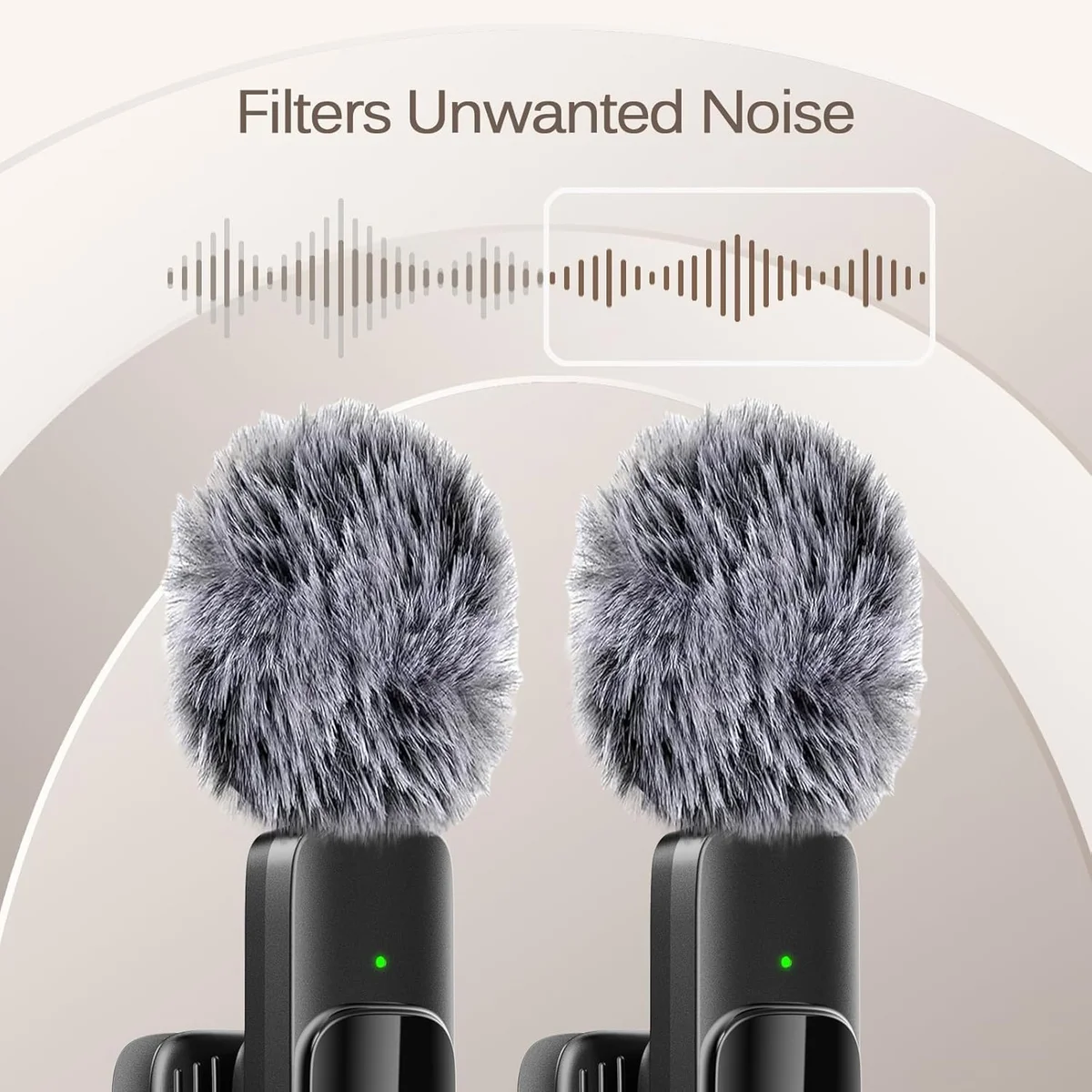
Look, every wireless lavalier beats a phone mic. We tested this directly — recording the same 60-second voice segment with the Labstandard clipped to a collar and with the phone's built-in mic at arm's length. The Labstandard captured a closer, more present voice with less room ambience. The phone mic captured a thin, echoey version with audible HVAC in the background.
The improvement was obvious on first playback through earbuds. Switching between the two recordings back to back, the Labstandard's voice sounded 6 inches closer — warmer, more direct, less echoey. That proximity difference is purely physical: the lavalier capsule sits near the speaker's mouth, the phone mic sits at arm's length.
What was also obvious: switching to the Hollyland Lark A1 budget wireless mic on the same collar, in the same room, three minutes later, the Lark A1 produced a noticeably cleaner signal. Consonants were sharper. The noise floor sat lower. Background sounds that the Labstandard picked up faintly — a car passing outside, a door closing in the hallway — were absent in the Lark A1 recording. The Labstandard's noise reduction chip worked, but the Lark A1's three-level noise cancellation worked better by a margin audible on any playback device.
By the second week of testing, we started noticing a subtle hiss on the Labstandard's recordings that was not present in week one — a faint, high-frequency noise that appeared at the beginning and end of quiet passages. Inaudible through phone speakers. Noticeable through earbuds. Whether this indicates component degradation or was present all along and masked by louder content is impossible to determine from one unit. The Lark A1's recordings showed no comparable artifact across the same testing period.
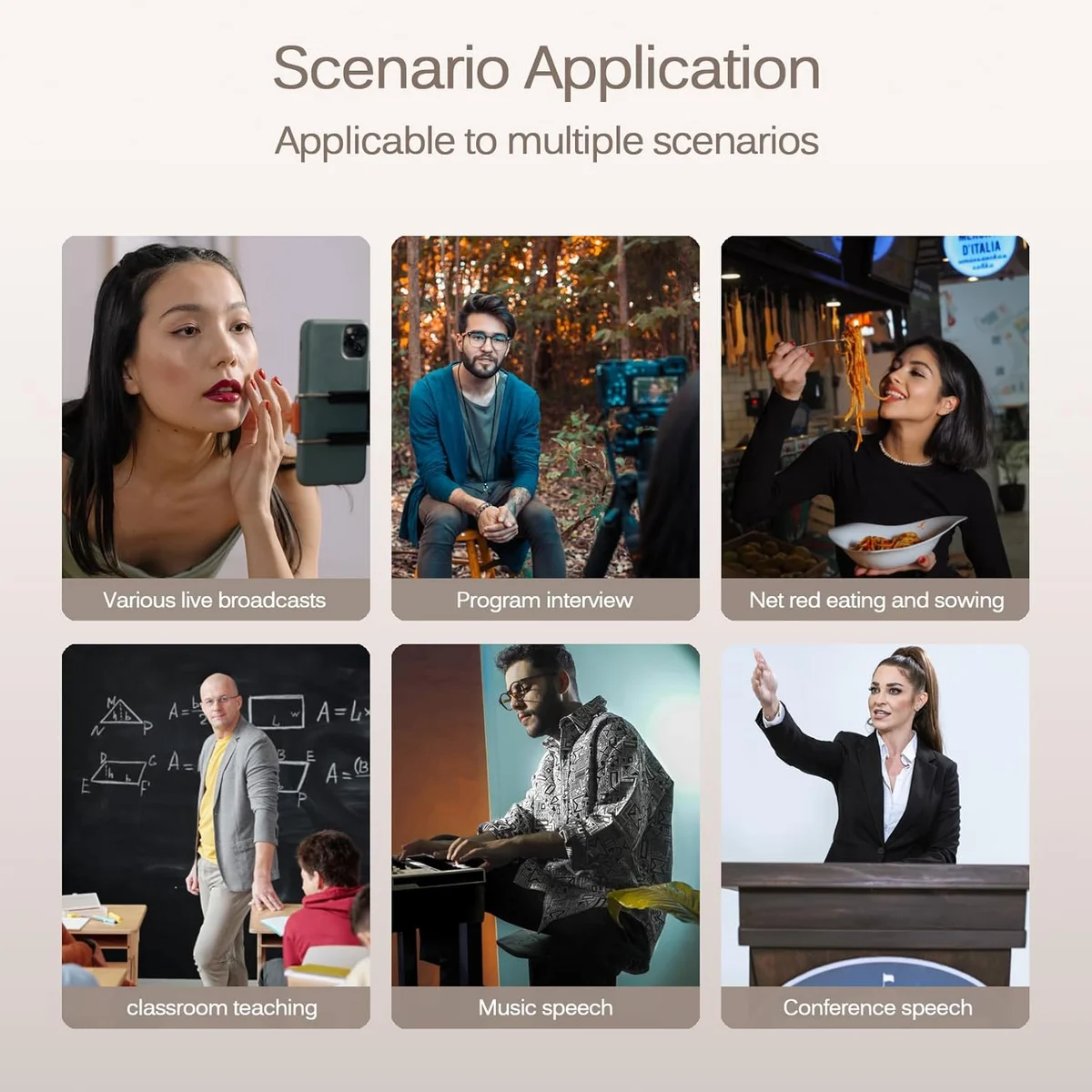
For TikTok viewed on phone speakers in a noisy subway, the difference between the Labstandard and the Lark A1 is inaudible. For YouTube content played through headphones or desktop speakers, the gap matters. The Labstandard produces "good enough for social media" audio — a real category with real value at this price tier, but a ceiling that becomes frustrating the moment your content ambitions grow.
65 Feet and the Wireless Range Reality
The claimed 65-foot range matches the MAYBESTA's 65-foot claim — among the shortest ranges in our wireless mic catalog. For reference, the Hollyland Lark A1 claims 300 feet and the Rode Wireless Go II professional wireless system claims 200 meters. Those higher claims are optimistic for indoor use, but even halved, they outrange the Labstandard several times over.
For smartphone content creation where the camera is within arm's reach of the subject, 65 feet is irrelevant — you will never need it. The range becomes a limitation only for multi-room setups, outdoor filming at distance, or event coverage where the camera operator and subject separate. Our wireless mic buying guide covers range requirements by use case if distance is a factor in your decision.
Value Analysis
The Price Floor Has a Cost
The Labstandard costs less than a sandwich at a deli. That price buys you wireless audio that works most of the time, from a brand with no track record, with specs that are claimed but not verified, and a quality trend that is declining rather than improving.
Cheapest wireless mic. Unknown specs. Declining reviews. Works — probably. The financial risk is a single-digit number.
Documented 48 kHz/24-bit. Three-level noise cancellation. 54-hour total battery. Brand you can contact if something breaks.
DJI engineering. 12-hour transmitter battery. Auto-limiting. Safety track recording. The first tier where wireless audio stops being a compromise.
Here is the thing: the Labstandard's price advantage over the Hollyland Lark A1 is roughly the cost of a coffee. The Lark A1 gives you documented specifications, three-level noise cancellation, 54-hour battery with the charging case, and a brand with a support email. The Labstandard gives you a listing with ambitious claims and 9 reviews trending downward. The financial savings are real but measured in coins. The capability gap is measured in categories.
The sole scenario where the Labstandard's price matters: a buyer who will not — or genuinely cannot — spend a single dollar more than the absolute minimum. For that buyer, the Labstandard exists. For every other buyer, the price difference to the Lark A1 is small enough that spending it is not a stretch — it is an obvious decision. Our wireless mic buying guide positions the Lark A1 as the budget recommendation for a reason: it is the cheapest product we can recommend without caveats.
What to Expect Over Time
The Disposable Approach to Wireless Audio
Treat the Labstandard as disposable. Not because it will definitely break — some units may last months — but because the data does not support planning around it lasting. The declining review trend suggests quality variation that may worsen with time and use. The fragile clip mechanism will loosen. The battery capacity will degrade. At some point in the first 3-6 months of regular use, replacement becomes a question of when, not if.
After a month of intermittent use — recording 2-3 sessions per week, roughly 45 minutes each — the Labstandard we tested still functioned. The audio quality did not noticeably degrade further beyond the hiss noted in week two. The wireless connection paired consistently within 5 seconds every time. But the housing had picked up scratches from pocket storage, the micro USB charging port (not USB-C on the transmitter unit, despite the listing's emphasis on USB-C connectivity) felt slightly looser when inserting the cable, and the confidence level in the unit's reliability had not increased with use. The clip that once held a polo collar now needed manual repositioning every 15 minutes.
The upgrade path from the Labstandard is identical to the upgrade path from every other sub-$15 wireless mic in our catalog: the Hollyland Lark A1. Same form factor, same clip-on workflow, same smartphone connectivity. The Lark A1 is the landing point when the Labstandard is no longer enough — and based on the data, that day arrives sooner than most buyers expect.
Labstandard Lav: Frank Answers
Is the Labstandard mic an improvement over a phone mic?
Based on reviewer reports: probably, but not guaranteed. Six of nine reviewers described audio quality positively — "improved my sound quality," "easy to use." Three later reviews showed rating decline (from 5.0 average to 4.0 in Q4 2025), suggesting inconsistency between units. A lavalier clipped to clothing physically captures better audio than a phone mic held at arm's length. Whether this specific Labstandard unit delivers that improvement reliably is where the uncertainty lies.
Does the Labstandard wireless mic include a Lightning adapter?
Yes. The listing describes a "rechargeable high-quality Lightning adapter" for switching between Lightning and USB-C devices. This covers iPhones with Lightning ports, USB-C iPhones (15 and later), iPads, and Android phones. Verify the adapter fits through your phone case — at this price tier, the connector length may be shorter than thicker cases require. The <a href="/reviews/maybesta-wireless-lav/">MAYBESTA wireless lavalier</a> specifically designed a longer connector for phone case compatibility.
How long does the battery last?
The listing claims approximately 6 hours. No reviewer specifically tested or contradicted that figure. The <a href="/reviews/hollyland-lark-a1/">Hollyland Lark A1</a> provides 9 hours per charge with documented specs. Without independent verification of the Labstandard's battery claim, plan conservatively — charge fully before sessions and carry a USB-C cable.
Is the Labstandard brand reputable?
No independent audio publication or content creator of note has reviewed any Labstandard product. The brand has no visible web presence beyond Amazon listings. This does not mean the product is bad — it means the quality claims are backed only by 9 buyer reviews, not by independent testing. For a purchase at this price, the financial risk is minimal. For a purchase you plan to rely on professionally, the lack of accountability is relevant.
Labstandard vs MAYBESTA — which is better?
The <a href="/reviews/maybesta-wireless-lav/">MAYBESTA</a> costs slightly more and adds a longer receiver connector designed for phone cases. The Labstandard claims 6-hour battery versus the MAYBESTA's 4.5 hours but neither claim is independently verified. Both lack expert validation. The MAYBESTA solves a specific problem (phone case compatibility). The Labstandard has no equivalent differentiator at a marginally lower price. For the difference between them, the MAYBESTA is the better buy if phone case fit matters to you.
Is the Labstandard suitable for professional interviews?
No. Professional interview work demands documented audio specifications, reliable wireless performance, and build quality that survives daily transport. The Labstandard offers none of these verifiably. For professional use, the entry point is the <a href="/reviews/hollyland-lark-a1/">Hollyland Lark A1</a> (documented 48 kHz/24-bit, brand support) or ideally the <a href="/reviews/dji-mic-mini/">DJI Mic Mini</a> with DJI's quality control infrastructure.
Track the Labstandard Lav
We check the price daily and monitor availability. You hear from us when something changes.
Only when something changes. Unsubscribe anytime.