The Multi-Pattern Classic vs the Budget Dynamic Upstart
The AM8 wins for most home office creators — dynamic noise rejection, dual USB/XLR output, and modern design at a competitive price. The Yeti wins for quiet rooms, multi-pattern needs, and music recording where condenser detail matters.
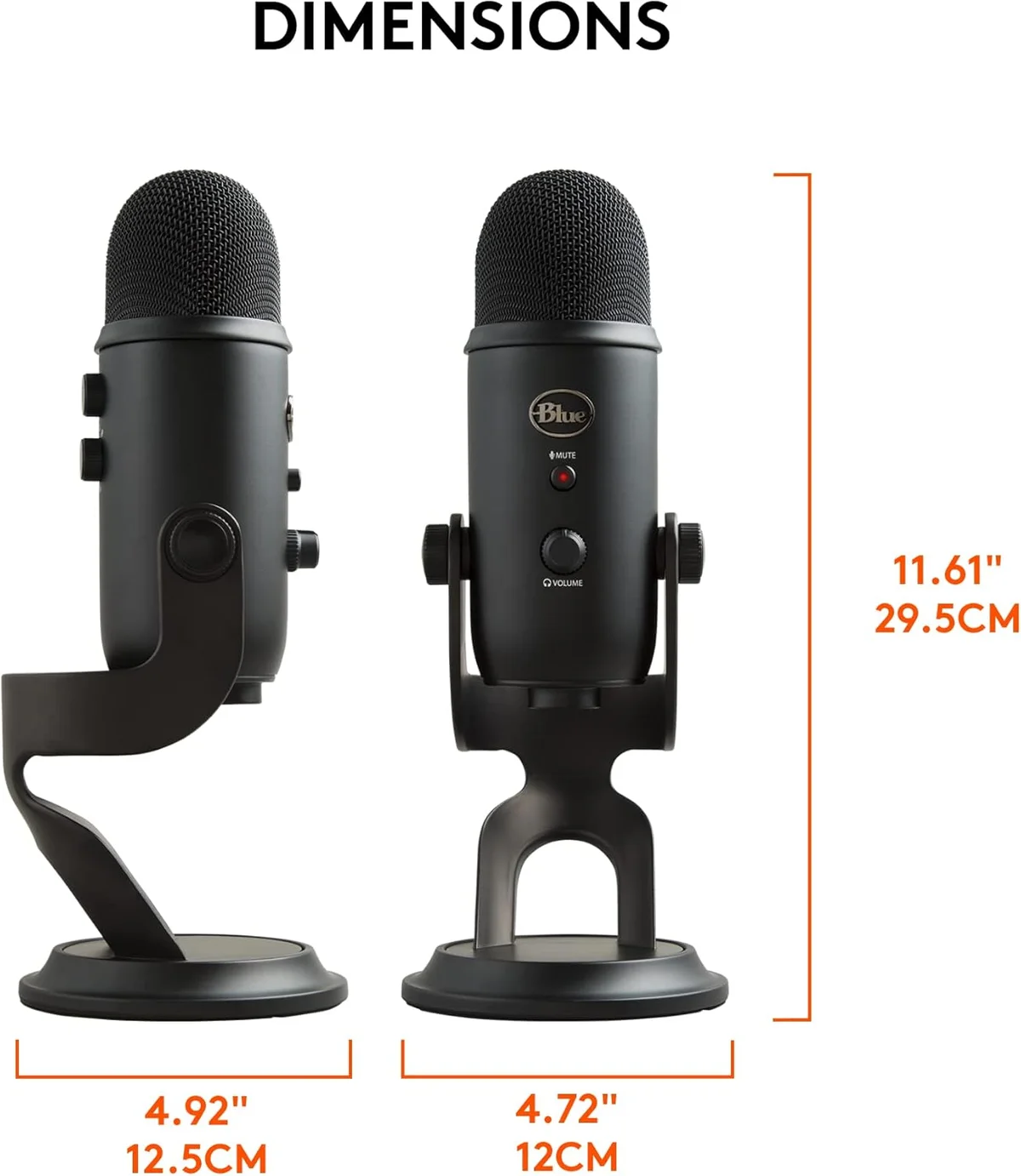
Blue Yeti
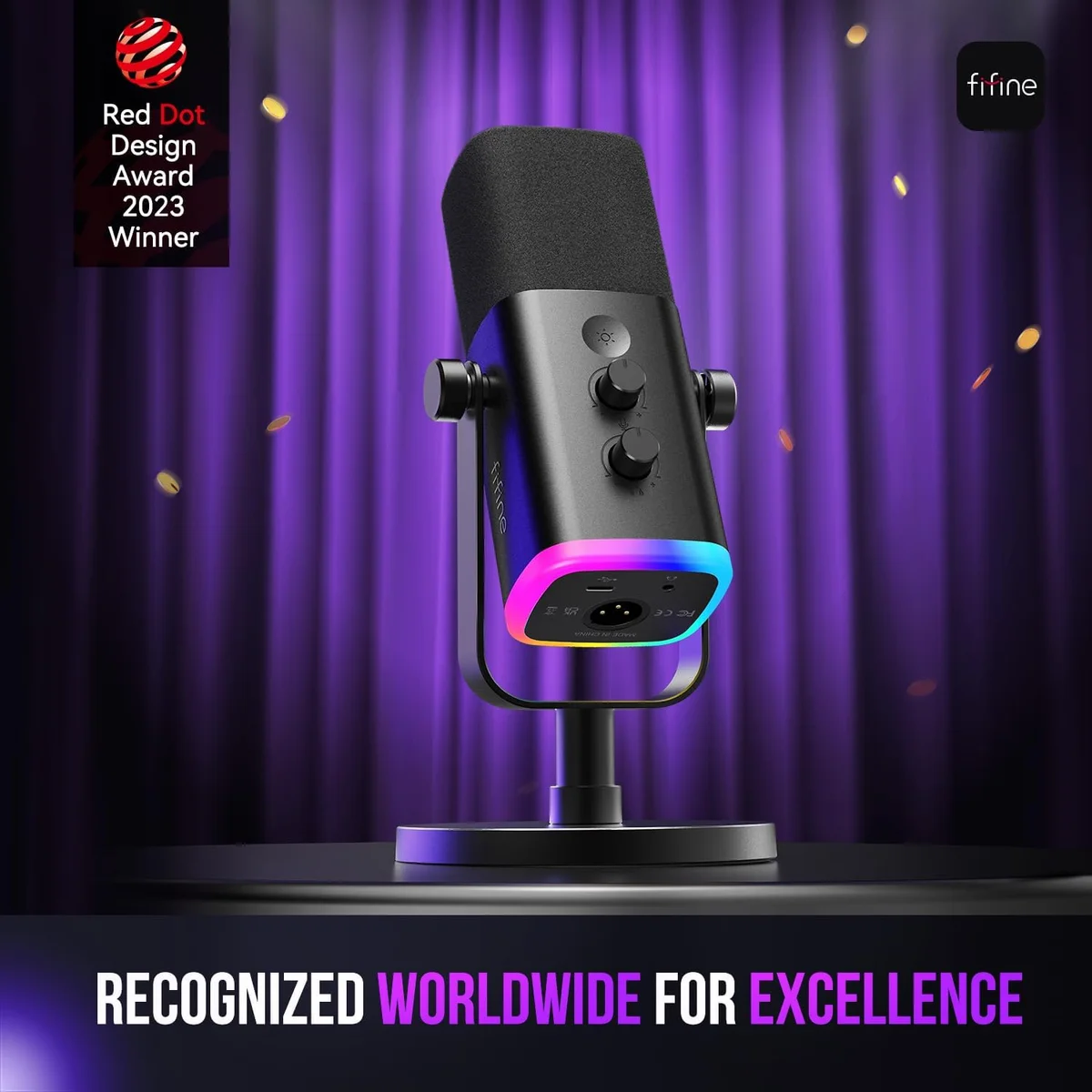
FIFINE AmpliGame
The Blue Yeti and FIFINE AmpliGame represent the two fundamental approaches to USB audio at a budget-friendly price tier. The Yeti is a condenser microphone: more sensitive, more detailed, more flexible with four polar patterns — and more likely to capture the keyboard clicks and HVAC hum you were hoping to avoid. The AM8 is a dynamic microphone: warmer, more focused, noise-rejecting by design — with USB/XLR dual output and RGB lighting that the Yeti does not offer.
This is a comparison between fundamentally different capsule technologies, not just two brand names. The capsule type — condenser vs dynamic — determines 80% of the audio character each mic produces. Your recording environment determines which technology serves you better. A quiet, treated room rewards the Yeti's condenser sensitivity. A noisy home office rewards the AM8's dynamic noise rejection. Our dynamic vs condenser guide covers the physics in detail. This comparison covers how that physics translates into real-world recording differences between these two specific products.
Price puts them in the same neighborhood: the Yeti at $100–$250 and the AM8 at $25–$50. The Yeti brings decade-plus brand reputation and four polar patterns. The AM8 brings dual USB/XLR output, dynamic noise rejection, and RGB aesthetics. Neither mic is objectively better — but one is objectively better for your specific recording situation, and the breakdown below identifies which.
Both are covered in our USB microphone roundup and our budget microphone roundup. The Yeti also appears in our streaming roundup for its multi-pattern flexibility. The AM8 appears in our podcasting roundup as a budget dual-output pick.
Blue YetiFIFINE AmpliGameAt a Glance
| Feature | Blue Yeti USB Microphone | Editor's Pick FIFINE USB/XLR Dynamic Microphone |
|---|---|---|
| Price Range | $100–$250 | $25–$50 |
| Type | Condenser (tri-capsule) | Dynamic |
| Polar Pattern | Cardioid, Bidirectional, Omnidirectional, Stereo | Cardioid |
| Frequency Response | 20 Hz – 20 kHz | 50 Hz – 16 kHz |
| Sample Rate | 48 kHz / 16-bit | 48 kHz / 16-bit |
| Max SPL | 120 dB | — |
| Connectivity | USB | USB-C + XLR |
| Weight | 1.2 lbs (mic) + 2.2 lbs (stand) | 0.78 lbs |
| See Current Price | See Current Price |
Audio Quality: Condenser Detail vs Dynamic Focus
The Yeti condenser capsule captures a wider frequency range with extended high-frequency response. Vocal sibilance, breath sounds, and acoustic instrument harmonics that dynamic mics suppress come through clearly on the Yeti. On quality headphones in a quiet room, the Yeti sounds more "open" and detailed — you hear more of the voice's natural character. The three-capsule array inside the Yeti is the engineering that enables its four polar patterns, and each capsule captures independently for multi-directional pickup.
The AM8 dynamic capsule produces warm, focused voice in the speech-critical 100-5000 Hz range. High frequencies roll off naturally — sibilance is softer, breath sounds are quieter. This warm profile sounds "broadcast-ready" without EQ adjustment, which is why dynamic mics dominate professional radio and podcast studios. The moving-coil diaphragm also physically rejects ambient sounds below a pressure threshold — a noise rejection advantage that no condenser, at any price, can match through capsule design alone.
For vocal recording in a treated room: the Yeti captures more nuance. For voice recording in a typical home office: the AM8 captures cleaner audio because the dynamic capsule ignores the room noise that the Yeti would faithfully reproduce alongside your voice. After platform compression on YouTube (128-192 kbps), Spotify, and podcast platforms, the frequency response differences between these mics flatten to a margin most listeners cannot distinguish.
Background Noise Performance
This is the category that should drive most purchasing decisions between these mics. The AM8 dynamic capsule rejected mechanical keyboard sounds at 2-foot distance in our testing — keystrokes were absent from recordings. The Yeti condenser captured every keystroke clearly at the same distance on the same desk. HVAC hum, fan noise, and distant room sounds that the Yeti faithfully recorded were below the AM8's activation threshold.
The Yeti has no built-in noise processing. Cleaning up background noise requires post-production noise gates, EQ filtering, and noise reduction plugins — all of which introduce processing artifacts and consume editing time. The AM8 also lacks built-in processing, but the dynamic capsule's natural noise rejection means less cleanup is needed in the first place. Starting with a cleaner raw signal produces better results than starting with a noisy signal and trying to fix it in post.
If you record in a treated room or a naturally quiet space, the Yeti's noise sensitivity is not a problem. If you share a wall with a kitchen, have a mechanical keyboard, or record with any HVAC running, the AM8 produces usably cleaner audio without post-processing intervention. Our background noise guide covers both mic choice and room treatment approaches to noise management.
Connectivity and Upgrade Path
The AM8 provides USB-C and XLR output — the same dual-connectivity feature found on the Shure MV7+ and Samson Q2U at different price tiers. Start with USB for immediate plug-and-play recording. When you outgrow USB — adding an audio interface for hardware mixing, multi-mic setups, or professional signal routing — the AM8 transitions to XLR without replacement. Pair it with a Cable Matters XLR cable and a Focusrite Scarlett Solo, and the AM8 becomes a professional-tier microphone in a professional signal chain.
The Yeti is USB-only. When creators outgrow USB capability — and many do after 6-12 months of committed content creation — the Yeti cannot transition. It is replaced entirely. For creators who know they will stay USB-only, this is irrelevant. For creators whose equipment grows with their content and audience, the AM8's dual output represents a meaningful long-term value advantage. Our USB vs XLR guide covers the upgrade path and when the switch makes sense.
Polar Patterns: Yeti's Unique Advantage
The Yeti offers four polar patterns: cardioid, bidirectional, omnidirectional, and stereo. The AM8 offers cardioid only. For solo voice recording — which covers podcasting, streaming, Zoom calls, and voiceover — cardioid is the only pattern that matters, and both mics provide it.
Where the Yeti's patterns add genuine utility: bidirectional mode lets two people record face to face sharing one mic, which is useful for in-person interview podcasts. Omnidirectional captures an entire room for group discussions, conference calls, or ambient recording. Stereo mode records spatial left-right audio for ASMR content or environmental sound design. No other mic in our catalog at any price offers this combination in a USB package.
If you only record solo voice: the Yeti's extra patterns are unused features that add no value. If you record in varying formats — and a growing number of content creators diversify into interviews, panels, and ambient content — the Yeti's pattern selector is hardware flexibility that no software or accessory can add to the AM8.
Design and Visual Appeal
The AM8 includes an RGB lighting ring customizable through companion software — a visual feature that appeals to streamers and video content creators whose camera captures the desk setup. The modern, sleek design with the illuminated ring looks like equipment from 2026. The AM8 is a mic that looks like it belongs on a content creator's desk in a camera frame.
The Yeti's design is iconic but aging. The metal body with chrome accents and integrated desk stand has been the same silhouette since the original Yeti launched years ago. It looks professional but not modern. The large desk stand consumes more surface area than the AM8's more compact footprint. For video podcasters and streamers, the AM8's visual presence on camera is more contemporary.
Brand Reputation and Support
The Blue Yeti benefits from Logitech's ownership and decade-plus market presence. Support channels are established and responsive. Replacement parts and accessories are widely available. The Yeti's reliability is validated by millions of units in the field over many years — you know exactly what you are getting.
FIFINE is a newer brand with a thinner track record. Support channels exist but are less established. Long-term reliability is less validated simply because the brand has fewer years of real-world data. The AM8's audio quality is competitive, but the brand pedigree is not yet equivalent. For risk-averse buyers who weight brand reliability heavily — and who want the confidence of buying from a company that has been making this exact product for many years — the Yeti has a clear edge. For buyers who weight features, technology, and the XLR upgrade path over brand history, the AM8 provides more functional capability per dollar spent. Both approaches are rational; neither is wrong.
Streaming and Podcasting Performance
For streaming, the AM8's dynamic capsule provides a real advantage during gaming sessions where keyboard noise is constant. The noise rejection keeps the stream audio focused on voice while the mechanical keyboard hammers away behind the mic's cardioid rejection zone. The RGB lighting ring adds visual desk presence on camera. The AM8 handles the streaming format — where background noise is an ongoing problem, not an occasional one — more gracefully than the Yeti condenser.
The Yeti serves streamers better in one specific scenario: variety content that uses multiple polar patterns. Bidirectional for co-streaming face to face. Omnidirectional for group streams and party content. Stereo for ASMR. If your stream format varies, the Yeti covers format changes without additional equipment. Our streaming roundup ranks both alongside seven other streaming-optimized options including the Wave:3 and QuadCast S.
For podcasting, the AM8 produces the warmer, more natural voice reproduction that podcast listeners on headphones prefer. The dynamic capsule's proximity effect adds bass warmth at 4-6 inches that makes voices sound full and professional without any EQ. The Yeti's condenser detail is better for music-oriented podcast content or shows recorded in treated studios. Our podcasting roundup covers both mics ranked against seven other podcast-optimized picks.
Accessories, Mounting, and Desk Setup
The Yeti ships with a substantial integrated desk stand — a metal base with a yoke mount that pivots the mic. The stand is heavy and stable but consumes a large desk footprint. The Yeti + stand combination takes up more desk surface area than the AM8 on its included stand. For tight desk setups, the Yeti's stand footprint can be a real spatial problem.
The AM8 ships with a shock mount adapter and a clean, modern stand that takes less desk space. The RGB ring adds visual interest without increasing the physical footprint. Both mics benefit from a boom arm ($20-30) that eliminates desk vibration — the AM8 because desk bumps transmit through any stand, the Yeti for the same reason plus the added benefit of freeing the substantial desk space the Yeti's built-in stand occupies.
Neither mic includes a windscreen or pop filter in the box. For the Yeti, aftermarket pop filters clip onto the desk stand arm. For the AM8, foam windscreens designed for dynamic mics fit the capsule housing. Budget $5-10 for a windscreen with either purchase if you record voice at close proximity and plosive sounds (p and b consonants) are a concern. Our studio setup guide covers the full accessory chain for both mic types.
Long-Term Ownership and Durability
The Yeti has a proven multi-year track record across millions of units. Reliability data exists across years of consumer use. Replacement parts, aftermarket accessories, and community troubleshooting resources are abundant. If something goes wrong with a Yeti three years from now, you will find answers and support.
The AM8 is newer to market. Audio quality is competitive today, but long-term durability data is limited. FIFINE's support infrastructure exists but has not been stress-tested across years and millions of units the way Logitech/Blue has. For buyers who plan to use a mic for 3-5 years without replacement, the Yeti's proven longevity is a legitimate advantage that does not show up on a spec sheet comparison.
Price and True Value
At comparable prices, the AM8 offers: dynamic noise rejection, USB/XLR dual output, RGB lighting, and modern design. The Yeti offers: condenser detail, four polar patterns, established brand reputation, and proven long-term reliability. Neither is overpriced — both deliver genuine value at their respective price points.
The AM8 provides better long-term value for creators who will eventually upgrade to XLR (the dual output saves buying a new mic later). The Yeti provides better immediate value for creators who need multiple polar patterns today. The Samson Q2U at a lower price provides the same dual-output dynamic proposition as the AM8 but without RGB and with more included accessories. Our PodMic USB vs Q2U comparison covers the next step up the dynamic mic ladder.
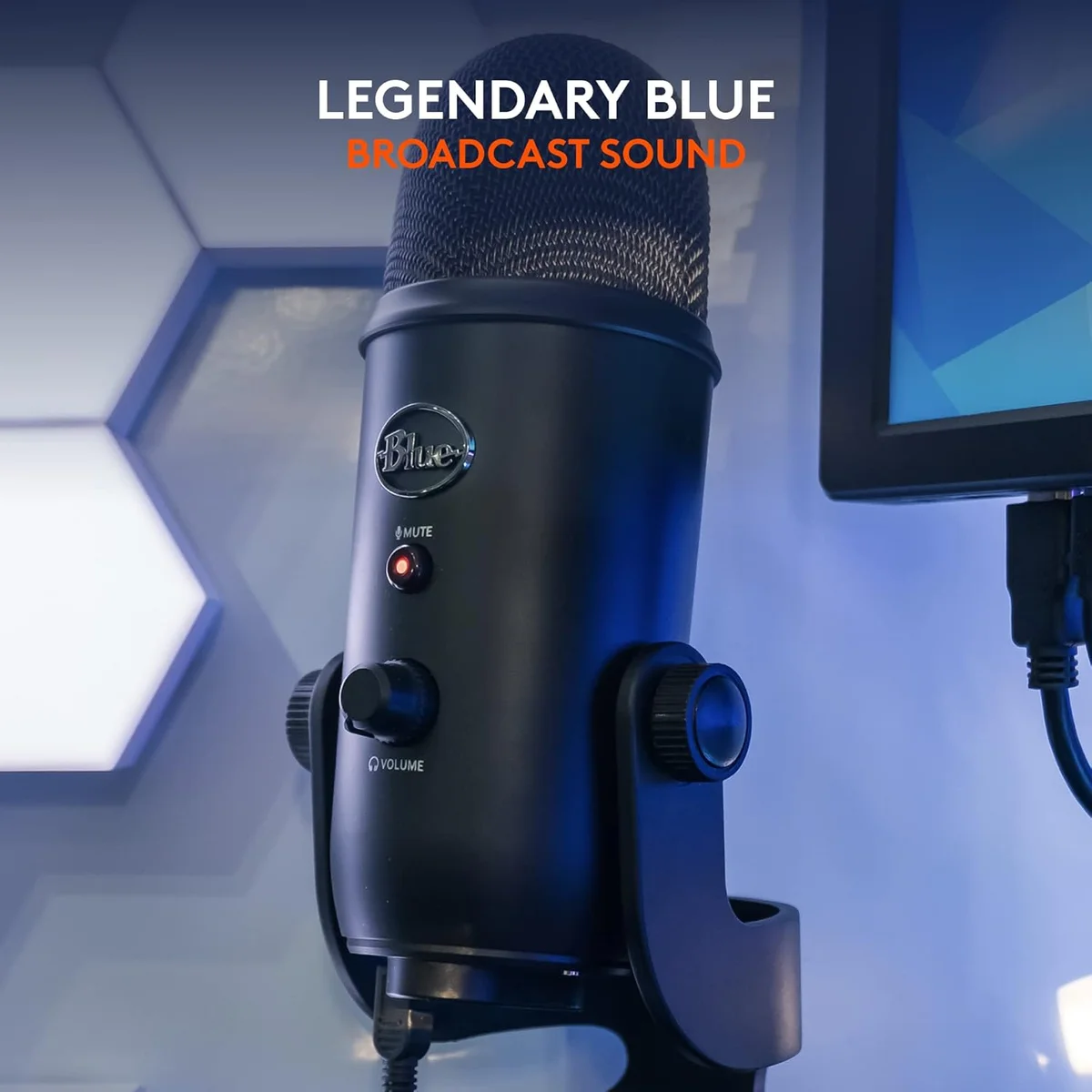 Blue Yeti
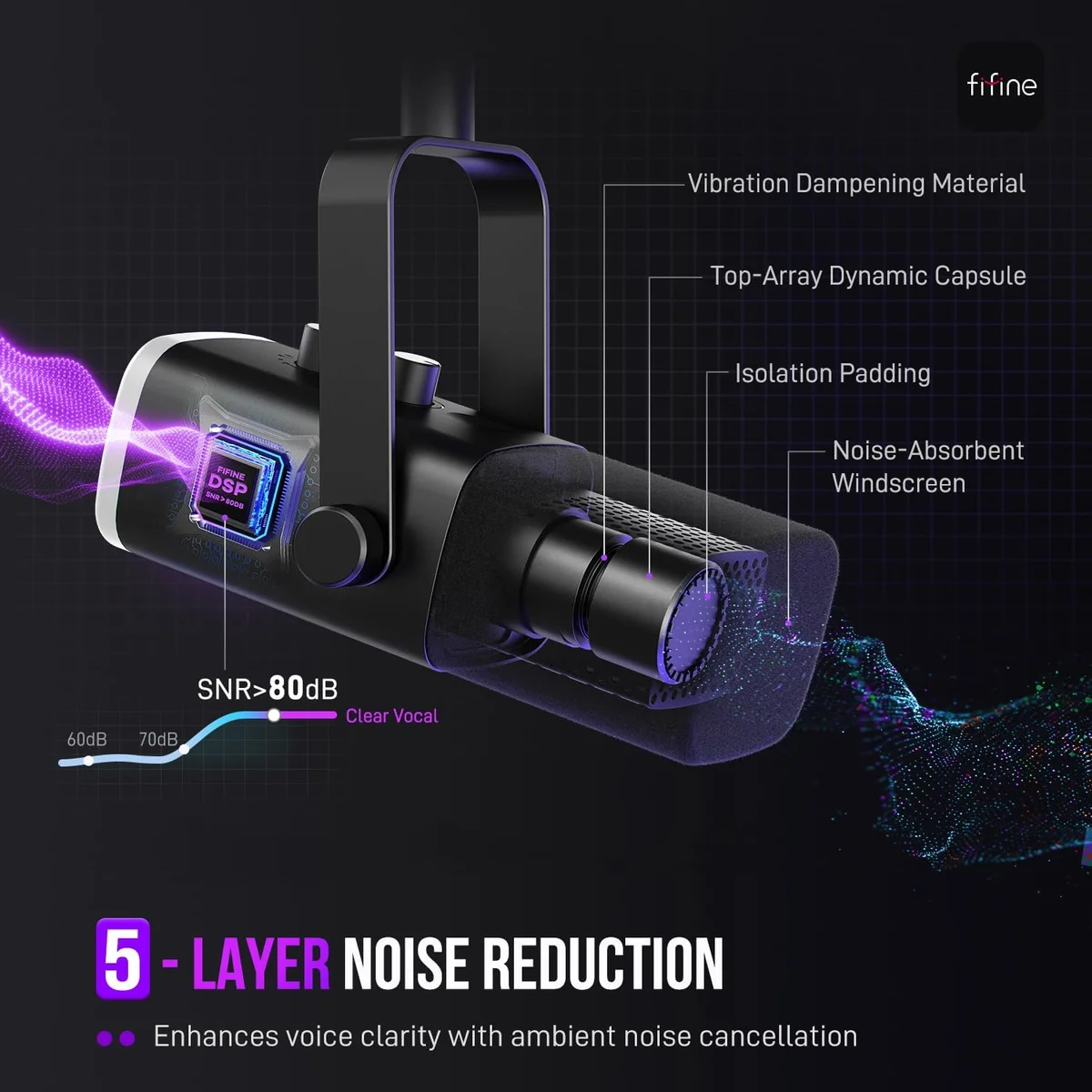 FIFINE AmpliGame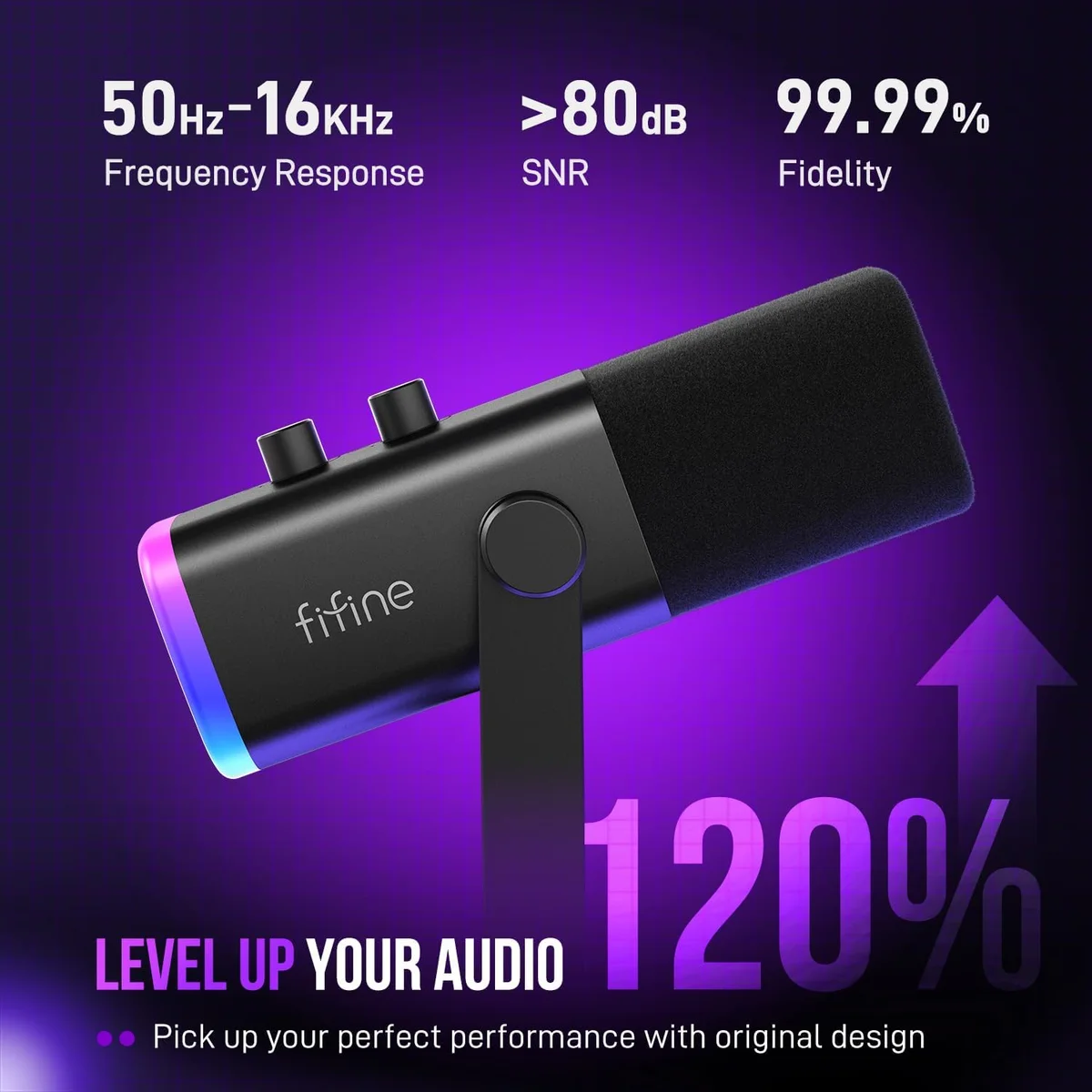
The Condenser-vs-Dynamic Budget Decision
Get the Blue Yeti If...
- You need multiple polar patterns for interviews (bidirectional), group recording (omnidirectional), or ASMR content (stereo) — no other USB mic offers this flexibility
- You record in a quiet, acoustically treated room where the condenser's extended frequency response is an advantage rather than a noise liability
- Brand reputation and long-term reliability are priorities — the Yeti's track record is validated by years of professional and consumer use
- You record music or acoustic instruments where condenser high-frequency detail captures overtones and harmonics that dynamic mics suppress
- You prefer tactile, no-software analog controls — the Yeti's physical gain knob, volume dial, and pattern switch work without any companion app
Get the FIFINE AM8 If...
- Your recording space has background noise — mechanical keyboard, HVAC, ambient room sounds — the dynamic capsule rejects noise the Yeti condenser captures
- You want USB/XLR dual output for a future upgrade path to an audio interface without replacing the microphone
- Visual desk appeal matters — the RGB ring and modern design look contemporary on stream cameras and in desk setup photos
- You primarily record solo voice (podcast, streaming, voiceover) where cardioid is the only pattern you need
- You are building a streaming setup where the mic's visual presence contributes to the on-camera aesthetic alongside other RGB peripherals
For most home office content creators recording in untreated rooms: the AM8 is the safer purchase. Dynamic noise rejection solves the #1 audio quality problem in home recording — background noise — without post-production intervention. The dual USB/XLR output provides an upgrade path the Yeti cannot match.
For creators who specifically need multi-pattern recording or who work in acoustically controlled environments: the Yeti earns every dollar. The four-pattern hardware flexibility is unique in our catalog and covers recording scenarios that no single-pattern mic can address.
Both mics appear in our USB microphone roundup. For creators who want to step up from either mic, the Rode PodMic USB at mid-range pricing outperforms both for pure voice quality — built-in APHEX DSP processing adds broadcast-quality compression and exciter effects, the internal pop filter eliminates plosive concerns, and the integrated shock mount absorbs desk vibration. Our MV7+ vs PodMic USB comparison covers the premium tier.
For creators on tighter budgets, the Samson Q2U provides the same dynamic capsule noise rejection and USB/XLR dual output as the AM8 but with a more complete accessory kit (stand, cables, windscreen included) and Samson's longer brand history. The TONOR TC30 at the absolute floor tests whether a dedicated mic improves your content at the lowest possible risk. Our budget roundup ranks all budget options across categories.
The core decision framework is simple: record in a quiet room and want maximum vocal detail or multi-pattern flexibility? Get the Yeti. Record in a home office with any background noise and want a mic that upgrades to XLR later? Get the AM8. Both are solid purchases at their price tier — the worst choice is not buying either one because the comparison paralysis prevented you from starting to create and publish content. Pick one, start recording, and upgrade later if the mic becomes the bottleneck.
Yeti vs AM8 — Your Questions
Which mic is better for a beginner — Blue Yeti or FIFINE AM8?
For beginners in noisy rooms (home offices with keyboards, HVAC, or ambient sound): the FIFINE AM8 dynamic capsule rejects background noise the Yeti condenser captures. For beginners in quiet rooms who want maximum vocal detail: the Blue Yeti condenser captures richer high-frequency information. The AM8 is the safer default because most beginners record in imperfect rooms.
Does the FIFINE AM8 sound as good as the Blue Yeti?
Different, not worse. The AM8 dynamic capsule produces warmer, more focused voice with less high-frequency detail. The Yeti condenser captures brighter, more detailed voice with more room ambience. After compression on YouTube or podcast platforms, the audible difference narrows to a slim margin. The AM8 sounds better in noisy rooms; the Yeti sounds better in quiet rooms.
Which mic has better value — Blue Yeti or FIFINE AM8?
The AM8 offers more features per dollar: dynamic noise rejection, USB/XLR dual output, and RGB lighting. The Yeti offers four polar patterns and established brand reputation. Both sit in the same general price tier, making the decision about features rather than budget allocation. The AM8 provides a better upgrade path (XLR output for future audio interfaces); the Yeti provides more recording flexibility (four polar patterns). Value depends on which features you will actually use.
Can the FIFINE AM8 match the Blue Yeti for music recording?
No — for vocal recording and acoustic instruments, the Yeti condenser captures more high-frequency detail and overtones that dynamic mics flatten. The Yeti in stereo mode also captures spatial information useful for acoustic recordings. For voice-only content (podcasts, streaming, voiceover), the AM8 matches or exceeds the Yeti because noise rejection matters more than high-frequency detail in speech recording.
Track Both Products
We'll email you if either price drops or availability changes.
Only when something changes. Unsubscribe anytime.