Best Microphones for Music Production
Home Production Has Different Rules
Professional studios use $3,000 condenser mics through $5,000 preamps in acoustically engineered rooms. Home producers record in bedrooms, closets, and apartments with whatever budget allows. The equipment rules that apply in studios do not transfer directly to bedrooms — and the advice that studio engineers give often leads home producers to buy the wrong mic.
Here is the thing: a $100 USB mic in a treated bedroom produces better recordings than a $1,000 XLR condenser in an untreated living room. The room is the bottleneck, not the microphone. Every dollar spent on a better mic before treating the room is a dollar wasted on capturing room reflections in higher fidelity.
We reviewed every USB microphone in our catalog for music production suitability — focusing on frequency response, noise floor, and tonal character that serves musical content rather than speech. The recommendations below prioritize realistic home studio conditions, not theoretical spec sheet performance.
What Music Production Demands From a Mic
Music recording differs from podcasting and streaming in three measurable ways that affect mic choice.
Speech content lives in a narrow band from 100 Hz to 8 kHz. Musical content extends beyond that — vocal overtones, cymbal shimmer, and guitar string brightness occupy the 8-20 kHz range. Condensers capture this range more faithfully than dynamics, which is why condensers dominate studio vocal recording.
A singer goes from whisper to full belt within a single phrase. The mic needs to capture both extremes without clipping on the loud end or losing the quiet end in the noise floor. 24-bit recording provides 144 dB of theoretical dynamic range — far more than 16-bit's 96 dB — which is why 24-bit matters more for music than for speech.
Podcasting wants neutral, speech-focused clarity. Music wants character. A condenser's airy top end serves pop and acoustic. A dynamic's warm proximity effect serves rap, soul, and lo-fi. Choosing between them is an aesthetic decision as much as a technical one.
Condenser Mics for Home Recording
Condensers are the default studio vocal mic for good reason — they capture the full frequency range and the micro-detail that makes a vocal recording sound present and alive. For home producers with reasonably quiet rooms and basic treatment (rug, curtains, blanket behind the monitor), a USB condenser produces demo-quality recordings that work for collaboration, streaming platforms, and portfolio building.
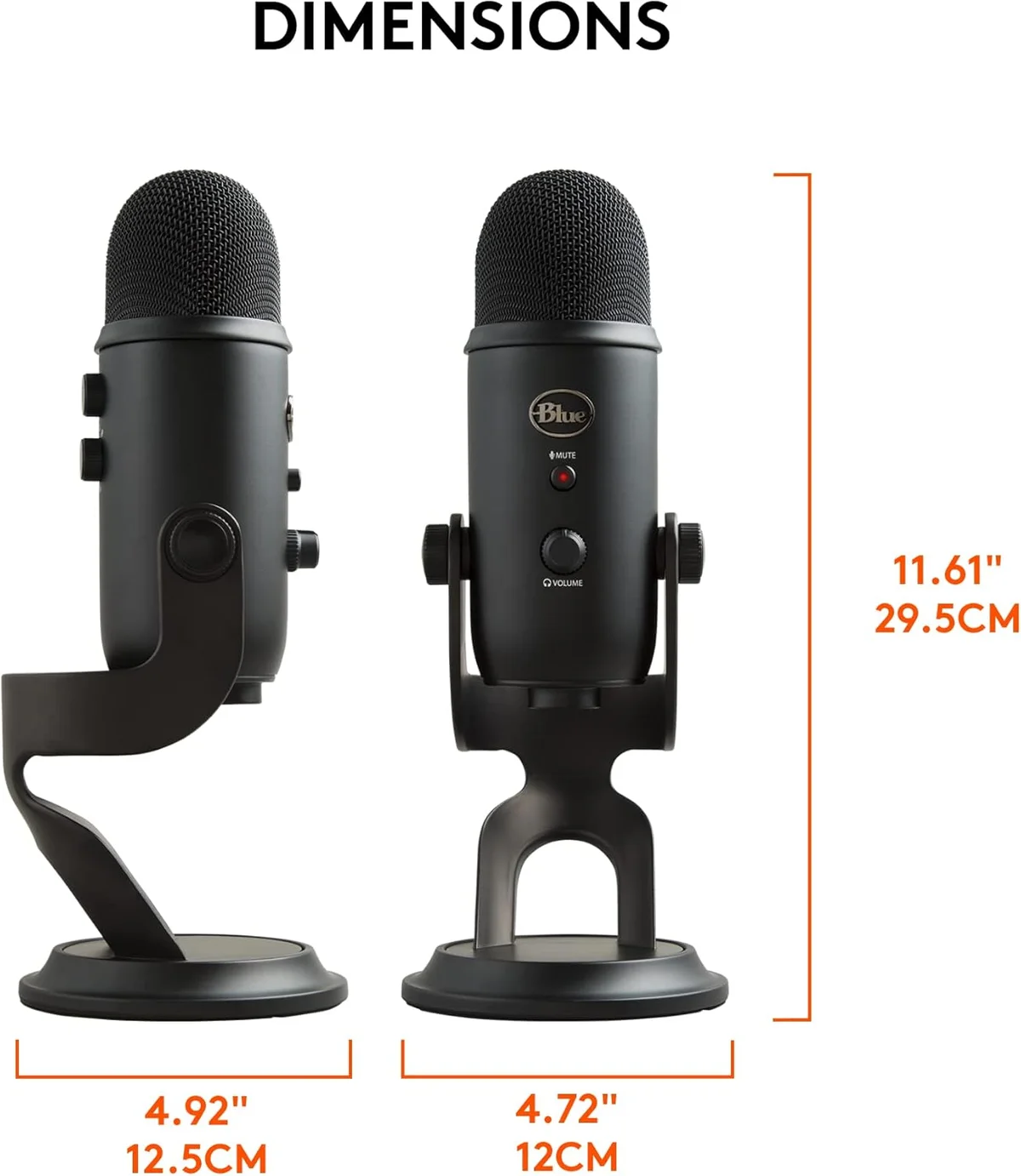
Four polar patterns cover solo vocals (cardioid), duets (bidirectional), room ambience (omnidirectional), and stereo instrument recording (stereo). The tri-capsule array captures genuine spatial information. The condenser sensitivity that hurts podcast audio helps music recording — it captures the detail that makes vocals sound human.
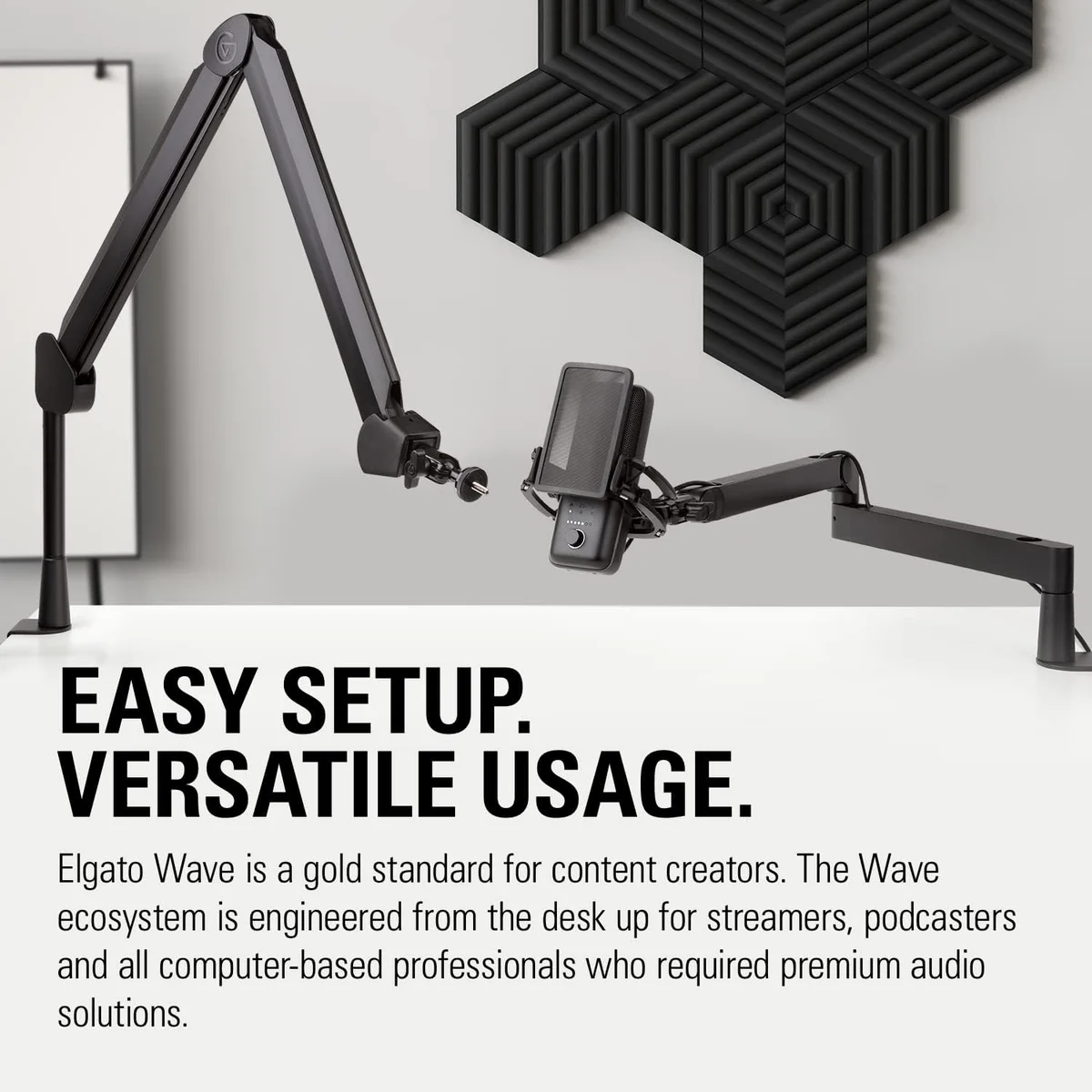
96 kHz/24-bit provides the highest sample rate in our USB catalog. Clipguard prevents peaking on loud vocal passages — belting singers and aggressive guitar strumming stay clean. Cardioid only, so no stereo recording.
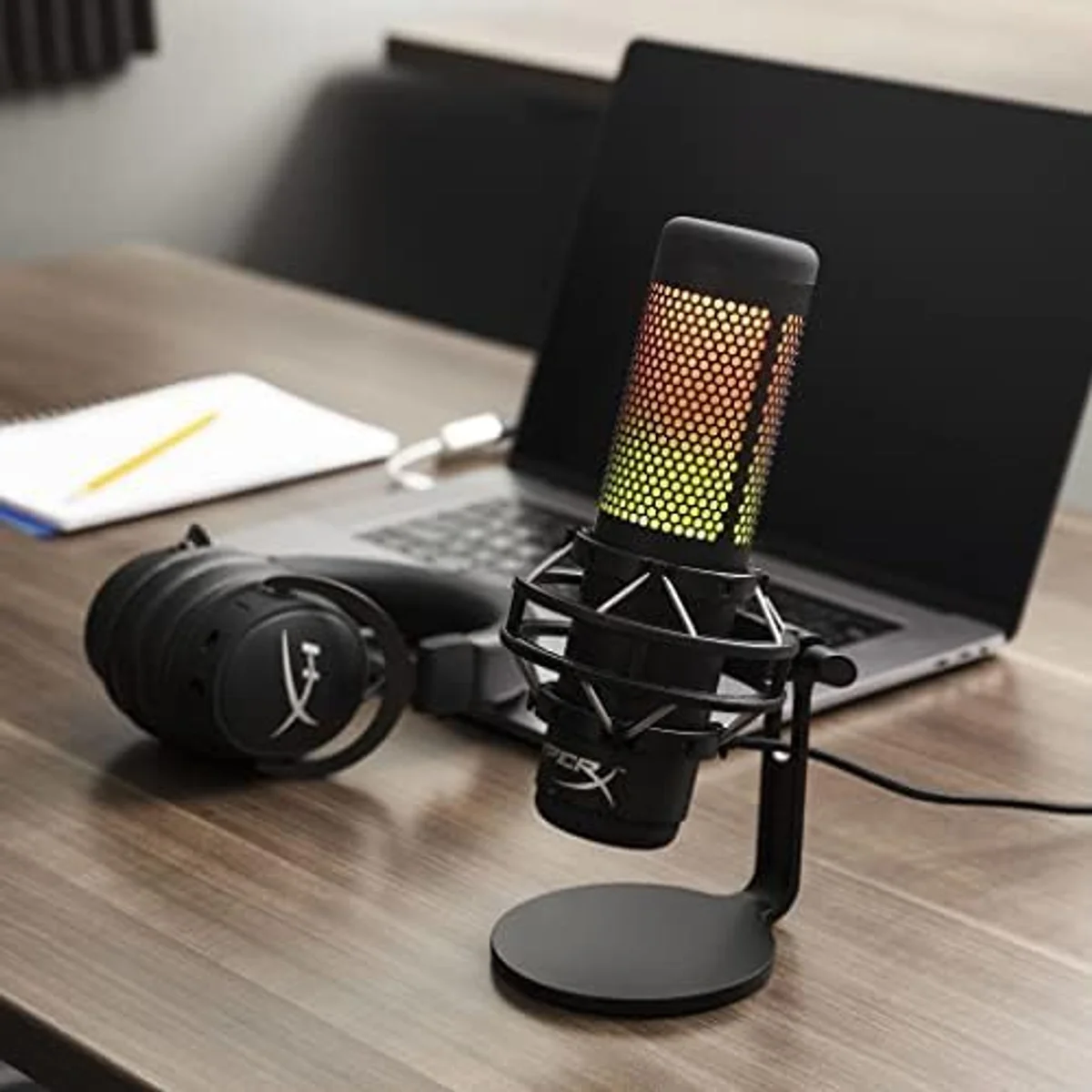
Four polar patterns with a built-in shock mount. The shock mount matters for music production — it isolates the mic from vibrations when you tap your foot, bump the desk, or play an instrument near the mic stand.
Dynamic Mics for Bedroom Producers
Look, not every home producer has a treated room. Bedrooms with hard floors, thin walls, and street-facing windows are hostile environments for condenser microphones. Dynamic mics reject the room reflections and background noise that condensers faithfully capture — producing cleaner recordings in worse conditions.
The tonal cost is real: dynamics miss the airy high-end detail that makes condenser vocal recordings shimmer. But a clean dynamic recording without room artifacts is more usable than a detailed condenser recording buried in echo. Post-production can add high-end presence to a clean dynamic recording. It cannot remove room echo from a condenser recording without destroying the vocal.
The dynamic mics in our catalog cover a range of price tiers and tonal characters. The warm, authoritative sound of a close-mic dynamic recording sits well in hip-hop and R&B mixes where the vocal needs to cut through dense instrumentation without competing for high-frequency space with synthesizers and hi-hats. For acoustic and folk genres where the vocal should sound open and airy, a condenser in a treated room remains the better tool.
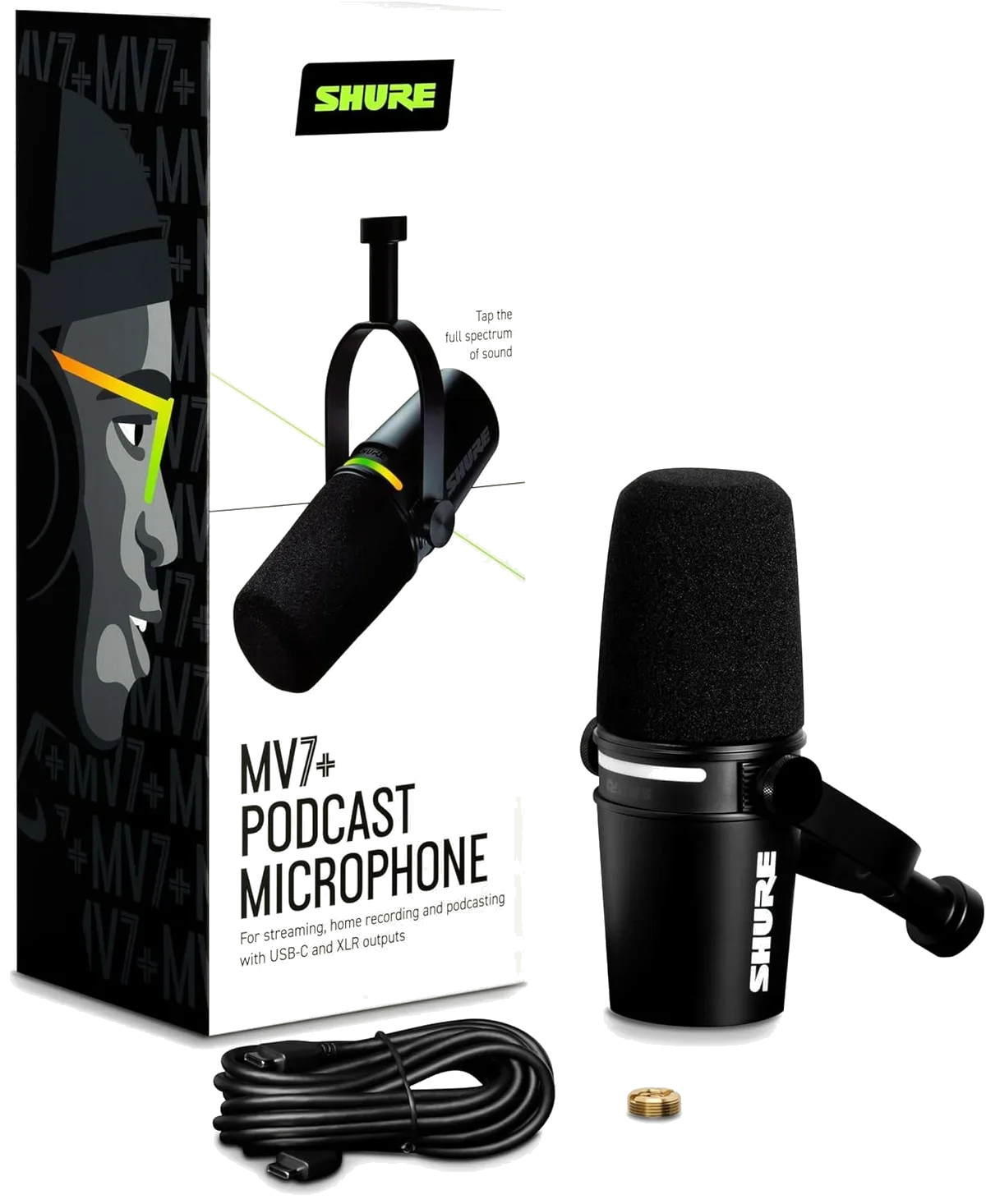
The MV7+ in XLR mode bypasses the digital processing and delivers a raw analog signal that responds well to external EQ and compression. The proximity effect adds warmth and body to close-range vocals — especially effective for rap, soul, and spoken word over beats.
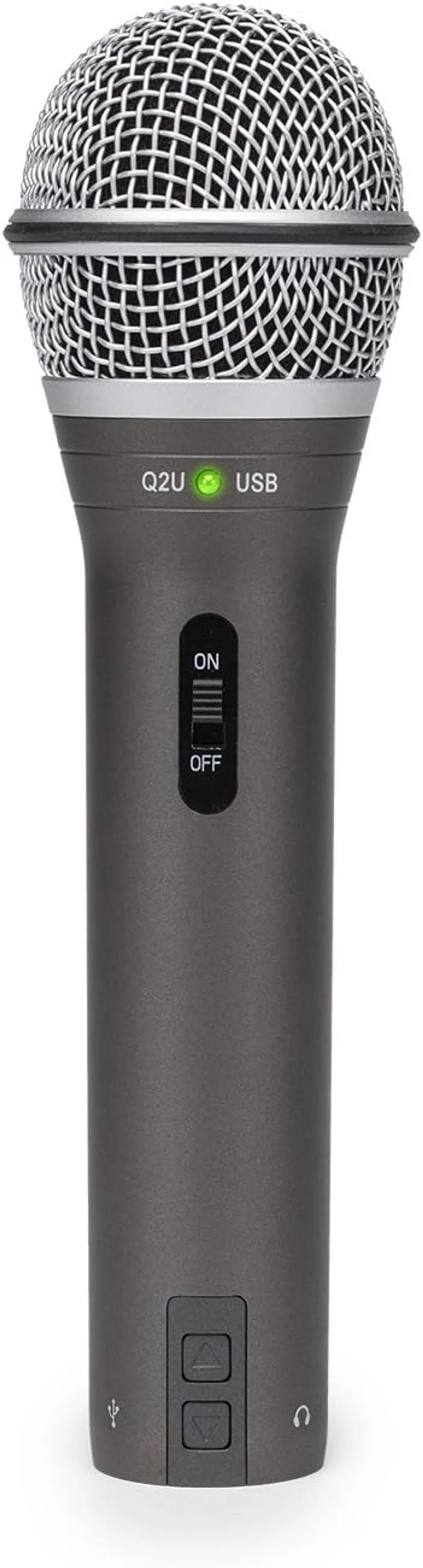
Budget dynamic with USB + XLR. The audio quality is basic but clean — good enough for demos, songwriting sessions, and collaboration tracks. Start on USB, switch to XLR through an interface when you are ready to add a second mic or hardware processing.
Recording Instruments With USB Mics
USB mics can record acoustic instruments — guitar, ukulele, percussion, piano — with results that range from usable to excellent depending on the mic, the instrument, and the technique.
Position the mic 8-12 inches from the 12th fret, angled slightly toward the sound hole. The Blue Yeti condenser in cardioid mode captures string brightness and body resonance. Avoid pointing directly at the sound hole — it produces a bass-heavy, boomy recording that sounds nothing like the guitar in person.
Position 12-18 inches above the strings (acoustic piano) or directly in front of the speaker (keyboard amp). The Elgato Wave:3 condenser with 96 kHz sampling captures the full harmonic range of piano, including the upper overtones that lower sample rates truncate. Clipguard handles loud passages without distortion.
A single USB mic cannot properly record a full drum kit — that needs 4-8 mics through a multi-input interface. But a single mic captures hand drums, shakers, tambourines, and auxiliary percussion effectively. Use omnidirectional mode on the HyperX QuadCast S four-pattern condenser for even pickup of percussion played around the mic.
Position the mic between your mouth and guitar in omnidirectional mode to capture both sources. Results are mixed — the balance depends on relative volume and distance. For serious music production, record each source separately on a dedicated track. For songwriting demos and quick captures, the single-mic approach produces a usable scratch track.
The XLR Upgrade Path for Growing Producers
USB microphones hit a ceiling when music production grows beyond single-source recording. Two specific needs force the transition to XLR: multi-track recording (two mics simultaneously) and hardware processing (external preamps and compressors that shape tone before the signal hits your DAW).
The Shure MV7+ premium broadcast dynamic, Rode PodMic USB broadcast podcasting dynamic, Samson Q2U budget dual-output recording mic, and FIFINE AmpliGame budget dual-connectivity dynamic all support XLR output alongside USB. Start with USB simplicity, transition to XLR through an audio interface when multi-track recording becomes necessary.
For XLR connections, cable quality matters for music production. Our Cable Matters Premium XLR braided cable uses OFC conductors and braided shielding that reject electromagnetic interference from monitors and power supplies. The AmazonBasics XLR budget cable works but its spiral shielding picks up more interference — audible as a low hum during quiet passages. Our complete XLR connector guide covers the technical differences.
DAW Choice for Home Music Production
The recording software (DAW) affects your workflow more than your audio quality. All modern DAWs produce identical audio from the same mic — the difference is in editing tools, virtual instruments, and plugin ecosystems.
Built-in virtual instruments, loops, and effects. Records multi-track. The best free starting point for songwriters and beat makers on Mac. Exports to Logic Pro when you outgrow it.
Audio editor, not a full DAW. Records, edits, and exports multi-track audio. No virtual instruments or MIDI. Best for recording acoustic performances that need minimal editing.
Full-featured DAW with unlimited track count, extensive plugin support, and a customizable interface. The license is affordable compared to Logic Pro and Ableton. Steep learning curve but the most powerful option per dollar for serious home producers.
Genre-Specific Mic Recommendations
Room Treatment for Music Recording
Music recording is less forgiving of room acoustics than speech recording. Room reflections add a subtle metallic quality to vocals, make guitar recordings sound boxy, and create phase interference that thins out instrument recordings. Even basic treatment produces a measurable improvement.
The minimum music recording treatment: thick curtains on every window, a rug covering hard floors, and a blanket or foam panel directly behind the mic position. This absorbs the first reflections that cause the most audible coloring. Our background noise reduction guide covers the full range of treatments from free repositioning to professional panel installation.
For vocal recording specifically, a reflection filter (a curved panel that sits behind the mic on the desk or stand) provides targeted absorption where it matters most. These cost roughly the same as a budget mic and produce an improvement equivalent to treating an entire wall — because they absorb sound at the exact point where first reflections would re-enter the mic capsule.
Monitoring While Recording
Musicians need to hear themselves while performing. Playing back audio through speakers creates a feedback loop — the mic captures the speaker output and you hear yourself with increasing delay and echo. Headphones solve this by keeping playback audio out of the mic's pickup range.
Use closed-back headphones for recording. Open-back headphones leak sound that the mic can capture — especially problematic with sensitive condensers. Every USB mic in our catalog with a headphone output (the Blue Yeti multi-pattern condenser, Samson Q2U dual-output dynamic, and Elgato Wave:3 streaming condenser) provides zero-latency direct monitoring through the headphone jack. This means you hear yourself in real time with no delay — critical for maintaining timing and pitch while performing.
Monitoring through the DAW adds latency — the time it takes for audio to travel from the mic through the USB bus, through the recording software, and back to the headphones. At low buffer settings, this can be 5-15 milliseconds (acceptable). At high buffer settings needed for plugin-heavy sessions, it can exceed 50 milliseconds (distracting enough to affect performance). Direct monitoring through the mic's headphone output bypasses this entirely.
Our complete microphone buying guide covers the full decision matrix, and our dynamic vs condenser guide explains the physics behind why each mic type sounds different on musical content. The USB vs XLR guide covers the transition from single-mic USB recording to multi-input XLR production in detail. The MV7+ vs Blue Yeti comparison directly addresses the condenser-vs-dynamic choice for the two most popular home production mics. For casual music-making and performance rather than production — live singing, karaoke nights, jam sessions — our portable karaoke system review covers an all-in-one alternative with wireless mics and built-in speakers.
Our Top Pick for Home Music Production
Compare Music Production Mics
Frequently Asked Questions
Can USB mics produce professional-quality music recordings?
For demos, songwriting, and bedroom production — yes. For release-quality masters — it depends on the genre and listener expectations. Lo-fi, acoustic singer-songwriter, and podcast-style spoken word all work on USB. Full-band production with multiple simultaneous sources needs XLR through a multi-input interface. The Blue Yeti at 48 kHz/16-bit produces demo recordings that are good enough for collaboration sharing and streaming platforms.
What sample rate and bit depth matter for music?
Record at 48 kHz/24-bit minimum for music. 44.1 kHz/16-bit is technically sufficient (CD quality), but 24-bit gives more headroom for quiet passages and reduces the risk of clipping on loud peaks. The Elgato Wave:3 records at 96 kHz/24-bit — overkill for most home production, but the extra sample rate provides marginal benefit when recording acoustic instruments with high-frequency content like cymbals or violin harmonics.
Why do music producers prefer XLR over USB?
Three reasons: multi-track recording (USB mics are single-channel devices), hardware processing (external preamps and compressors shape tone in ways USB cannot), and interface flexibility (replace the preamp without replacing the mic). Home producers who record one source at a time — solo vocals, single acoustic guitar — get equivalent results from USB. The switch to XLR matters when you need two or more simultaneous inputs.
Is a condenser or dynamic mic better for recording vocals?
Condensers capture more high-frequency detail — breathiness, sibilance, air — which adds presence to vocal recordings in treated rooms. Dynamics produce warmer, more focused vocals with less room noise, which works better in untreated bedrooms. Genre matters too: dynamic warmth suits rap, soul, and spoken word. Condenser detail suits pop, acoustic, and classical vocal styles.
Can a microphone record acoustic guitar?
Yes. Position the mic 8-12 inches from the 12th fret area (where the neck meets the body). Condensers capture the full frequency range of acoustic guitar better than dynamics — the string brightness and body resonance both come through. Avoid pointing the mic directly at the sound hole, which produces a boomy, bass-heavy recording.
What is the cheapest way to start recording music at home?
A USB condenser mic, a free DAW (GarageBand on Mac, Audacity on any platform), and a quiet room. Total cost: one mic purchase. The Blue Yeti or TONOR TC30 both work for getting started — the Yeti is better, the TC30 is cheaper.
Our Top Recommendation
Based on our research, the Blue Yeti is our top pick — beginners who want a single mic for multiple recording scenarios in a quiet, treated room. strong for asmr stereo mode..
Get Our Top 3 Picks
Get our top 3 picks for your budget — one email, then only updates.
Only when something changes. Unsubscribe anytime.