Best Microphones for Voiceover
Voiceover Demands Broadcast-Grade Audio
Voiceover is the most unforgiving use case for a microphone. There is no background music masking imperfections. No video distracting from audio flaws. No crowd noise to blend into. The microphone captures a single voice in isolation, and every room reflection, mouth click, and electrical hum reaches the listener's ears.
That standard shapes every recommendation on this page. We evaluate microphones against the delivery requirements of real VO platforms — ACX audiobook specs, commercial broadcast standards, and e-learning audio guidelines. A mic that sounds "good enough" for podcasting or streaming may fail an ACX quality check because the noise floor is 6 dB too high or the frequency response rolls off too early for consonant clarity.
The mic is only one piece of the chain.
Broadcast-grade VO audio does not require broadcast-grade budgets. Dual-connectivity USB mics have closed the gap between home studios and professional facilities. Mic choice, room treatment, distance technique, and gain staging all contribute equally to the final sound — and most of those cost nothing.
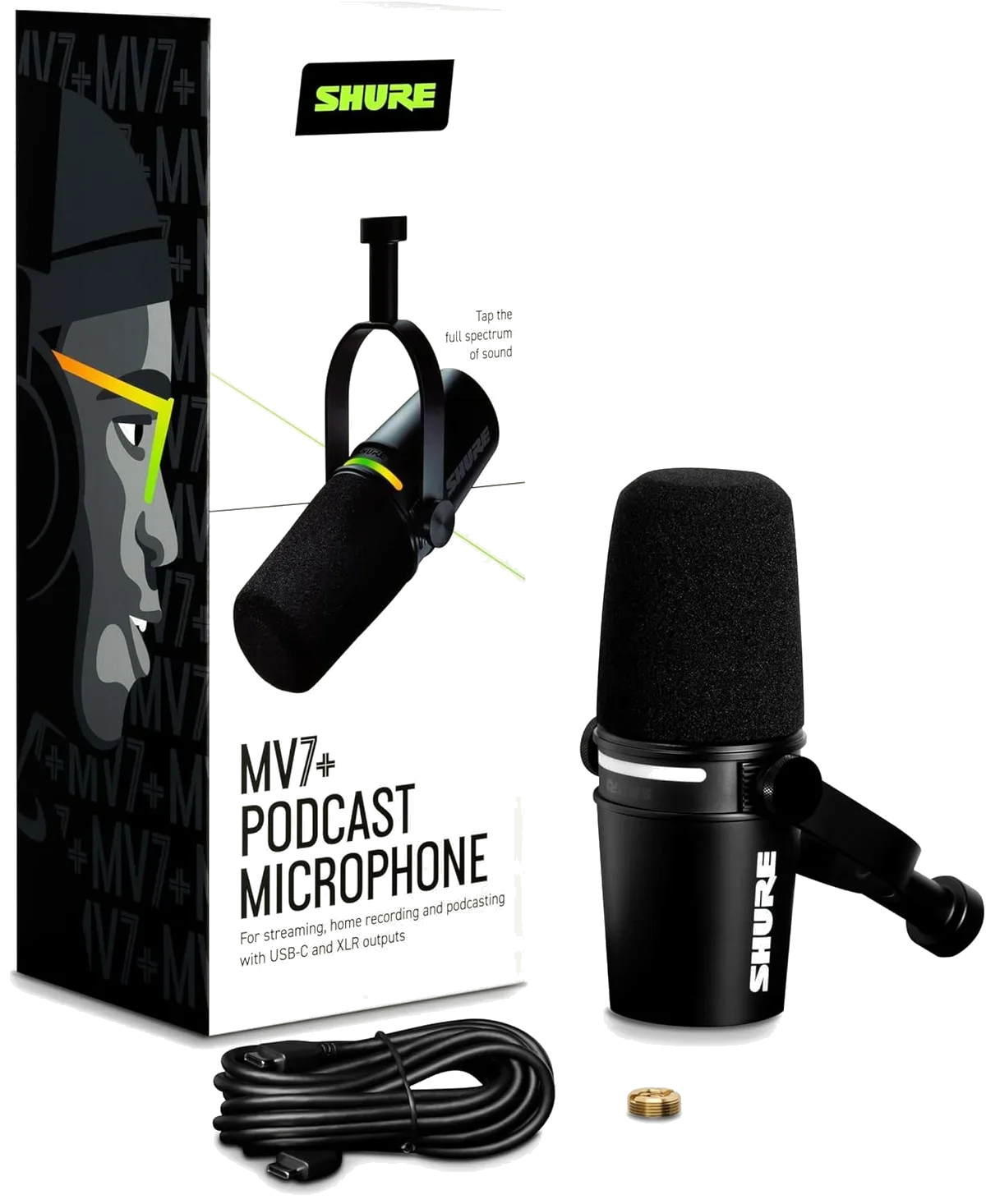
Auto Level Mode compensates for distance changes mid-read — critical for long-form narration where posture shifts. USB-C for immediate recording, XLR output for studio-grade preamps when you upgrade. The broadcast heritage shows in the tonal warmth.
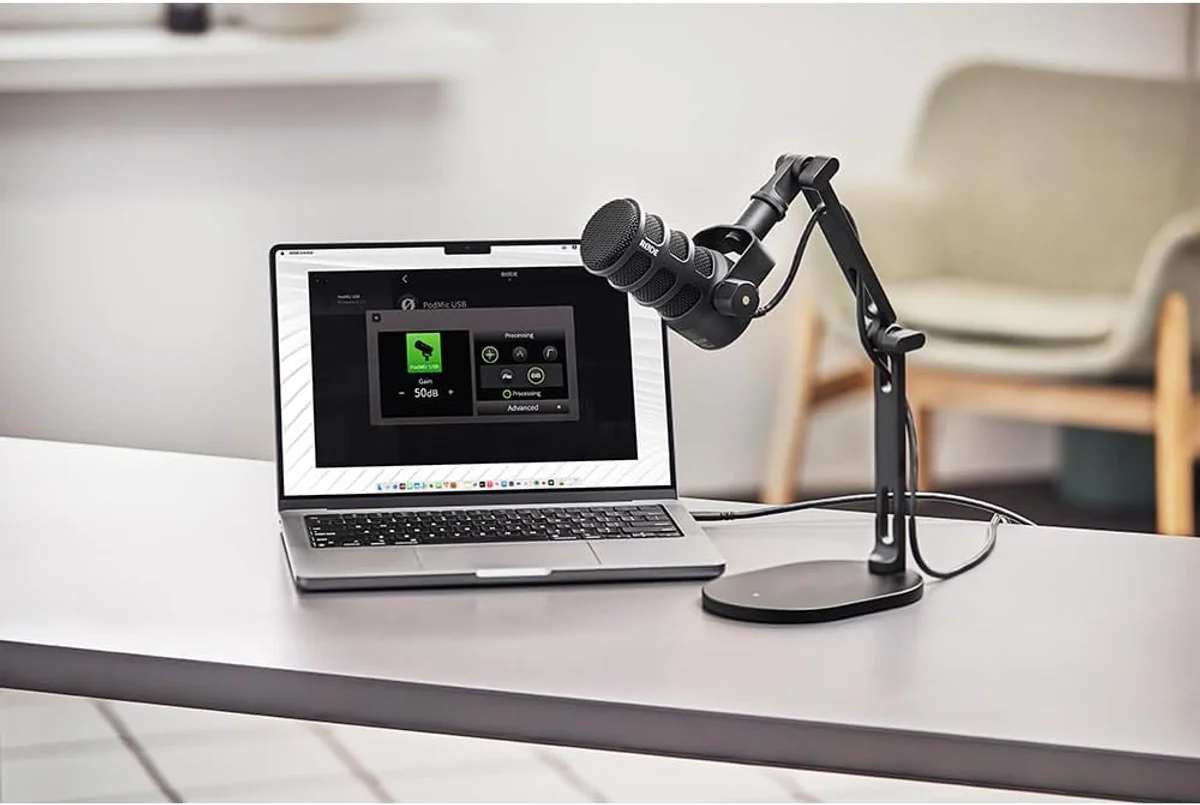
Built-in pop filter eliminates plosive handling in post. APHEX processing adds broadcast color without plugins. The internal shock mount absorbs desk vibrations during long reads.
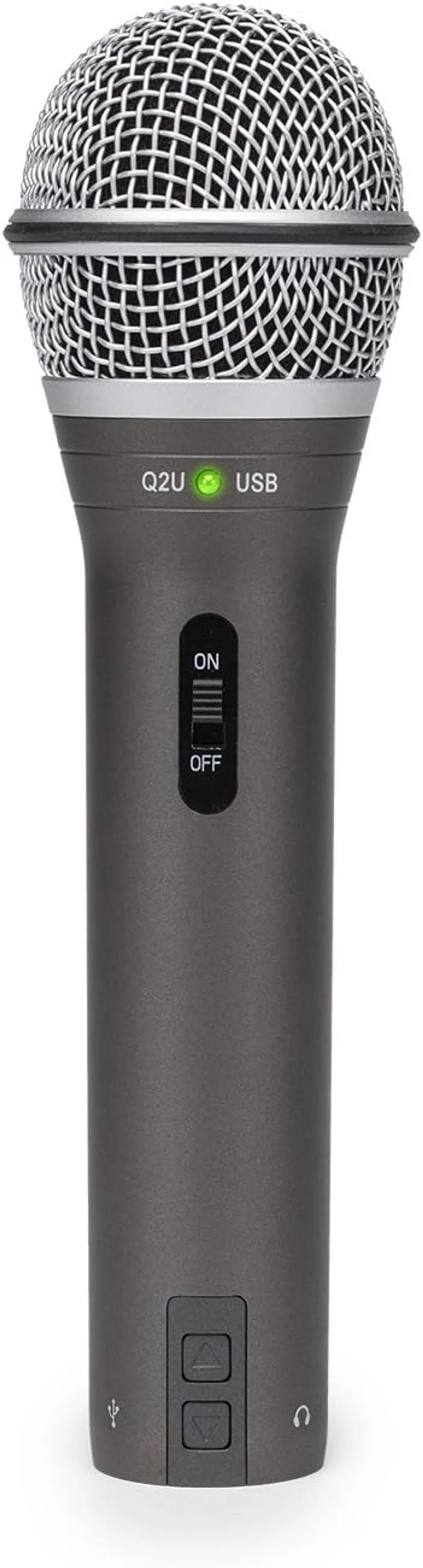
The entry point for working voiceover. Clean dynamic capsule with dual USB/XLR output and a complete accessory kit — start recording demos the day it arrives.
Dynamic Mics and the Home VO Advantage
Here is the thing about home voiceover studios: they are acoustically imperfect. Street noise bleeds through walls. HVAC systems cycle on during takes. The room has hard surfaces that create reflections. A condenser microphone hears all of it.
Dynamic microphones solve this by physics, not processing. Their moving-coil capsule responds to close sound pressure and ignores distant sources. A dynamic mic placed 3 inches from your mouth picks up your voice and almost nothing else — no AC hum, no passing trucks, no the neighbor's dog barking two rooms away.
This is why the majority of home VO artists we track use dynamic mics. The Shure MV7+ broadcast dynamic leads the category because its Auto Level Mode adjusts gain in real time — when you lean back during a long narration session, the mic compensates instead of dropping your level. The Rode PodMic USB with its internal pop filter and APHEX processing is the alternative for artists who want broadcast tone without plugins.
The noise rejection advantage compounds over time. Every hour you do not spend cleaning up room noise in post is an hour you spend on auditions and paid work. Professional VO artists bill by the finished hour, not the recording hour — and a clean source signal cuts the editing ratio from 3:1 to under 2:1.
When Condensers Earn Their Place in VO
Condensers are not wrong for voiceover. They are conditional.
A condenser microphone captures higher frequency detail than a dynamic — the subtle breath textures, the sibilance on S sounds, the air around vowels. For audiobook narration where listeners wear headphones for hours, that extra detail creates intimacy. For character voiceover where whispers and subtle vocal shifts carry the performance, condensers preserve nuances that dynamics miss.
The condition: your room must be treated. A condenser in an untreated bedroom sounds worse than a dynamic in the same space because it captures every room flaw with equal sensitivity. If you have invested in acoustic panels, bass traps, and a reflection filter — or you record in a properly treated closet booth — a condenser rewards that investment.
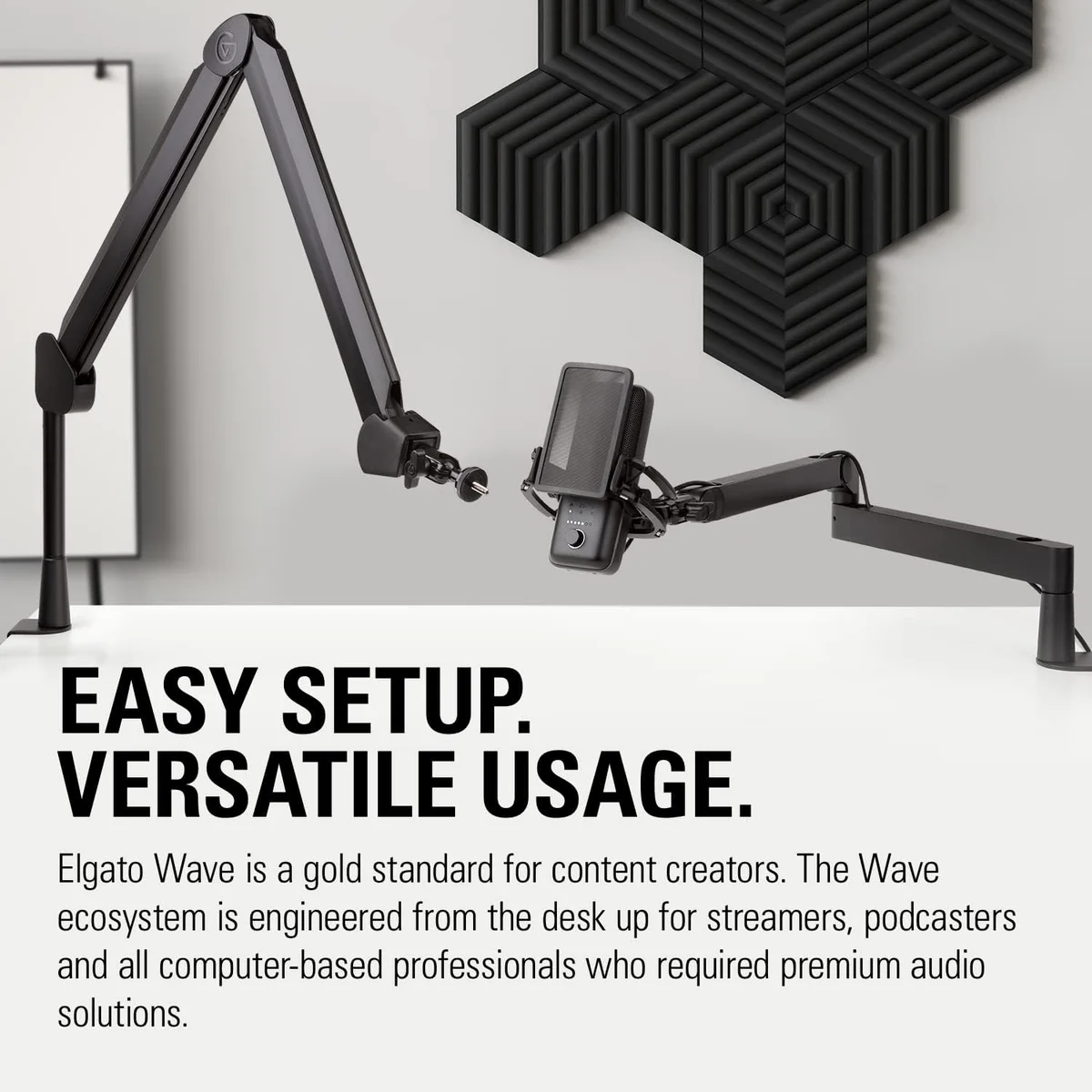
Clipguard prevents clipping on loud passages — a lifesaver during character VO where volume swings are part of the performance. The 96 kHz/24-bit capture exceeds ACX requirements.
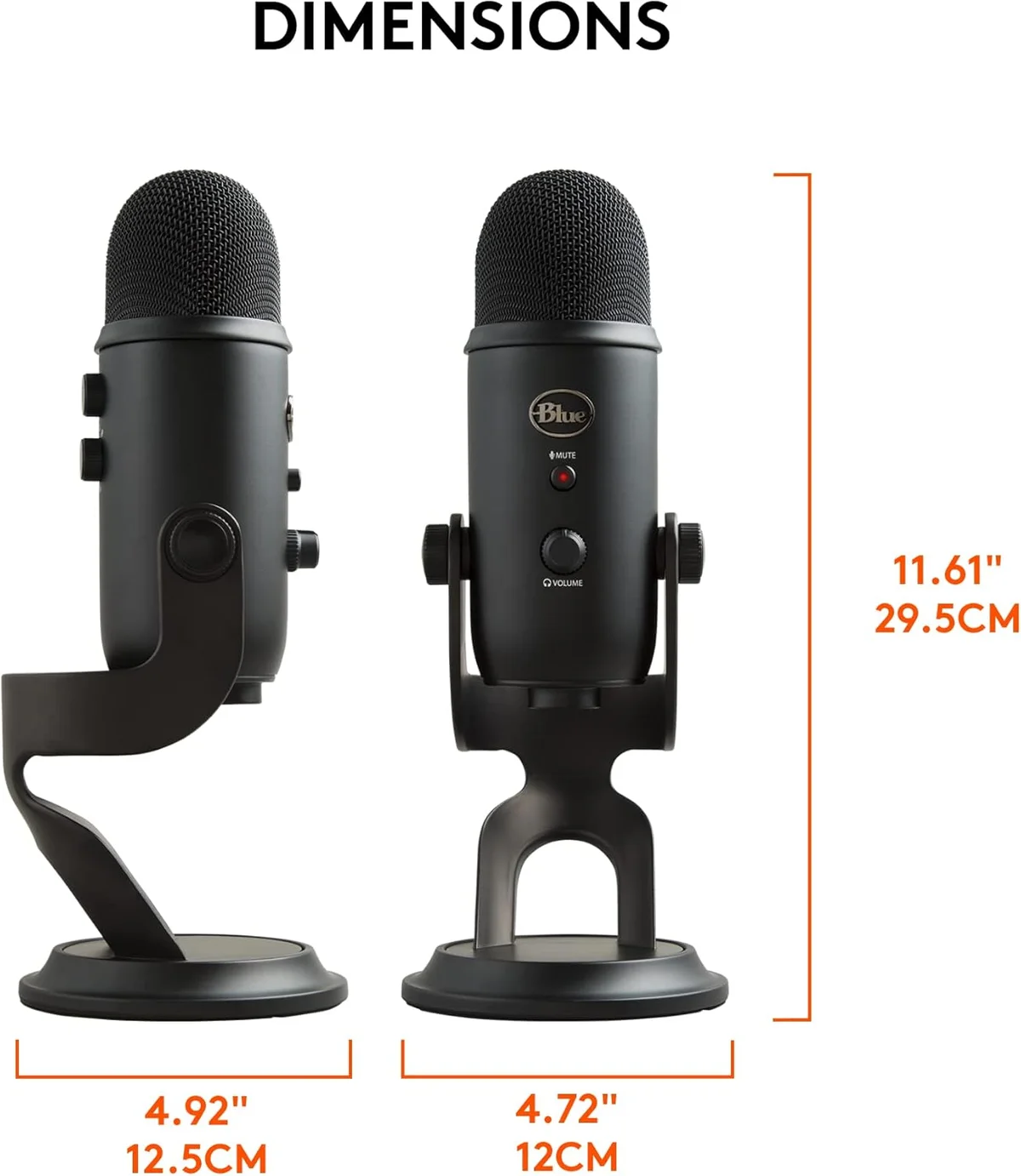
Four polar patterns in one body. Cardioid for standard narration. Bidirectional for dialogue reads between two voice actors. Omnidirectional when recording group ADR or roundtable reads. No other USB mic at this price offers that flexibility.
The USB-to-XLR Upgrade Path for Working VO Artists
Every mic we recommend for voiceover has dual USB/XLR connectivity. That is not a coincidence — it is the defining feature for VO professionals who start at home and scale into paid work.
USB gets you recording immediately. Plug into your laptop, open Audacity or Reaper, and record your first audition. No audio interface, no phantom power supply, no driver configuration. The Samson Q2U dual-output dynamic ships with both USB and XLR cables in the box — zero additional purchases required.
XLR unlocks the professional chain when your income justifies it. An external preamp gives you cleaner gain with less self-noise. A dedicated audio interface adds hardware monitoring so you hear yourself without latency. A compressor in the chain evens out dynamics before they reach your DAW. Each piece improves the signal, and the XLR output on your existing mic connects to all of it.
USB mic + free DAW (Audacity). Record auditions, build portfolio. Investment: mic only.
Same mic via XLR + budget audio interface ($50-100). Better gain control, hardware monitoring, lower noise floor.
Same mic via XLR + interface + preamp + quality XLR cable. Broadcast-grade chain without replacing the mic.
The upgrade path matters because VO careers build slowly. Most artists spend 6-12 months on USB before their booking rate justifies interface and preamp purchases. A mic that locks you into USB-only — or forces you to buy XLR-only from the start — misaligns your equipment investment with your income timeline.
Proximity Effect: The VO Actor's Best Friend
Proximity effect is the bass boost that occurs when a sound source is very close to a directional microphone. The closer you get, the more low-frequency energy the capsule captures. At 2 inches, a dynamic mic adds 6-10 dB of bass to your voice. At 6 inches, the effect nearly disappears.
VO artists treat proximity effect as a performance tool, not a technical problem.
Distance from the mic is an acting choice.
Commercial reads — the ones selling products on TV and radio — want that deep, warm, authoritative tone. Move closer to the mic. Audiobook narration benefits from a natural, conversational distance — 4-6 inches, where proximity effect adds subtle warmth without the "radio announcer" coloring. Character work uses distance variation as an acting technique: lean in for intimate whispers, pull back for shouted dialogue.
Maximum bass boost. The "movie trailer" voice. Requires careful plosive management — use off-axis positioning or the PodMic USB built-in pop filter.
Moderate warmth with clear articulation. The sweet spot for most VO work. Natural speaking distance that reduces fatigue during long sessions.
Minimal proximity effect. Flat, natural voice reproduction. Best for long-form content where listener fatigue from excessive bass becomes a problem over hours.
VO actors shift distance mid-read for tonal variation. The MV7+ Auto Level Mode compensates for the volume changes this technique creates.
Recording Environment for Voiceover
The room contributes more to VO audio quality than the mic does. A premium mic in an untreated room produces worse results than a budget mic in a treated closet. That is not an exaggeration — it is the reason VO coaches tell beginners to spend money on blankets before spending it on microphones.
Hard surfaces reflect sound. Reflections reach the mic milliseconds after the direct voice, creating a "boxy" or "roomy" quality that cannot be removed in post-production. Noise gates and de-reverb plugins attempt to fix it, but they always degrade the voice along with the reflections.
Walk-in closet with hanging clothes on three sides. Drape a moving blanket over a curtain rod above. Place the mic at seated or standing height. This is the most common home VO setup for a reason — hanging fabric absorbs mid and high frequency reflections without expensive acoustic panels. Cost: one moving blanket.
Acoustic foam or thick blankets on the wall behind the mic and behind you. Carpet or thick rug on the floor. The FIFINE AmpliGame dynamic at a budget price paired with this treatment produces recordings that pass platform quality checks. The PodMic USB vs Samson Q2U comparison covers how these two dynamics differ in noise rejection at different price tiers.
A curved acoustic panel that sits behind the mic on a stand. It blocks reflections from the wall behind the mic — the most problematic reflection path. Not a substitute for full room treatment, but an effective supplement for desk setups where wall-mounted panels are not an option.
The interaction between mic type and room treatment is direct. Dynamic mics in untreated rooms: usable. Condensers in untreated rooms: problematic. Condensers in treated rooms: excellent. Dynamics in treated rooms: also excellent, with even less noise floor. The Blue Yeti multi-pattern condenser is the only USB mic in our catalog that lets you switch between cardioid and omnidirectional patterns — a useful test for hearing how pickup pattern affects room reflections in your specific space.
Our Pick by Voiceover Type
Different VO markets have different audio expectations. Audiobook listeners wear headphones for hours and notice every artifact. Commercial clients want broadcast punch in 30-second spots. E-learning platforms compress audio and deliver it through laptop speakers. The mic that excels in one context may underperform in another.
The VO Signal Chain: From Mic to Delivery
Recording is half the voiceover workflow. Post-production turns a good raw recording into a deliverable file. The signal chain for VO is shorter than for music production — spoken word needs less processing — but each step matters.
The chain: mic placement (distance, angle) → gain staging (input level set to peak at -12 to -6 dB) → recording (48 kHz / 24-bit WAV) → noise gate (removes silence between phrases) → EQ (high-pass filter at 80 Hz to cut rumble, gentle presence boost at 3-5 kHz for clarity) → compression (2:1 ratio, slow attack to preserve transients) → normalization (target -3 dB peak for ACX, -16 LUFS for broadcast) → export.
Every mic on this page produces recordings clean enough that the post-production chain stays short. The Shure MV7+ with Auto Level and its built-in DSP processing handles gain staging and light compression at the hardware level — reducing the DAW processing to noise gate, EQ, and normalization. The Rode PodMic USB APHEX processing adds aural exciter and big bottom effects that mimic the output of outboard studio processors.
Our USB vs XLR connectivity guide covers the interface and preamp options for artists ready to move beyond USB. The MV7+ vs PodMic USB comparison breaks down how these two top VO mics differ in processing approach, build quality, and tonal character. The Shure MV7+ vs Blue Yeti comparison covers the dynamic-vs-condenser decision specifically for voice work, and our USB microphone roundup ranks every USB mic we have tested against the full range of voice recording use cases. The Blue Yeti vs FIFINE AmpliGame comparison is worth reading if you are weighing condenser detail against dynamic noise rejection at a budget.
Our Top Pick for Voiceover Artists
Compare Top Voiceover Mics
Frequently Asked Questions
Do voiceover artists need XLR or USB microphones?
For home VO studios, USB/XLR hybrid mics like the Shure MV7+ and Samson Q2U are the best starting point. USB gets you recording immediately. When you outgrow USB — typically when you land consistent commercial work and need an external preamp for gain control — the XLR output is already there. Pure XLR mics require an audio interface, which adds cost and complexity before you have paid work to justify it.
Why do voiceover studios prefer dynamic microphones over condensers?
Dynamic mics reject room noise by design. They pick up sound from directly in front of the capsule and ignore everything else — HVAC hum, street noise, computer fans. Most home VO booths are not acoustically perfect, and dynamic mics compensate for that. Condensers capture more detail but also capture every flaw in the room. Professional VO studios with full acoustic treatment use condensers. Home studios almost always sound better with dynamics.
What is proximity effect and why does it matter for voiceover?
Proximity effect is the bass boost that occurs when you speak within 2-6 inches of a directional microphone. It adds warmth and depth to the voice — the "radio announcer" quality that commercial VO clients expect. Dynamic mics exhibit stronger proximity effect than condensers. VO artists learn to control their distance from the mic to dial in the exact amount of bass enhancement they want for each read.
Can you record professional voiceover on a budget mic?
The Samson Q2U produces recordings that pass audition standards on platforms like Voices.com and ACX when paired with basic room treatment — even a closet full of clothes works. The difference between a budget dynamic and a premium one is not quality versus garbage. It is good versus polished. Budget mics require more post-production EQ and compression to reach the same tonal quality that premium mics deliver out of the box.
How much room treatment does a home VO booth need?
At minimum: absorption panels or thick blankets on the wall directly behind you and on the two side walls flanking the mic. A carpet or thick rug under the desk. That alone eliminates the worst reflections. A closet converted into a booth with hanging clothes and a moving blanket draped overhead is a legitimate starting VO space that produces audition-quality recordings with a decent dynamic mic.
What sample rate and bit depth should voiceover recordings use?
Record at 48 kHz / 24-bit. This is the delivery standard for broadcast, audiobooks (ACX requires 44.1 kHz but accepts 48 kHz downsampled), and commercial VO. Recording at 96 kHz provides no audible benefit for spoken word and doubles file sizes. The extra bit depth of 24-bit gives you headroom during recording so quiet passages stay above the noise floor without risking clipping on loud takes.
Our Top Recommendation
Based on our research, the Shure MV7+ is our top pick — serious podcasters and streamers who want a single mic that works with both usb-c and xlr, especially in untreated rooms..
Get Our Top 3 Picks
Get our top 3 picks for your budget — one email, then only updates.
Only when something changes. Unsubscribe anytime.